




NAPT calls for review of safety standards
The National Association for Pupil Transportation’s (NAPT) board of directors petitioned the National Highway Traffic Safety Administration (NHTSA) to review key school bus safety standards and to elaborate on lap/shoulder belts.

ALBANY, N.Y. — The National Association for Pupil Transportation’s (NAPT) board of directors petitioned the National Highway Traffic Safety Administration (NHTSA) to review key school bus safety standards and to elaborate on lap/shoulder belts.
In a 2002 report to Congress on school bus safety, NHTSA said that it was considering the following changes to Federal Motor Vehicle Safety Standard (FMVSS) 222, which covers school bus passenger seating and crash protection:
Increase seat back height from 20 to 24 inches to reduce the potential for passenger override in the event of a crash.
Require buses under 10,000 pounds to have lap/shoulder restraints. Currently, passenger seats on these buses are only required to be equipped with lap belts.
Develop standardized test procedures for voluntarily installed lap-shoulder belts.
The NAPT’s petition asks NHTSA to initiate rulemakings on those items to determine whether upgrading FMVSS 222 could make school buses safer.
In a separate statement, the NAPT said that it would sponsor an industry-wide forum to discuss any changes that NHTSA proposes.
The NAPT also requested clarification of statements that NHTSA made about lap/shoulder belt systems in the report to Congress. NHTSA had indicated that lap-shoulder belt systems, if used properly, could save one life a year. However, NHTSA noted that this estimate relied on 100 percent usage and no misuse of the systems.
The NAPT wrote in its petition that those usage parameters are “virtually impossible.” Further complicating the matter was NHTSA’s finding that misuse could result in serious neck and abdominal injuries.
“We were expecting NHTSA to tell us whether or not lap/shoulder belts should be integrated into the passenger crash protection system of school buses,” said NAPT Executive Director Mike Martin. “We, like everyone else, were disappointed that we didn’t get a definitive answer. Whether NHTSA was unable or unwilling to settle the matter is, at this point, irrelevant; the outcome is the same in either case — everyone who wanted and needed a clear answer to that question is currently frustrated and perplexed.”
In the petition, the NAPT said that it interprets NHTSA’s statements about lap/shoulder belts to mean that the current system of passenger crash protection in school buses, compartmentalization, continues to be the best approach.
“We know that NHTSA considers a yellow school bus the safest form of ground transportation in America — even without seat belts,” said NAPT President Lenny Bernstein. “As a result, we believe modifications to the current system of school bus passenger crash protection should only occur when we can be sure beyond a reasonable doubt that those modifications will improve the safety of each and every child in a school bus.”
The NAPT also called on NHTSA to help in educating the public about how school buses differ from cars from a crashworthiness perspective and about the key role that school bus transportation plays in saving lives.
The petition and other related documents are available on the NAPT Website, www.napt.org, in the “Industry News” section.
More Safety

Doing More With Less: How Transportation Directors Can Prioritize Safety Amid Budget Uncertainty
With diesel prices soaring and nearly one-third of transportation directors expecting budget cuts, maintaining student safety has never been more challenging. Download this guide to learn how leading districts are prioritizing risk, funding critical safety technology, and building stronger budget cases with data.
Read More →
How To Build a More Secure School Bus Yard During and After Hours
As thefts and overnight security threats continue, school transportation leaders are combining stronger operational practices with AI-enabled surveillance to better protect buses, facilities, and staff.
Read More →
FMCSA Names New Chief Safety Officer: What School Bus Operators Should Know
Steve Dowling is set to lead the federal agency's efforts to advance commercial motor vehicle safety and reduce crashes, fatalities, and injuries on the nation's roadways.
Read More →
New Study Finds School Zone Speed Safety Cameras Cut Speeding Violations 97%
A Florida university's research demonstrates that Verra Mobility's automated enforcement changes driver behavior and significantly improves school zone safety.
Read More →
What Changed in DOT’s New National Roadway Safety Strategy?
The federal agency's new plan shifts its focus to safer people, roads and vehicles, with a new three-pronged approach instead of five. One outlined action even addresses a key industry concern around illegal school bus passing.
Read More →
Are Autonomous Vehicles Ready to Safely Navigate School Bus Stops?
NHTSA is accelerating autonomous vehicle deployment through new safety standards and commercial approvals. See why school transportation leaders are watching.
Read More →
NFL Star Lomas Brown Kicks Off New Illegal School Bus Passing PSA
Just in time for the back-to-school season, the former Detroit Lions offensive tackle took time to record a video encouraging motorists to slow down around school buses.
Read More →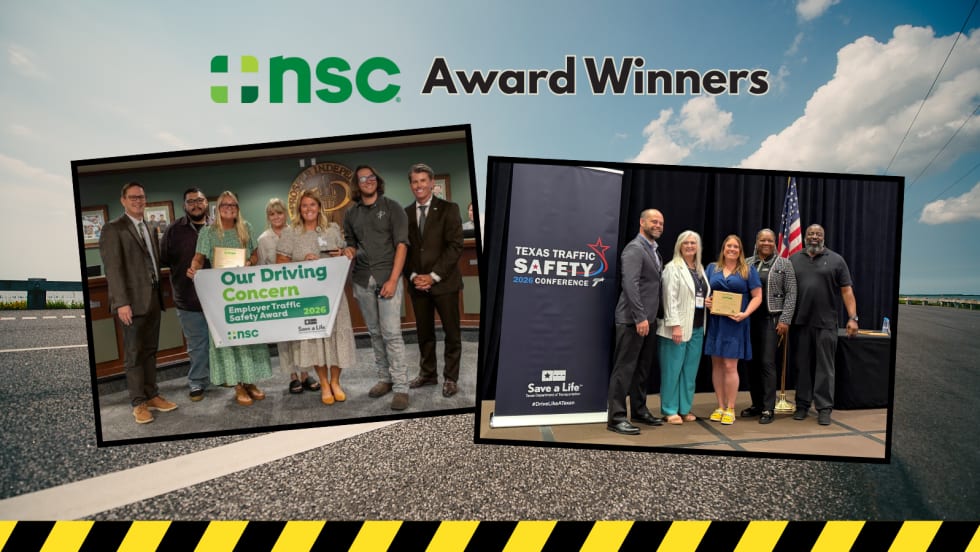
How Two Texas Districts Built Award-Winning Safety Programs
Learn how Prosper ISD and Rockwall ISD earned National Safety Council honors through hands-on training, safety culture, and strategies that reduced transportation incidents.
Read More →
NHTSA Releases 10-Year Review of Fatal School Bus Crashes
The latest federal analysis reinforces the safety of school buses while identifying where school-age pedestrians and other motorists remain most at risk.
Read More →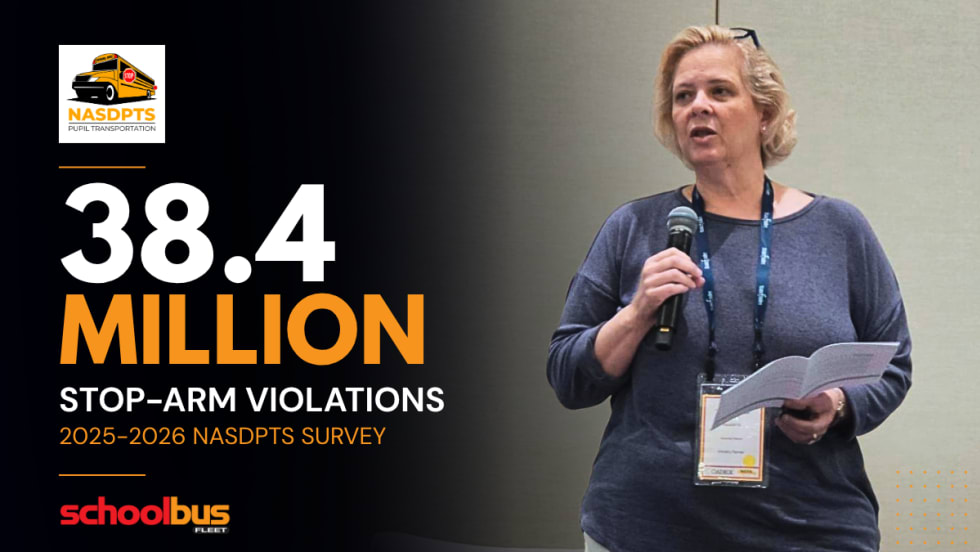
2026 NASDPTS Survey: Data Shows Further Reduction of Illegal Passing
New data is in! School bus stop-arm passings are down to 38.4 million violations per year, about a 2.3% decrease from last school year — but passings on the right side of the bus are higher than ever.
Read More →