




More and more alternatives
There’s clearly still a lot of room for growth in alternative fuel use. Fortunately, the vehicle options for pupil transportation operations continue to grow.
Beyond the safety and other benefits that they provide, yellow school buses are undoubtedly the green way for kids to get to school.
One school bus can replace dozens of cars on the road, and emissions from yellow buses continue to be cut. With the recent EPA engine standards, particulate matter and oxides of nitrogen from new diesel buses are down to near-zero levels. And many older buses are being retrofitted with emissions-reducing devices.
Then there’s alternative fuels. As noted in our Maintenance Survey last year, diesel is still by far the most common fuel used for school buses, and gasoline is second. We asked survey respondents which fuels some or all of their school buses are powered by. The results were:
• Diesel: 96 percent of respondents
• Gasoline: 38 percent
• Biodiesel: 18 percent
• Compressed natural gas (CNG): 5 percent
• Propane: 2 percent
• Hybrid-electric: 2 percent
There’s clearly still a lot of room for growth in alternative fuel use. Fortunately, the vehicle options for pupil transportation operations continue to grow.
As you’ll see in this story, the new propane-powered Type A bus from Collins Bus Corp. has gone through the certification process and into full production.
The NexBus Propane small school bus, built on a GM chassis, will be available under the Collins, Mid Bus and Corbeil brands. It has an estimated range of more than 300 miles.
Also in the Type A realm, the new Blue Bird Propane-Powered Micro Bird by Girardin became available for sale in July, with production scheduled to begin toward the end of this year.
Blue Bird also offers its Propane-Powered Vision Type C, which has been growing in popularity. The manufacturer reports that well over 1,000 of the buses are now transporting children in the U.S. and Canada.
In Texas, the Railroad Commission (the state’s energy agency) has for years been promoting propane school buses and securing funds for districts to acquire them. Commissioner Michael Williams recently commended the Texas Parent Teacher Association for awarding more than $200,000 to two districts for buying propane buses.
Hybrid school buses have also been making inroads into the market in the past several years. As illustrated on the cover of this issue, Thomas Built Buses offers its Saf-TLiner C2e, with a regenerative hybrid-electric parallel system working alongside the conventional powertrain.
IC Bus was the first to offer a plug-in hybrid school bus. The CE Series hybrid utilizes an induction electric motor and lithium ion batteries in addition to its diesel engine.
Last year, Collins began manufacturing its NexBus hybrid-electric school bus. The Type A is built on a Ford chassis with a parallel hybrid drive system.
Furthermore, CNG-powered Type Ds are available from Blue Bird and Thomas Built. And many school districts and contractors have begun running their diesel buses on biodiesel blends.
As the alternative fuel options continue to expand and more operations adopt them, yellow school bus transportation will grow even greener.
More Alternative Fuels
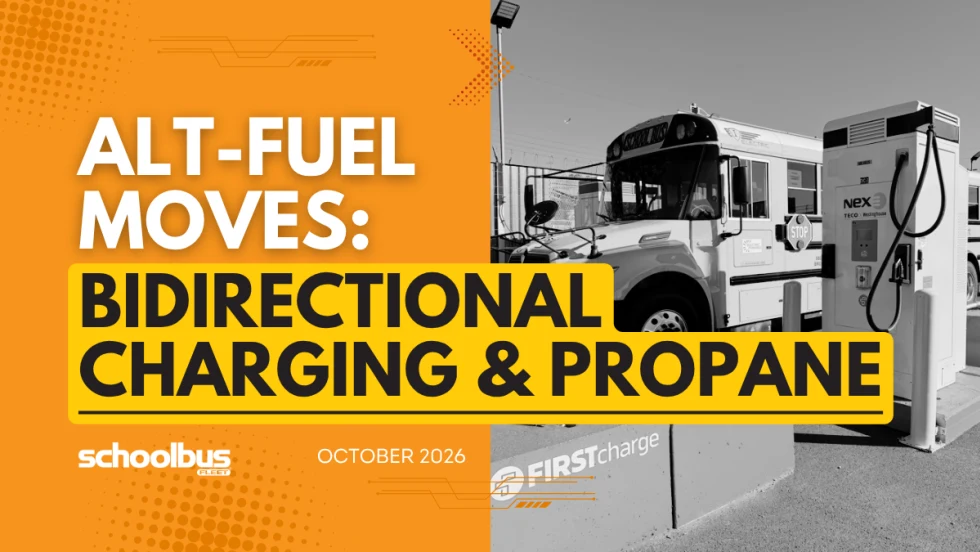
Alt-Fuel Moves: Electric Bus Rollouts, Bidirectional Charging & Propane Growth
See which fleets are adding electric and propane school buses as districts and operators invest in charging infrastructure, bidirectional technology, and alternative-fuel expansion.
Read More →
Nobody Told Diesel Prices They Were Supposed to Come Down
With diesel prices surging, school bus fleets have new reason to stress-test fuel costs, consider diversification, and calculate what each route really costs to operate.
Read More →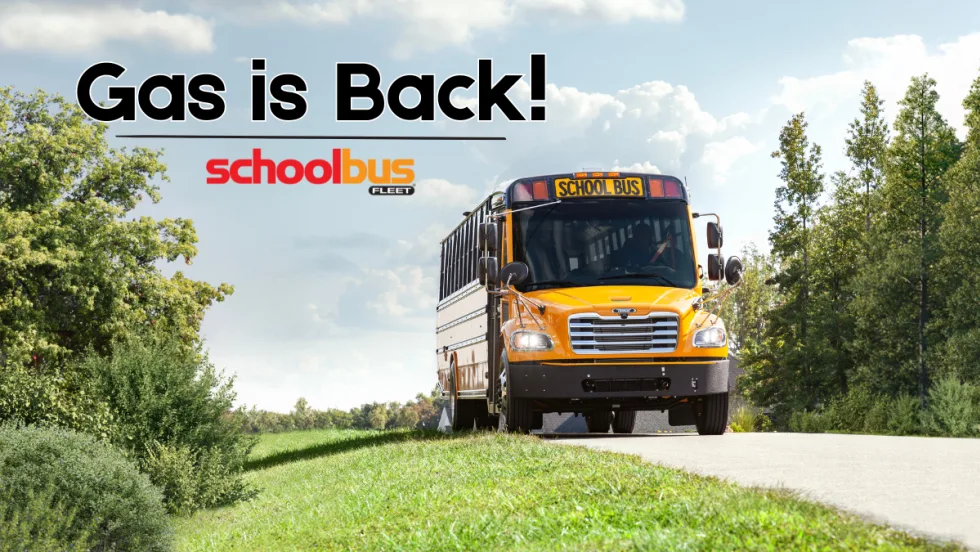
Why Gasoline School Buses Are Making a Comeback
Gasoline is gaining ground in full-size school buses. See how today’s options stack up against diesel on cost, maintenance, emissions, performance, and more.
Read More →
EPA Opens $180M DERA Funding Round for Diesel Upgrades
The 2026 Diesel Emissions Reduction Act program seeks applications from eligible organizations to accelerate the retirement of legacy diesel vehicles.
Read More →
The Secret Life of an Electric School Bus Battery
Batteries change throughout years of daily routes, but degradation doesn’t necessarily mean the end. Here’s what operators should know about performance, safety, and second life.
Read More →
CALSTART and Forth Combine to Form Catalyst Mobility
The new name represents a renewed vision for the nonprofit focused on advancing clean, equitable, and affordable transportation solutions that move people and goods.
Read More →
Alt-Fuel Moves: New Buses, Charging Hubs & Real-World EV Testing
Propane and electric school bus deployments continue to grow as districts add new vehicles, expand charging infrastructure, and gather more real-world operating data.
Read More →
Fewer Electric School Bus Models Reshape the U.S. Market
WRI’s latest buyer’s guide points to a consolidating electric school bus market, but fewer options may reflect a maturing industry rather than fewer meaningful choices for school bus operators.
Read More →
The Fuel Budget You Can Actually Predict: How Propane Autogas Keeps Money in the Classroom
Learn how propane autogas helps school districts manage fuel costs with predictable pricing, lower maintenance, and reduced emissions from former transportation director Joel Stutheit.
Read More →
Hendrickson, Driventic Introduce New Electric Powertrain for School Buses
ELECTRAAX, the electrified, lightweight drive axle offers integrated ePowertrain efficiency and modular flexibility for Class 6–7 school bus use.
Read More →