




Late-breaking news from the pupil transportation industry
EPA calls for cleaner buses DALLAS — EPA Administrator Christine Whitman has unveiled an initiative to clean up the air inside ...

EPA calls for cleaner buses
DALLAS — EPA Administrator Christine Whitman has unveiled an initiative to clean up the air inside school buses, which a federal study now suggests could be hazardous to riders.
At an Oct. 7 ceremony in Dallas, Whitman announced the creation of an Adopt-A-School Bus program in north Texas. Under the program, businesses and other entities will be asked to donate funds to school districts to buy new buses that promote cleaner air or to retrofit older diesel buses with emissions-reducing equipment.
Whitman said she would like to take the program nationwide, citing a recent EPA study that suggests that diesel exhaust fumes contribute to increases in the incidence of asthma and lung disease in children. Said EPA regional administrator Gregg Cooke: "There's a lot of evidence that indicates that perhaps the worst time of any child's day is the time they spend on old, old school buses."
State officials say about one-third of Texas' school buses fail to meet current air pollution standards and are hoping to replace approximately 500 pre-1993 diesel buses in north Texas.
Funding grants for the new buses and retrofits will be based on a district's poverty level and the number of older buses in its fleet. School districts in areas with high concentrations of ozone and other air toxins will be given priority as well.
The EPA does not regulate air quality in school buses, and Whitman said she would prefer not to expand the EPA's regulatory reach at this time "because if we just say it's their responsibility, it's going to be very expensive."
In September, the EPA released a 651-page report on the short- and long-term effects of diesel exhaust. The health assessment was not conclusive, but did report that "evidence for exacerbation of existing allergies and asthma symptoms is emerging." It also said that long-term exposure to diesel exhaust "is likely to pose a lung cancer hazard."
The National Association for Pupil Transportation warns that the EPA initiative could mislead parents about the air quality in school buses. Studies by clean-air activists and school bus industry representatives have produced conflicting results. For NAPT President Donald G. Paull's response to the EPA's Adopt-A-School Bus program, see Industry Forum in this issue.
'Good Morning America' targets bus rowdiness'
NEW YORK — In response to a Sept. 18 incident in which 5-year-old Christopher Gonzalez fell from the emergency exit of a school bus in Bronx, N.Y., reporters at ABC's "Good Morning America" (GMA) have put together a segment looking at violence on the school bus.
The segment, which uses onboard video footage and interviews with Gonzalez and his mother, aired Oct. 8. Describing the fighting showcased in the piece, GMA co-host Diane Sawyer said, "It's roughhousing. It's bullying. And sometimes it's worse." GMA co-host Charles Gibson added, "This is not just horseplay. This is violence on the school bus."
The footage shown in the segment captured several fights in which students were injured and property was damaged. Some fights included groups of students attacking a single victim. Drivers were shown breaking up fights or calling for help, but the effect of having a driver present appeared minimal.
According to Gonzalez, it was this kind of uncontrolled roughhousing that led to him being pushed out the bus' emergency exit, fracturing his skull. "My baby's hurt and this could have been avoided," said the boy's mother.
The solution? ABC news reporter Ann Pleshette Murphy, who hosted the segment for GMA's American Family Report, suggests having monitors on the worst routes. "The best thing to do is to have a monitor and to identify those [trouble] routes," she says. She notes, however, that you can't just put anyone on a route without proper screening and training.
Video cameras, though helpful, she says, will not necessarily deter misbehavior. The fight footage shown on the segment was gathered from onboard video cameras, proving children are not always put off by the prospect of being recorded. She stressed the importance of using cameras as documentation devices more so than as prevention measures.
Twice in her report, Pleshette Murphy emphasized the overall safety of the school bus, citing that it is 87 times safer than other means of home-to-school transportation. In her final statement, she said, "The answer is not to yank your kid off the school bus."
Foreseeing the public uproar that could potentially result from this report, the School Bus Information Council (SBIC) issued a memo to prominent industry members before the segment aired. In its message, the SBIC says, "No doubt this story will motivate some parents and state legislators to call for monitors, video equipment, or both, on all buses."
When addressing public concerns, the report advises stressing the safety of school buses versus other forms of transportation, noting the extensive screening and training that school bus drivers undergo and listing the many safety features on school buses.
For more safety information, statistics, resources and media-relations materials, visit the SBIC at www.schoolbusinfo.org.
More Alternative Fuels
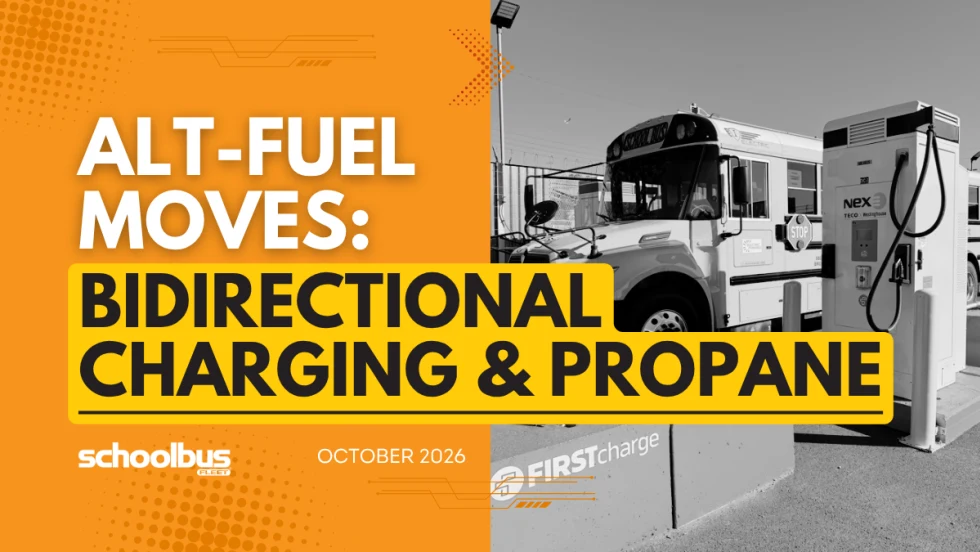
Alt-Fuel Moves: Electric Bus Rollouts, Bidirectional Charging & Propane Growth
See which fleets are adding electric and propane school buses as districts and operators invest in charging infrastructure, bidirectional technology, and alternative-fuel expansion.
Read More →
Nobody Told Diesel Prices They Were Supposed to Come Down
With diesel prices surging, school bus fleets have new reason to stress-test fuel costs, consider diversification, and calculate what each route really costs to operate.
Read More →
Why Gasoline School Buses Are Making a Comeback
Gasoline is gaining ground in full-size school buses. See how today’s options stack up against diesel on cost, maintenance, emissions, performance, and more.
Read More →
EPA Opens $180M DERA Funding Round for Diesel Upgrades
The 2026 Diesel Emissions Reduction Act program seeks applications from eligible organizations to accelerate the retirement of legacy diesel vehicles.
Read More →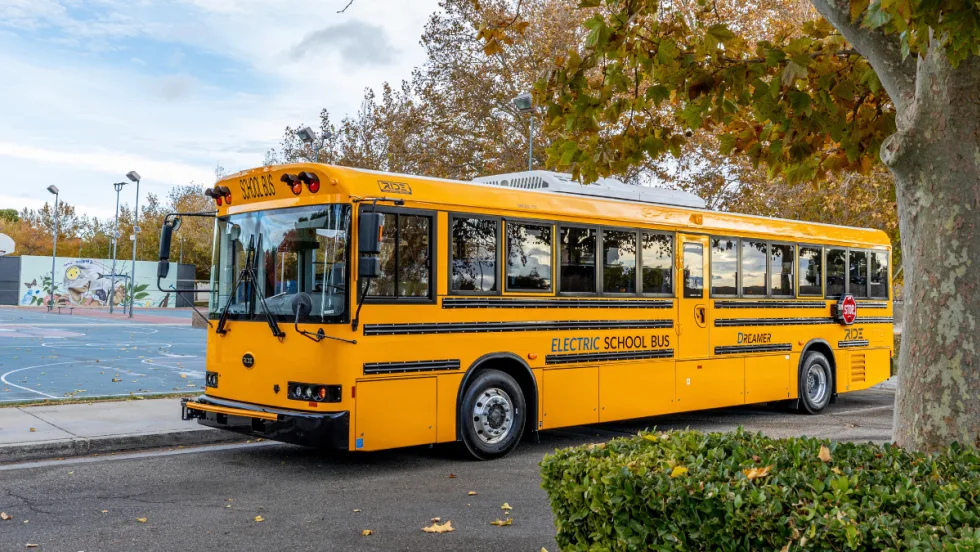
The Secret Life of an Electric School Bus Battery
Batteries change throughout years of daily routes, but degradation doesn’t necessarily mean the end. Here’s what operators should know about performance, safety, and second life.
Read More →
CALSTART and Forth Combine to Form Catalyst Mobility
The new name represents a renewed vision for the nonprofit focused on advancing clean, equitable, and affordable transportation solutions that move people and goods.
Read More →
Alt-Fuel Moves: New Buses, Charging Hubs & Real-World EV Testing
Propane and electric school bus deployments continue to grow as districts add new vehicles, expand charging infrastructure, and gather more real-world operating data.
Read More →
Fewer Electric School Bus Models Reshape the U.S. Market
WRI’s latest buyer’s guide points to a consolidating electric school bus market, but fewer options may reflect a maturing industry rather than fewer meaningful choices for school bus operators.
Read More →
The Fuel Budget You Can Actually Predict: How Propane Autogas Keeps Money in the Classroom
Learn how propane autogas helps school districts manage fuel costs with predictable pricing, lower maintenance, and reduced emissions from former transportation director Joel Stutheit.
Read More →
Hendrickson, Driventic Introduce New Electric Powertrain for School Buses
ELECTRAAX, the electrified, lightweight drive axle offers integrated ePowertrain efficiency and modular flexibility for Class 6–7 school bus use.
Read More →