




Moving to Full Fleet Electrification: A Look at 3 Districts' Plans
5 Questions: Johana Vicente on Link Between Electric School Buses, Environmental Justice
The national director of grassroots community nonprofit Chispa discusses its advocacy of electric school buses in low-income communities and communities of color, which are most impacted by transportation pollution.

Nicole Schlosser・Former Executive Editor

Johana Vicente, the national director of Chispa, says “We know that transportation pollution disproportionately affects low-income communities of color. … With school buses being the largest form of public transportation, transitioning to electric school buses is critical to protecting our planet, health, and communities.”
Photo courtesy Chispa
5 min to read
The link between the climate crisis, environmental justice, and school buses is clear to many in pupil transportation, and Johana Vicente is one of the leaders in a movement that is building awareness of the role electric buses can play in cleaner air and equity.
Vicente, the national director of Chispa (which means “spark” in Spanish), a grassroots community nonprofit program that organizes for climate action, started as one of its organizers in Maryland six years ago. Working in her home state, “where I have lived my whole immigrant life,” she says, made her aware of how connected the climate crisis was to communities on the ground.
“From dirty air to lack of access to clean drinking water, I saw how people of color were being disproportionately impacted by environmental injustices, and that fueled my passion for this work,” she told School Bus Fleet.
In this interview with SBF, Vicente discusses Chispa’s Clean Buses for Healthy Niños campaign, its work advocating for electric school buses and related funding in Arizona and Nevada, and the need to keep tabbing funds for low-income communities and communities of color, which are most impacted by transportation pollution.
1. Tell us about Chispa’s mission and the organization’s work.
Chispa is a program of the League of Conservation Voters. Through grassroots organizing, we work to build the power of Latinx communities to have a say in the decisions that affect their environment and communities. We want low-income Latinx communities to be able to influence decision makers and hold polluters accountable to protect our access to clean air and water, healthy neighborhoods, and a safe climate for generations to come. We are currently organizing communities in Arizona, Nevada, Colorado, Maryland, Florida, and soon will be launching in Texas. (Learn more about Chispa’s work at cleanride4kids.org or on its Facebook, Instagram, or Twitter pages.
2. How do electric school buses factor into Chispa’s mission?
Clean air is a major concern for most of our members on the ground. We work in some of the most polluted areas in the country, like Phoenix, Denver, Las Vegas, and Miami. When the Volkswagen (VW) settlement came out, we saw it as a unique opportunity to reduce diesel emissions and clean up the air our kids breathe in a way that our community would get tangible results. That’s why in 2016 we launched Clean Buses for Healthy Niños, a campaign targeting decision makers to prioritize the health of our kids by using VW settlement funds to transition our school bus fleets to zero-emission, electric models, especially in the most polluted communities.
We know that we will never be able to reach our climate goals if we don't address transportation pollution, and we know that transportation pollution disproportionately affects low-income communities of color. With school buses being the largest form of public transportation, transitioning to electric school buses is critical to protecting our planet, health, and communities.
3. How is Chispa helping pupil transporters with electrification?
Chispa programs across the country have been engaging school districts for years around electric school buses, and so we’re working with transportation and sustainability officers to help them secure funding or promote the pilot programs to their communities. For example, Chispa Arizona worked with students, parents, and staff in the Phoenix Union High School District to make sure the school board committed to and followed through with investing in an electric school bus. In 2019, Chispa Nevada volunteers supported the passage of legislation that would open funding for electric school buses, and now Clark County School District — the fifth largest school district in the country — is purchasing electric school buses. This includes funding specifically for charging infrastructure.
At the national level, Chispa partners with groups like Clean Energy Works and Vermont Energy Investment Corp. that are providing technical assistance directly to school districts.
4. With recent announcements of federal funding that includes support for electric school buses, do you think it will be easier for all communities to obtain the buses and the infrastructure? If not, what challenges remain?
Absolutely. This is the level of investment needed to accelerate school bus electrification beyond pilot projects across the country. One thing that I will mention that is often missing from this conversation is that this level of investment is not something that decision makers came up with on their own. This is thanks to years of organizing and pressuring that Chispa and other members of the Electric School Bus Coalition have done to push for a clean ride for our kids. And we’re not done: right now we’re asking Congress to make these investments a reality via an online petition to key members of Congress.
What is also great about this proposed funding is that it explicitly mentions that communities overburdened by pollution — communities of color and low-income communities — need to benefit from this transition first. Again, this is something that Chispa and our partners in our coalition have been pushing for since the Clean School Bus Act was first introduced in 2019.
5. What else needs to be done to better achieve equity in school transportation?
We need to continue setting aside funding and resources specifically for the communities that most use public transportation like school buses and who are most affected by transportation pollution: Black and Brown communities, often low-income communities. We need to make sure those communities are the first to see the benefits of clean transportation.
One way to do this is for school districts and school boards to directly engage these communities, parents, and students, so that they have a greater say in how our children are transported to and from school. By listening to their feedback and prioritizing the needs of those most affected, we can make sure school transportation is addressing decades of environmental injustices that have placed those communities in the neighborhoods with the dirtiest air and the fewest resources.
Subscribe to Our Newsletter
More Alternative Fuels

CALSTART and Forth Combine to Form Catalyst Mobility
The new name represents a renewed vision for the nonprofit focused on advancing clean, equitable, and affordable transportation solutions that move people and goods.
Read More →
Alt-Fuel Moves: New Buses, Charging Hubs & Real-World EV Testing
Propane and electric school bus deployments continue to grow as districts add new vehicles, expand charging infrastructure, and gather more real-world operating data.
Read More →
Fewer Electric School Bus Models Reshape the U.S. Market
WRI’s latest buyer’s guide points to a consolidating electric school bus market, but fewer options may reflect a maturing industry rather than fewer meaningful choices for school bus operators.
Read More →
The Fuel Budget You Can Actually Predict: How Propane Autogas Keeps Money in the Classroom
Learn how propane autogas helps school districts manage fuel costs with predictable pricing, lower maintenance, and reduced emissions from former transportation director Joel Stutheit.
Read More →
Hendrickson, Driventic Introduce New Electric Powertrain for School Buses
ELECTRAAX, the electrified, lightweight drive axle offers integrated ePowertrain efficiency and modular flexibility for Class 6–7 school bus use.
Read More →
The Mobility House Joins PowerFlex in Fleet Electrification Deal
The acquisition combines intelligent charging software, bidirectional charging expertise, and fleet electrification services to support the growing adoption of electric school buses across North America.
Read More →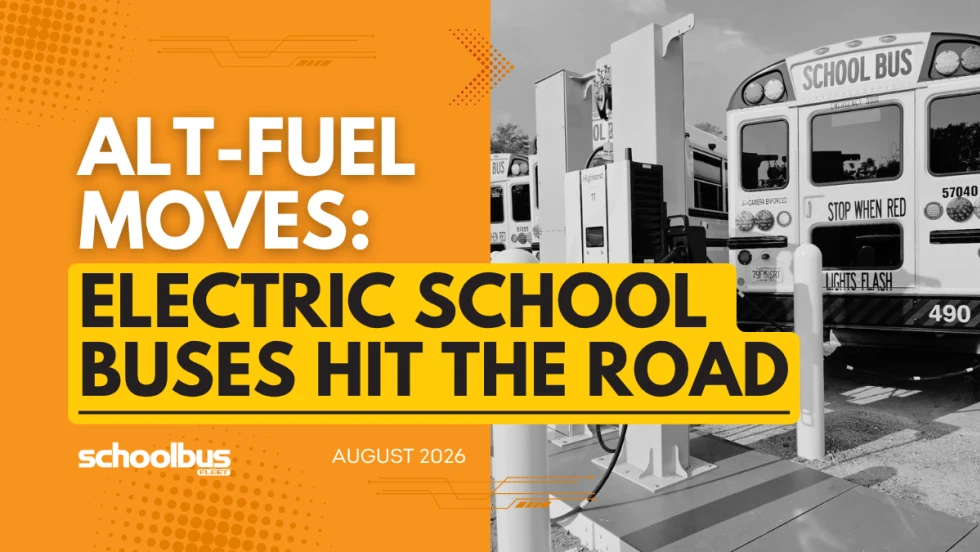
Alt-Fuel Moves: Electric School Bus Investments Hit the Road
See which districts across the U.S. are putting electric school buses into service, expanding charging infrastructure, and planning the next phase of fleet electrification.
Read More →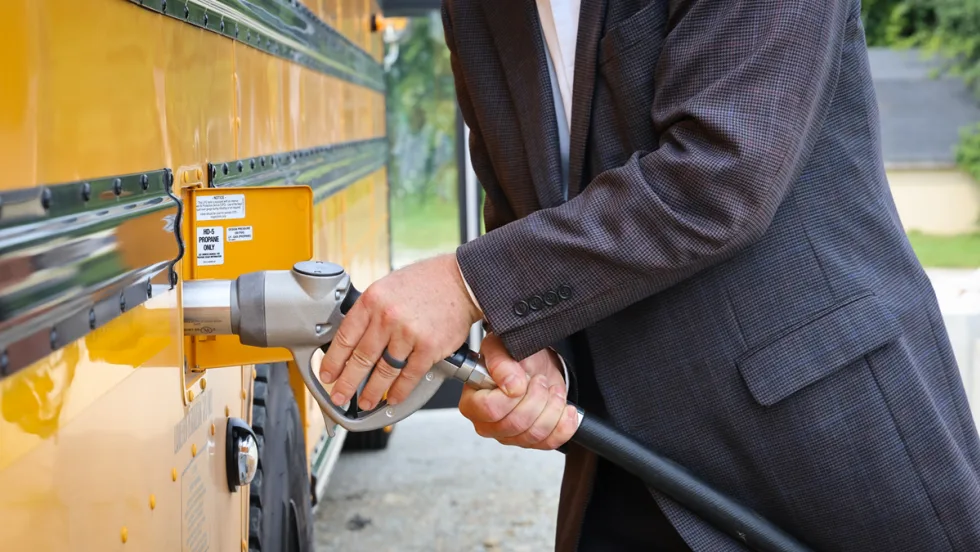
With Fuel Volatility Ahead, School Districts Turn to Propane
While diesel prices peaked above $5 this spring, districts with propane autogas-powered fleets paid under $2 per gallon, according to PERC.
Read More →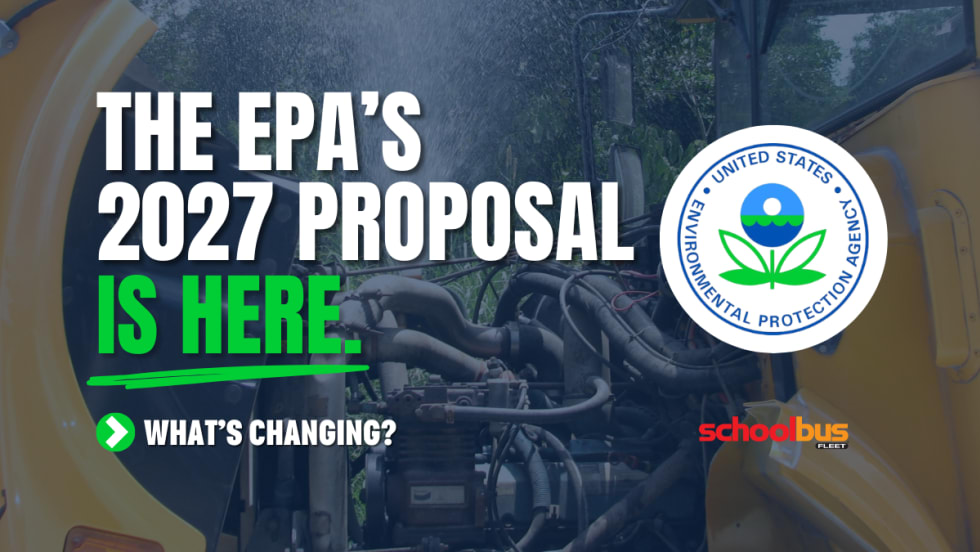
EPA Unveils Proposed Changes to 2027 Heavy-Duty Engine Rules
The federal agency has proposed changes to next year’s targets that would eliminate DEF derates, ease warranty requirements, and retain current NOx emissions standards.
Read More →
Alt-Fuel Moves: EV Charging & Infrastructure Projects Gain Momentum
The latest developments include new funding, charging infrastructure, utility investments, and fleet technologies designed to support the transition to electric school buses nationwide.
Read More →