




Industry Puts Greater Emphasis on Security Training
Programs are available through federal agencies such as the Department of Homeland Security, but many school bus operators are supplementing their training with the help of local law enforcement.
The five-year anniversary of the 9/11 terrorist attacks was observed last September. Anyone who’s had to fly recently knows how much tighter airport security has become. The changes have made it more time-consuming and frustrating to move through an airport, but, more importantly, tougher for terrorists to mount an attack.
Over the past five years, how far has the K-12 educational community come in preparing its school transportation systems to thwart or respond to terrorist attacks on school buses? And how much further does it need to go?
Most industry watchers would probably agree that much has been done to address the security of school buses. The bombings of transit systems in London and Madrid have heightened the awareness of possible attacks on transportation systems in North America. Although it seems more likely that transit buses and passenger trains, rather than school buses, would be targeted, that’s a dangerous assumption.
Let’s take a look at how the school bus community has responded to the threat of terrorism and what steps it has taken to harden itself as a target.
Keeping watch
The need to train bus drivers to recognize possible terrorist activity was an obvious consequence to the attacks of 9/11. To that end, the School Bus Watch program was created. This training is modeled after the Highway Watch program for truck drivers.
More than three-quarters of respondents to a recent SCHOOL BUS FLEET survey said they have implemented School Bus Watch training, which is designed for all transportation staff, not just drivers.
“All of our drivers are required to complete the School Bus Watch training,” says Mark Lindstrom, transportation director at Troup County (Ga.) Schools. “Many of them have had it twice.”
For those not familiar with School Bus Watch (and some respondents said they had not heard of it), the program teaches staff how to observe, assess and report safety or security-related activities. The program was developed for pupil transportation by the three national industry associations — National Association for Pupil Transportation, National Association of State Directors of Pupil Transportation Services and National School Transportation Association — in cooperation with the Highway Watch program.
The program offers train-the-trainer instruction, as well as end-user training that can be taught by an instructor or through a DVD or videocassette. In a nutshell, the training emphasizes the need for transportation professionals to be aware of suspicious people, packages or activities and to report any concerns to the proper authorities. The focus of the training is on activity occurring on the highway rather than at the bus yard.
Those who’ve undergone the training are given a 24-hour toll-free Highway Watch call center number to report their observations. The information gathered from School Bus Watch participants is analyzed by the Highway Information Sharing and Analysis Center (ISAC), which in turn shares the information with law enforcement and national security agencies.
For more information about School Bus Watch, visit www.highwaywatch.com. Or you can call Danielle Abe at the National School Transportation Association at (703) 684-3200.
‘24’ on a school bus
Meanwhile, about two in five respondents to the survey have provided their drivers with the Transportation Security Administration’s (TSA) training called “School Transportation Security Awareness” (STSA).
This DVD-based training program, unlike School Bus Watch, focuses on security concerns within the transportation system rather than the outside community.
According to TSA officials, more than 400 organizations in 42 states have registered for the full STSA training package. The training program has been embraced by law enforcement officials as well as school bus operators. The New York State Police has ordered DVDs for distribution to all school districts in its jurisdiction.
[PAGEBREAK]
The DVD depicts a fictional scenario in which terrorists hijack a school bus, plant a bomb on it and try to blow up an elementary school. The stylized production has elements of the TV show 24 and provides entertainment value in addition to education.
In the story, two men hijack a school bus while it’s picking up children along the route. One of the men holds a knife to the driver’s throat, while the other forces the passengers to the back of the bus. The bus driver is forced to skip her stops and drive to a warehouse where the children are herded into a sequestered area and a bomb is loaded into the bus.
But the quick-thinking bus driver covertly calls 911 on her cell phone and leaves the line open. She’s aided by an observant parent who reports seeing two men board her child’s bus and a bus mechanic who discovers a radio-jamming device taped under a bus seat. School authorities do their part by evacuating the elementary school while the bus is en route. After it arrives on school grounds, SWAT teams surround the bus and subdue the would-be terrorist before he is able to detonate the bomb.
The scenario illustrates the importance of training, awareness and planning in successfully defusing an attempted attack. The training film is clear about the very real possibility of such an attack.
“School buses used as terrorist weapons clearly have enormous potential to cause destruction and loss of life,” the narrator says. “None of us likes to imagine the possibility that our school buses could become the target of security threats, but the facts are unambiguous: Buses are vulnerable to attacks by hijackers, suicide bombers and remotely detonated explosive devices.” For more information about the STSA training program (which can be ordered with a DVD Leader’s Guide), visit www.tsa.gov/what_we_do/layers/school_trans_awareness.shtm or contact Dale Potts, TSA program manager, at (571) 227-3525 or dale.potts@dhs.gov.
Taking the next step
While the aforementioned programs are enhancing the knowledge base of drivers, managers and other transportation personnel, many operations believe more needs to be done in this area. More than half of the respondents to the survey said more driver training is necessary in the area of security.
At Owosso (Mich.) Public Schools, the transportation department receives training from local law enforcement in handling hostage situations, according to Transportation Director Jayne Campbell. She says Lt. Tom McComas of the Cabell County Sheriff’s Department (and the lead member of the SWAT team) has lectured on that topic. “He has also presented information about the simple process of making bombs and things for the drivers to watch for,” Campbell says. “We also did some training in hostage negotiations.”
Owosso has a fleet of 17 school buses that serve two high schools, a middle school and seven elementary schools. Using law enforcement officers to provide security training imbues the session with more credibility than if it was delivered by a trainer. Campbell says McComas makes it clear to the drivers that terrorist activity is “a reality, can happen anywhere and affects everyone when it does happen.”
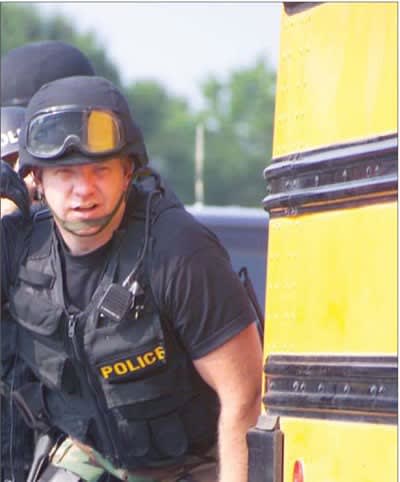
Mock takeover of bus At Unionville-Chadds Ford School District in southeastern Pennsylvania, the transportation department was able to offer its drivers a demonstration of a mock takeover of a school bus.
Transportation Supervisor Gail Wolfel says she helped to arrange a demonstration of a bus takeover for an annual conference of the Pennsylvania Association of School Business Officials and then asked the same group — a SWAT team from Cumberland County, Pa. — to reprise the training program for her drivers. It was a huge success. “The drivers still talk about that in-service,” Wolfel says. “It was the best one we ever had. The drivers liked being involved. Making it so real helped to convince them that this is something that can happen, and has happened, in many places across the country.”
Since the SWAT team cannot make frequent visits to the school district, Wolfel also uses a videotape training session, “School Bus Held Hostage” from Strategies Training Systems.
Getting clear of trouble
Emergency response is also a critical link in the security chain. At South Country Central School District in Patchogue, N.Y., the transportation department practices school evacuation drills. “We have timed how long it would take to get the buses to the school, load the students and drive them away,” says Transportation Supervisor Louise Colletti.
Colletti believes that the area of school transportation security training is constantly evolving and requires a proactive approach. She recently attended a course on prevention and response to suicide bombings offered by the New York Association for Pupil Transportation. “I try to take any class that would help and share the information with my district,” she says. “There is always room for more knowledge. No one has it all.”
More Safety

How to Build a Better School Bus Driver Training Program
Is it time to strengthen your driver training? Here’s how to pick the right talent and improve recruitment, retention, and safety. This video is brought to you by IC Bus.
Read More →
Recent School Bus Accidents Leave 2 Dead, 2 Injured
Four school bus crashes in Florida, Illinois, and Georgia highlight risks in transportation lots, at bus stops, and during student loading and unloading.
Read More →
When Every Second Matters, Clarity Keeps Routes Moving
From routine delays to urgent incidents, strong communication practices help drivers, dispatchers, schools, and families respond with confidence.
Read More →

What Happens When a School Bus Catches Fire — and What Can Help
School bus fires are rare but can be devastating. Learn how advances in fire suppression and asset protection help fleets detect fires earlier, reduce damage, and improve safety.
Read More →
Geotab Launches Tool to Help Fleets Investigate Road Incidents
Geotab Investigations combines telematics data, video, documents, and other evidence to help fleets reconstruct incidents, resolve claims, and determine what happened.
Read More →
Texas Sixth Grader Wins 2026 National School Bus Safety Poster Contest
Sai Darshana Yekolu of Moseley Middle School in Prosper, Texas, was named the newest winner for her artwork, bringing the theme of “Safe Rides, Everyday Heroes” to life.
Read More →
Doing More With Less: How Transportation Directors Can Prioritize Safety Amid Budget Uncertainty
With diesel prices soaring and nearly one-third of transportation directors expecting budget cuts, maintaining student safety has never been more challenging. Download this guide to learn how leading districts are prioritizing risk, funding critical safety technology, and building stronger budget cases with data.
Read More →
Walton County Schools Adds Gatekeeper Stop-Arm Enforcement System
The Florida district will deploy Gatekeeper’s updated Student Protector technology, which now incorporates AI to improve video evidence.
Read More →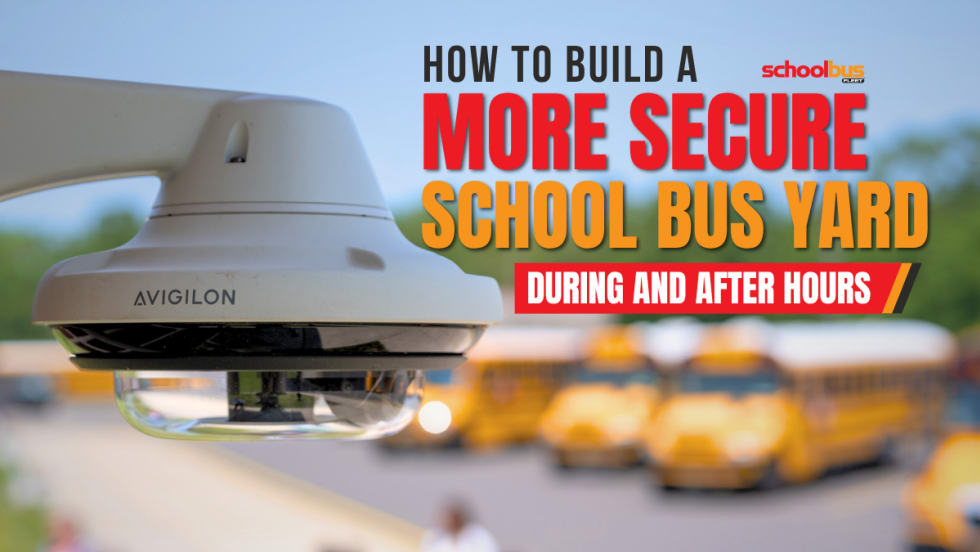
How To Build a More Secure School Bus Yard During and After Hours
As thefts and overnight security threats continue, school transportation leaders are combining stronger operational practices with AI-enabled surveillance to better protect buses, facilities, and staff.
Read More →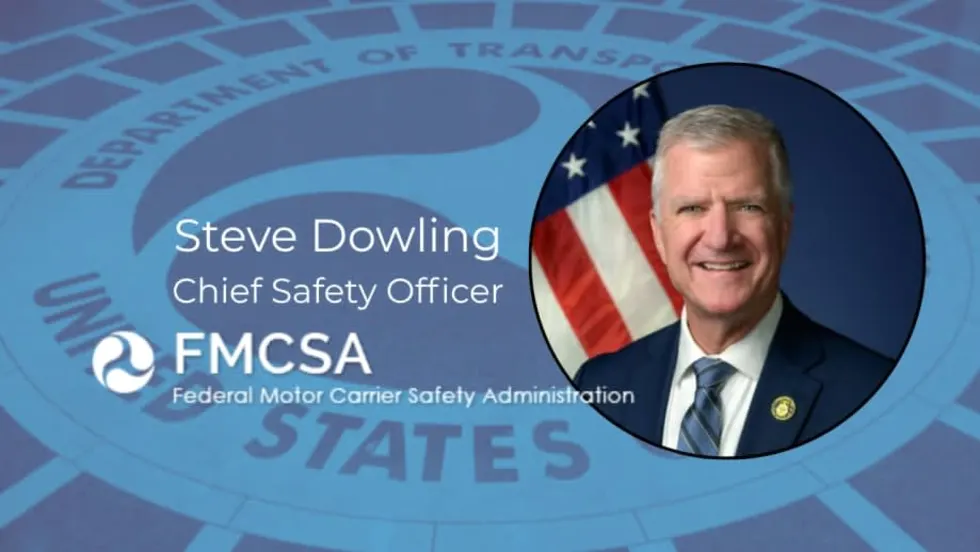
FMCSA Names New Chief Safety Officer: What School Bus Operators Should Know
Steve Dowling is set to lead the federal agency's efforts to advance commercial motor vehicle safety and reduce crashes, fatalities, and injuries on the nation's roadways.
Read More →