




IC Bus Exec Trish Reed Talks Propane, School Bus Sales
Reed discusses the benefits of IC Bus’ new propane school bus, which the manufacturer sees tying in to projected growth in alternative fuels.


Trish Reed joined IC Bus at a significant time for the school bus manufacturer. As Reed took over the role of vice president and general manager in late August, IC Bus was preparing to unveil its new propane school bus.
The bus, which debuted at the National Association for Pupil Transportation (NAPT) trade show in Kansas City, Missouri, in November, is the manufacturer’s first to be fueled by propane autogas. It will be powered by a Power Solutions International (PSI) 8.8-liter propane engine.
The propane CE Series school bus is slated to be ready for delivery in the summer, in time to hit the road for the 2015-16 school year.
In a recent interview with SBF, Reed discussed the new propane model, her experience with pupil transportation customers and the state of school bus sales.
Propane benefits
Reed calls propane a “logical choice” for many school bus operations.
“The local infrastructure and availability and the low cost of the fueling stations seem to be what makes propane an easier choice for our customers at this point in time,” she says.
Referring specifically to IC Bus’ new propane model, Reed cites its “diesel-like performance” as an attractive feature for school bus operations. The PSI 8.8-liter engine is engineered for high torque at low speed, with a rating of 565 lb.-ft. at 1,500 rpm. That can come in handy for stop-and-start applications, enabling quick acceleration and strong hill-climbing capability.
Reed points to other benefits of the propane engine for school bus drivers as well as for shop staff.
“We’ve had customers visit our engine partner, and they talk about the [reduced] noise. For the driver, that makes it much easier to hear what’s going on, especially in loading and unloading,” Reed says. “Also, there’s the lower cost of maintaining a propane engine versus a diesel.” For example, revving is reduced, which in turn reduces engine wear and oil usage.
Alternative-fuel vehicles are a fairly small percentage of the school bus market, with diesel still making up the vast majority. However, IC Bus sees more growth ahead for “green” buses.
“We forecast [alternative-fuel school buses] getting above 15% of the industry by the time we come around to 2017,” Reed says. “There are a lot of variables in that, like the current dynamic of fuel prices. But I think it’s good to offer our customers an alternative to diesel.
“The feedback we’ve gotten on our purpose-built propane bus is that some customers might have been looking at [propane] but didn’t want to sacrifice diesel performance. On our option, you don’t have to sacrifice that.”
[PAGEBREAK]

Industry experience
Reed says that the new propane model generated “a lot of booth activity” at the NAPT trade show, which was her first. Overall, she says, the conference and trade show was an opportunity for her to meet customers and learn about key issues that pupil transporters are dealing with.
“I got to sit in on some of the seminars, including the live-action event,” Reed says, referring to the session that informed attendees about violent encounters on the school bus and included a demonstration of a SWAT team responding to an active shooter. “That was very impressive.”
While this was Reed’s first trip to the NAPT Summit, her experience with the bus industry runs much further back than her current role at IC Bus. Reed is a 25-year veteran of Navistar, the parent company of IC Bus.
Her prior positions include president of Navistar’s UpTime Parts, where she was credited with driving improved customer satisfaction and nearly double-digit sales growth. Reed has also served in various roles, including vice president of business operations, at Navistar Financial Corp.
It was at Navistar Financial that Reed first began working with the school bus industry, particularly in leasing options for school districts and contractors.
“Most of my roles at Navistar Financial were interfacing with dealers and customers, and school bus customers and dealers were a big part of that,” Reed says.
During her tenure at UpTime Parts, Reed launched a “one-stop shop” parts program for mostly national accounts, including some large school bus contractors.
Now, Reed says she is excited to be playing a more direct role in the school bus industry.
“It’s a fantastic industry to be a part of,” she says. “It’s an important mission to get kids to and from school every day. It’s just thrilling to be 100% involved in that.”
Sales indicators
School Bus Fleet’s research found that school bus sales in North America (specifically the U.S. and Canada) increased 4.4% in 2014 compared to 2013. That was the third year in a row that sales increased, after five years of declining sales.
Reed notes that the recent increase in sales points more to a need to replace old buses than to an improvement in the funding situation for school districts.
“I don’t think we’ve seen anything that would indicate that funding has gotten any better,” Reed says. “There’s a lot of pent-up demand. Fleets are looking at the cost to maintain old buses vs. new. They need to replace those old buses.”
For 2015, Reed says that IC Bus expects school bus sales to be flat compared to 2014.
“We don’t see anything that tells us funding will drastically change,” she says. “We could see a bump [in sales] again this year, but at this time, we don’t expect anything significant.”
More Management

Stertil-Koni Announces New Company President
Lewis Nelson joins the heavy-duty vehicle lift provider, succeeding Scott Steinhardt in the lead role.
Read More →
Tennessee Hall of Fame Honors Drivers for Decades of Service
Frances Theiring, a school bus driver for Wilson County Schools, retires this year after almost 50 years on the road. She is one of two long-time drivers honored for their service in the state.
Read More →
What Happens to a School Bus After Retirement? First Student Has a New Answer
Through a new partnership with Advanced Remarketing Services, proceeds from retired vehicle sales will support Special Olympics and other community-focused organizations while advancing sustainability goals.
Read More →



School Bus Logistics Adds 3 Data Analysts, Expands Routing Capabilities
Three new data analysts and a BusRight certification bring an added layer of support to the routing services districts already use.
Read More →
Outsourcing Student Transportation Services Toolkit
Did you know nearly 40% of school districts utilize a private contractor to serve their transportation needs? Explore why more school leaders are turning to contracted transportation services, and how outsourcing can create meaningful value without sacrificing control. Discover the practical benefits of a transportation services platform that provides flexibility with coordination.
Read More →
EverDriven Debuts TripCentral as New District Transportation Portal
The new transportation management hub takes over the district portal to power trip planning, operations, visibility, and intelligence for school district transportation needs.
Read More →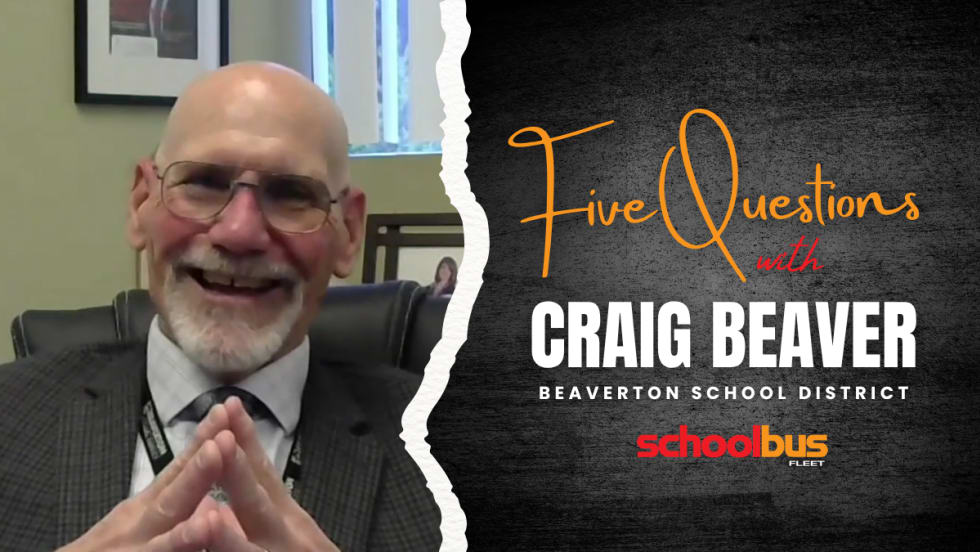
Lessons Learned from 4 Decades in Transportation: 5 Questions with Craig Beaver
Sit down with longtime transportation leader Craig Beaver moments before he retires, as he reflects on his career leading up to his role at Beaverton School District in Oregon and the secrets to leading great teams.
Read More →
BusRight Honors Texas Driver With Inaugural Behind The Wheel Award
Selected from more than 300 nominations, Lawson Crook earned BusRight’s inaugural award for his dedication to students and safety.
Read More →
Craig Beaver’s Final Stop: Lessons from 43 Years in Transportation
After more than four decades in transportation, retiring Beaverton School District director Craig Beaver reflects on leadership, alternative fuels, AI, staffing, and what’s coming next. The Route is sponsored by IC Bus.
Read More →
What 43 Years in Transportation Taught Craig Beaver About Leadership
After more than four decades in transportation, retiring Beaverton School District admin Craig Beaver reflects on leadership, alternative fuels, AI, staffing, and what’s coming next.
Read More →