




Healthcare Reform’s Material Impact on the Industry
Officials at brokerage firm William Gallagher Associates outline components of the Patient Protection and Affordable Care Act and the penalties employers such as school bus contractors will have to pay for noncompliance.

In March 2010, the federal government passed sweeping national healthcare reform legislation: the Patient Protection and Affordable Care Act. Most U.S. businesses, both large and small, are just now realizing the scale of the financial impact on their operations. For companies that employ a large number of part-time employees and offer limited or no coverage to those employees today, the impact will be dramatic. This includes school bus operators, who will be impacted by several provisions within the bill.
In a few years, the school bus industry will find itself in the center of the storm, but many operators are still in the dark when it comes to understanding the impact the Patient Protection and Affordable Care Act will have on their businesses. Unfortunately for those operators, they are bidding on contracts today that will still be in place when the act will change their cost of doing business.
Reform presents many unknowns
The first rule of healthcare reform: there are still a lot of unknowns. The law is constantly changing. Republicans want to repeal it, but that effort probably will not succeed as a result of the current composition of Congress and President Obama's promise to veto any repeal efforts. Several states are fi ghting it in court. There have been minor victories regarding parts of the law, but not the whole thing. The lawsuits will probably end up in the Supreme Court. Guidance is pending from three federal agencies (Health & Human Services, Labor and Treasury) on how the law works. Even in few instances where guidance has been provided, the agencies have been inconsistent and unpredictable.
Provisions and penalties
The second rule of reform: the act can hurt business today, in 2011, as well as in various points in the future as its provisions are implemented. The law has a number of sections with potentially big penalties. Unfortunately, ignorance of the law is not a defense against the imposition of those penalties.
Bearing in mind the number of unknowns, here are some parts of the law you need to know about. It's not a comprehensive list, but what we think is important after working with a leader in the bus industry:
Requirement to provide benefits — As of January 1, 2014, employers must provide health insurance for all fulltime employees or pay penalties ranging from $2,000 to $3,000 per employee. While this provision has gotten a lot of publicity, less attention has been paid to the fact that the definition of fulltime employee under this provision has changed.
Who is a "full-time employee"? — In 2014, the law changes the definition of a full-time person to someone who averages 30 hours per week and is employed 120 days out of the year. Right now, you may think that a lot of your drivers, monitors and mechanics are part time, but the act will change that, which will result in operators either being required to provide health insurance or to pay a penalty.
Of equal importance, the law will change the definition of a full-time employee to a much stricter one before 2014. This new requirement was set for January 1, 2011, but implementation has been temporarily delayed due to the massive financial impact and penalties that will come with it. When they do go forward with this change, a full-time employee may be someone that averages 35 hours per week over nine months of the year. Failure to offer compliant benefits to this group (think bus drivers assigned to long routes and mechanics) will result in a $100 per day penalty per employee. That's $36,500 per year per driver or mechanic. Companies better check their current plan eligibility now.
Exchanges and credits — Many, if not most, Americans making an hourly wage may be eligible for discounted health insurance on the new state exchanges. It would be a credit for purchasing coverage, like a coupon. If just one of your employees that is considered a full-time employee receives one of these credits, then you, as their employer, would be subject to onerous penalties. Unfortunately, you have no control over whether your employees opt to go to the exchanges, and they may do so regardless of whether you offer coverage.
Penalties — In 2014, the Shared Responsibility section of the law goes into effect. The bad thing is, it doesn't matter if you offer health insurance or not. You will probably pay penalties because some of your employees find it cheaper to buy health insurance on the state exchange. Here is a simple description of the penalties:
● If you offer health insurance, you will pay either $3,000 per full-time employee receiving an exchange credit, or $2,000 per full-time employee for all of your people (minus the first 30 employees), even if they have coverage through your company. For example, if you have 100 full-time employees, you would pay a penalty for 70 of them. Whichever total penalty is less is what you will pay. This means that even though you already offer health insurance and think it's the right thing to do, you may have additional, unplanned costs.
● If you do not offer health insurance, you will pay a penalty of $2,000 per fulltime employee, minus the first 30 fulltime people. This could be a budget buster for bus operators that don't factor these costs now in their bid rates.
Administrative burden — The act has onerous monthly reporting requirements, and penalties must be paid on a monthly pro-rated basis. We all need more direction on how this will work, but we know that you or one of your employees may spend several hours each month dealing with this burden. You probably already have a lean administrative staff — can you handle more of a burden? Alternatively, you may need to invest in a significant payroll and human resources system upgrade to cope with the administrative burden. These system implementations or upgrades take time, money and a lot of patience.
How much you pay toward health insurance — Even if you offer health insurance and pay part of the cost, the law will still penalize you if you pay less than 60 percent of the cost of coverage, or if the cost to an individual employee exceeds 9.5 percent of his or her household income. No one has been able to answer how an employer will know household income.
Waiting period for health insurance — If you have a waiting period that is longer than 90 days, you will want to change that requirement. If you don't, you may expose yourself to penalties as well.
[PAGEBREAK]
Benefit plan — The federal government will draft by 2014 an "essential benefit package" that will be a required offering by employers providing health insurance. We are based in Massachusetts, the only state to enact health reform, and we have what is called minimum creditable coverage — the minimum plan design a person can have. It may be the model for the federal government, and it may be richer than what you currently offer.
Start preparing now
These are the highlights, and there will be more to come. Our major concern for the industry is this: How can your company remain competitive, especially in any long-term contracts you may have or are bidding on now, when these unforeseen costs hit your bottom line?
We conducted an in depth review of these changes for a client and in a reasonable case scenario, their fiscal 2010 cash flow would have been reduced by $1.55 million or 10 percent had all of the act's provisions been in place for the 2010-11 school year, without any additional compensation from customers.
Companies and school districts that still operate their own student transportation need to prepare today for these financial penalties and burdens that begin kicking in this year and in 2014. Companies need to engage in a comprehensive review of their current plan, their employee make-up, and how health reform may bring material costs to their organization.
Christopher Nadeau is a principal with William Gallagher Associates (WGA) in Boston and is the leader of the employee benefits practice nationally. He is chairman of the Council of Insurance Agents & Brokers, where he has spoken with members of Congress on health reform, and participates on various boards and industry advisory groups, including Blue Cross Blue Shield of Massachusetts, Delta Dental and UNUM. Prior to joining WGA, he was the practice leader of a competitor firm and spent nine years in the insurance industry. Nadeau is a graduate of Bucknell University. He can be reached at cnadeau@wgains.com.
Scott Kirschner is a vice president in the employee benefi ts practice of WGA. Prior to joining the company, Kirschner was the director of the employee benefits practice at a competitor, as well as spending 14 years with Towers Perrin and KPMG and eight years in the insurance industry. Kirschner has written and spoken on many healthcare issues over the years and is a member of WGA's Health Reform Advisory Team. Kirschner is a graduate of Vanderbilt University. He can be reached at skirschner@wgains.com.
William Gallagher Associates was founded in 1983 and is one of the largest property and casualty and employee benefit brokerage firms in the eastern U.S. For the third year in a row, WGA was voted the best firm of its size by the readers of Business Insurance. Learn more at www.wgains.com.
More Safety

How To Build a More Secure School Bus Yard During and After Hours
As thefts and overnight security threats continue, school transportation leaders are combining stronger operational practices with AI-enabled surveillance to better protect buses, facilities, and staff.
Read More →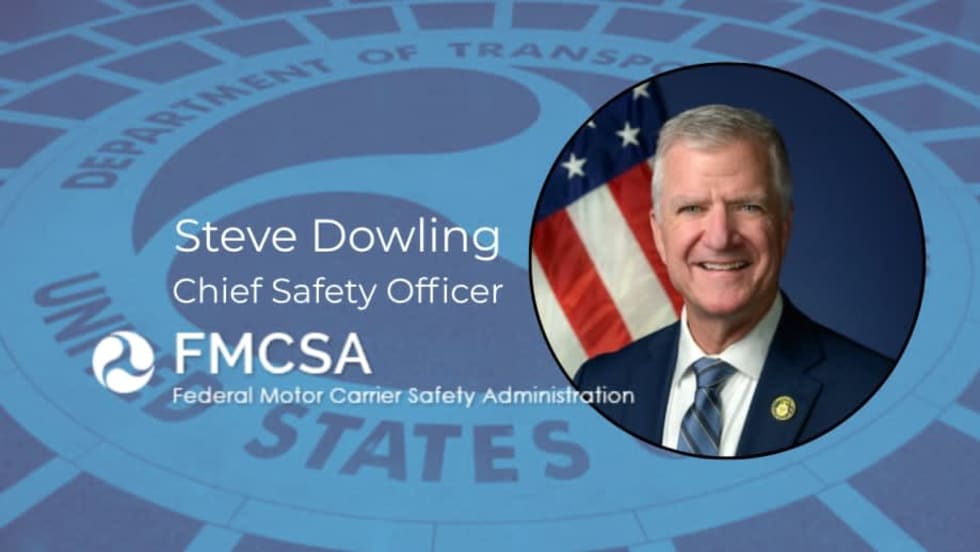
FMCSA Names New Chief Safety Officer: What School Bus Operators Should Know
Steve Dowling is set to lead the federal agency's efforts to advance commercial motor vehicle safety and reduce crashes, fatalities, and injuries on the nation's roadways.
Read More →
New Study Finds School Zone Speed Safety Cameras Cut Speeding Violations 97%
A Florida university's research demonstrates that Verra Mobility's automated enforcement changes driver behavior and significantly improves school zone safety.
Read More →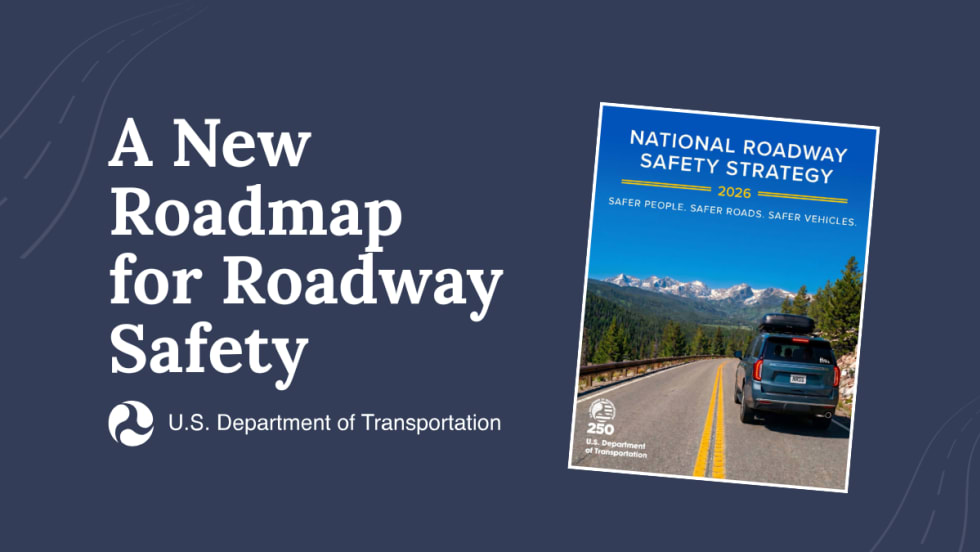
What Changed in DOT’s New National Roadway Safety Strategy?
The federal agency's new plan shifts its focus to safer people, roads and vehicles, with a new three-pronged approach instead of five. One outlined action even addresses a key industry concern around illegal school bus passing.
Read More →
Are Autonomous Vehicles Ready to Safely Navigate School Bus Stops?
NHTSA is accelerating autonomous vehicle deployment through new safety standards and commercial approvals. See why school transportation leaders are watching.
Read More →
NFL Star Lomas Brown Kicks Off New Illegal School Bus Passing PSA
Just in time for the back-to-school season, the former Detroit Lions offensive tackle took time to record a video encouraging motorists to slow down around school buses.
Read More →
How Two Texas Districts Built Award-Winning Safety Programs
Learn how Prosper ISD and Rockwall ISD earned National Safety Council honors through hands-on training, safety culture, and strategies that reduced transportation incidents.
Read More →
NHTSA Releases 10-Year Review of Fatal School Bus Crashes
The latest federal analysis reinforces the safety of school buses while identifying where school-age pedestrians and other motorists remain most at risk.
Read More →
2026 NASDPTS Survey: Data Shows Further Reduction of Illegal Passing
New data is in! School bus stop-arm passings are down to 38.4 million violations per year, about a 2.3% decrease from last school year — but passings on the right side of the bus are higher than ever.
Read More →
Another School Bus Fatality Reported in Monsey, New York
A 7-year-old girl died after being struck by a school bus in Rockland County, New York while crossing the street. Here's what we know.
Read More →