




Guidelines for Transporting Students with Spina Bifida [Updated 2023]
Learn about the symptoms, treatment, and transportation strategies for students with spina bifida.
![Guidelines for Transporting Students with Spina Bifida [Updated 2023]](https://assets.bobitstudios.com/image/upload/f_auto,q_auto,dpr_auto,c_limit,w_920/transporting-students-with-spina-bifida_1768073293721_t8urpl.png)
When transporting students with spina bifida, school bus drivers should avoid sudden stops, sharp turns, and bumps on the route.
Photo: Canva/School Bus Fleet
Students with special needs require special care by pupil transportation providers. There are certain things these providers should keep in mind when transporting students with spina bifida.
The U.S. Centers for Disease Control and Prevention reports that each year, approximately 1,400 babies born in the U.S. have spina bifida.
What is Spina Bifida?
It's important to understand what exactly spina bifida is. It means cleft spine, which is an incomplete closure in the spinal column. There are three types of spina bifida (from mild to severe):
Spina bifida occulta — an opening in one or more of the vertebrae (bones) of the spinal column without damage to the spinal cord.
Meningocele — the meninges, or protective covering around the spinal cord, have pushed out through the opening in the vertebrae in a sac called the “meningocele,” but the spinal cord remains intac.
Myelomeningocele — not only are there openings in the vertebrae, but the spinal cord itself does not close. It usually protrudes from the back.
The brain sends out messages for the muscles to move. However, in spina bifida, these messages reach a “dead end” at the level of the spinal defect. When no message gets through, there is total paralysis from the spinal level down.
In some children, some messages are able to get through along the spine and there is only partial paralysis. If there is partial or complete paralysis of the trunk or legs, the child is paraplegic. If the arms are also involved and the spinal defect is higher in the spine, the child is a quadriplegic.
Most children born with an open spine also develop hydrocephalus. Many people with spina bifida have some additional disabilities such as bladder and bowel dysfunction and leg paralysis. Another closely associated problem is Arnold-Chiari syndrome, in which part of the lower brain may protrude downward into the spinal canal.
Symptoms or Characteristics to Be Aware of
Students with spina bifida have a defective closure of the spinal cord with protrusion of nerve fibers and other contents of the cord into an exterior sac. Symptoms are often associated with hydrocephaly and scoliosis and can include bladder and bowel dysfunction and leg paralysis. Spina bifida occulta children may be able to walk and have minimal bowel and bladder dysfunctions.
Meningocele and myelomeningocele children lack bladder and bowel control, cannot walk and require the use of leg braces, crutches, or canes. Some must use wheelchairs. With hydrocephalics, a shunt is required. Lower limb involvement, including ankle and feet deformities, is common. Urinary tract infections are also common.
Caring for Students with Spina Bifida
The purpose of an Individualized Education Program (IEP) is to lay out the instruction, supports, and services a student with disabilities.
IEP goals and objectives may include physical therapy, occupational therapy, programs designed for students with intellectual disabilities, and shunt management by a school nurse.
Teena Mitchell, special-needs transportation coordinator for Greenville (South Carolina) County Schools, recommends that pupil transportation departments be involved with the student's IEP team to discuss the student's needs with other team members, such as nursing services, physical therapists, and parents.
Multiple surgeries may be required during childhood to maintain straight spine, legs, feet, and joint mobility.
Avoid contact with the spinal opening during lifting, transferring, or other physical activities at school or when being transported to or from school. Personal hygiene care is required by a personal attendant or the school nurse.
Transportation Strategies for Bus Drivers
Here are a few things bus drivers should do when they are transporting students with spina bifida:
Provide curb-to-curb services.
Avoid sudden stops, sharp turns, and bumps on the route.
Observe the child carefully for signs of shunt displacement (vomiting, irritability, extreme headache) and immediately notify school nurse and/or parents if these signs are observed.
Bench seat padding may be necessary under physical therapist guidance to avoid bumping or chafing the spinal defect area. Additionally, special seating that may help prevent injuries in case of an unavoidable sudden stop or accident may be used.
One thing to keep in mind is that because students with spina bifida may lack bowel and bladder control, he or she may experience problems with personal hygiene and body odors that should be minimized on the school bus.
Transportation personnel should look out for the student's feet, as they may be displaced off the wheelchair foot rests and injured by other students in the aisle without the child knowing or feeling the injury.
Bottom line, Mitchell recommends that transportation department staff collaborate to discuss and plan for challenges such as evacuation drills or actual emergencies.
At the time of the original print publication of this article in the December 2000 issue of School Bus Fleet Magazine, Dr. Ray Turner was a special education coordinator at Northside Independent School District in San Antonio. He has authored several special-needs transportation handbooks.
More Special Needs Transportation
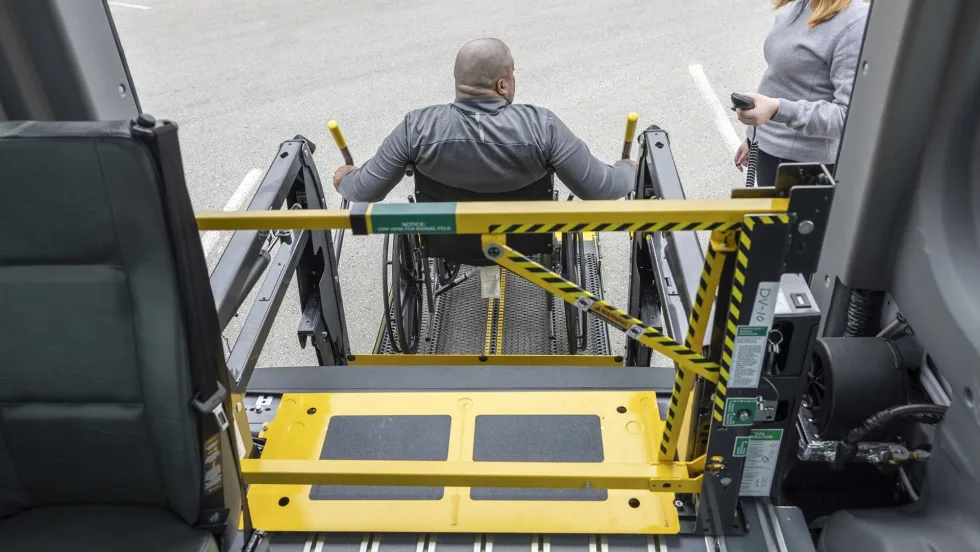
BraunAbility Introduces New Safety Barrier for Wheelchair Lifts
LiftSentinel is designed to add another layer of protection during wheelchair loading and unloading and can be retrofitted to many existing commercial lift installations.
Read More →
HopSkipDrive Launches New Safety, Driver Consistency Features for 2026-27 School Year
The company’s free ride recording, live ride tracking, and consistent driver assignments aim to improve safety and continuity for diverse student transportation needs.
Read More →
The Most Common Wheelchair Securement Mistakes on School Buses (and How to Fix Them)
Small missteps in wheelchair securement can have serious consequences. Here are 32 tips from experts to reduce risk and increase student safety on the bus.
Read More →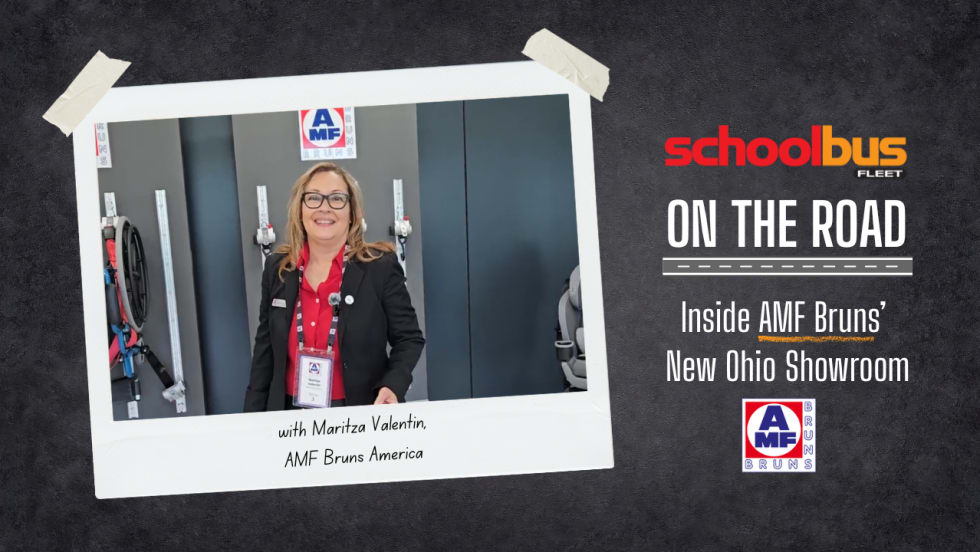
Inside AMF Bruns’ New Showroom: School Bus Securement Solutions Explained
Go inside AMF Bruns America’s new Ohio showroom with Maritza Valentin to see its FutureSafe technology, driver training tools, securement systems, and seating innovations.
Read More →
What AMF Bruns’ New Facility Means for Customers [Video]
Inside AMF Bruns’ new Stow, Ohio, operations: See how expanded space and innovation will enhance customer support and operations.
Read More →
AMF Bruns Expands in Ohio, Investing in Growth and Community
With expanded production space, local investment, and a growing workforce, AMF Bruns is scaling its U.S. presence. Here’s an exclusive first look inside the new Stow, Ohio, HQ.
Read More →
Inside AMF Bruns of America’s New Ohio Manufacturing Facility [Photos]
Take a behind-the-scenes look at AMF Bruns of America’s new 41,000-square-foot Stow, Ohio, headquarters, featuring advanced manufacturing, expanded space, and future-ready mobility solutions.
Read More →
First Student Boosts Student Support in Wichita & Texas
First Student and Wichita Public Schools are using behavioral support strategies to improve student ride experiences, while a separate initiative expands access to after-school programs through a bus donation.
Read More →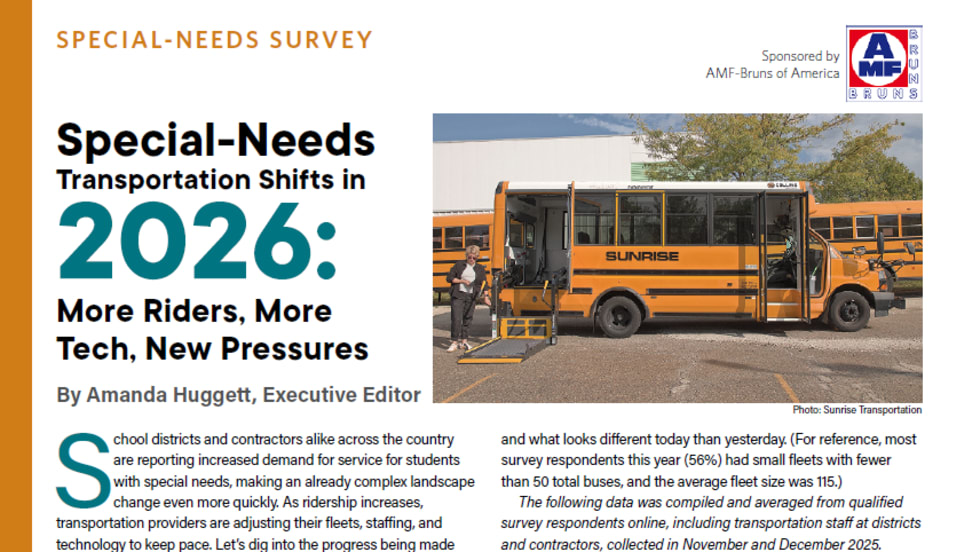
2026 Special-Needs Transportation Survey
What’s changing in special-needs transportation? This year, student transportation operators report a rising need, easing driver shortages, growing tech adoption, and evolving challenges. Sponsored by AMF Bruns of America.
Read More →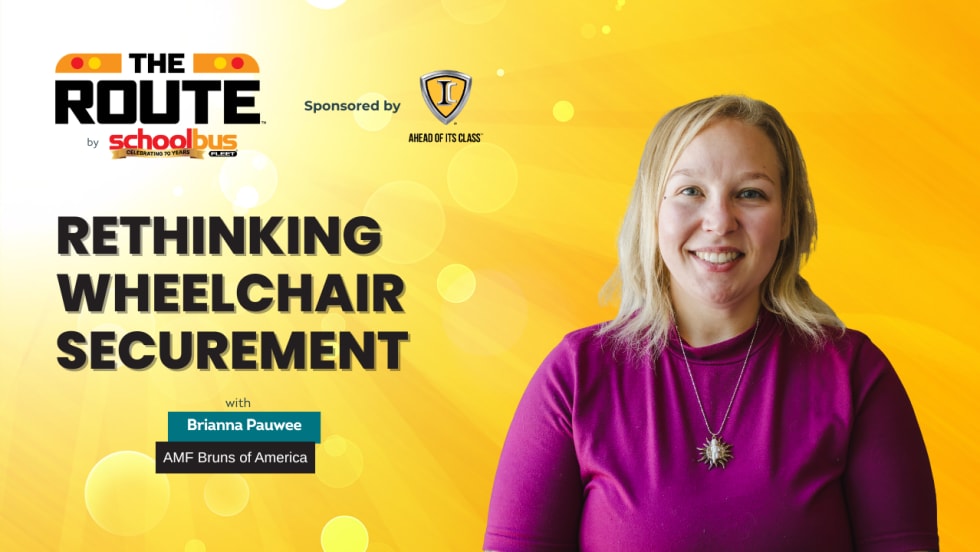
The Lived-Experience Gap in Mobility Tech: An Expert Take on Safe Student Transportation
Brianna Pauwee, a product application specialist at AMF Bruns of America and a wheelchair user, drops in to The Route to share practical securement and training insights, plus the story behind the new “Beyond Mobility” podcast. The Route is sponsored by IC Bus.
Read More →