




Fire Suppression Systems Protect Assets, Save Lives
Manufacturers of fire suppression systems for school buses provide product details and discuss the benefits of installation.

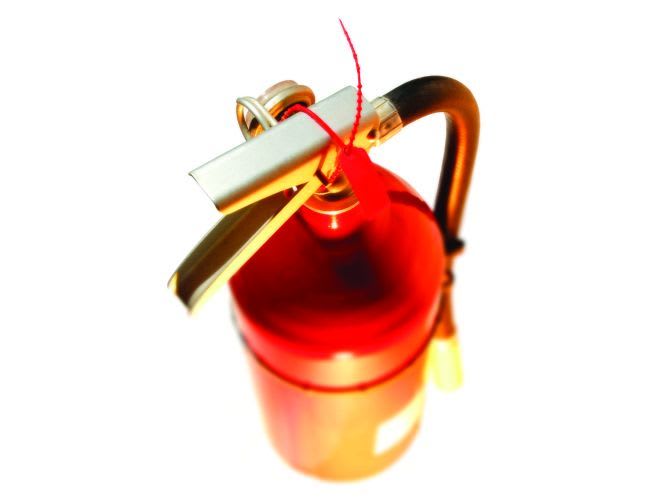
A vehicle fire can start under a variety of circumstances, including abrasion against a hydraulic line that results in a hydraulic fluid leak or a short in the electrical cables.
Among the benefits of installing fire suppression systems on school buses is the potential for reducing vehicle insurance rates and premiums, preventing the total loss of the vehicle and reducing damage to equipment, and most importantly, preventing injury to the bus driver and passengers.
"You get less than five minutes to completely evacuate a vehicle. In fact, sometimes in only a couple minutes, the smoke is too intense and the fumes too bad to survive," says Joey Peoples, manager of Kidde's commercial ground vehicle group. "Yes, there are a lot of children on a school bus, but by far, the big risk is if you have a fire with handicapped people on board — the amount of time it takes to get them off the vehicle is much greater than it is for those who have better mobility."
School bus fleet operators are sometimes resistant to installing automatic fire suppression systems on their vehicles, Jomarr Products Inc. Vice President Mark Perrella says. "But when you're purchasing a new school bus with a base cost between $75,000 to $100,000, the cost of an automatic fire suppression system is relatively insignificant," he says. "Considering the potential consequences of a school bus fire, the installation of an automatic fire suppression system is not a luxury item or an unnecessary, frivolous expense. It is a very important safety feature."
Amerex Corp.
[IMAGE]553[/IMAGE]Amerex's Phil Anania, vice president, vehicle system sales, says that with many systems on the bus market currently, one of the company's greatest strengths is in its experience and its service network. "We have distributors nationwide buying our systems and installing in school districts across the country," he says.
Fire detection can be provided by fixed temperature thermostats and linear or Safe-IR detectors. Any combination can be used as necessary. Fire suppression agent is delivered to hazard areas by fixed high-capacity, fast flow, machined brass nozzles.
“It’s fully automatic, so it doesn’t rely on the operator making any kind of a call, whether he or she should push the button,” Anania says. “All the driver has to worry about is getting the students off the bus.”
The vehicle fire suppression system cylinders are constructed of steel and coated with an epoxy primer and a polyurethane top coat for resistance to corrosion. The valve is brass and features a brass gauge guard to protect the pressure gauge in rugged environments. Pressurized cylinders are shipped filled with ABC or Purple K dry chemical, and are available in 13-, 25- and 50-pound sizes. The systems are approved by Factory Mutual, a third party product testing and certification organization.
“We realize that the budget for maintenance comes out of the local school district’s direct budget,” Anania says. “One thing that we’ve learned is that they need to keep the maintenance expense low.”
To that end, Anania says that after the Amerex system discharges during a vehicle fire, the dry chemical in the agent cylinder and the electric actuator must be replaced and the hose delivery system needs to be blown out. “The whole process takes about 45 minutes.”
Fogmaker North America
USSC Group Inc. subsidiary Fogmaker North America’s Fogmaker system extinguishes fires with water mist, making it an environmentally friendly choice and eliminating some of the concerns surrounding clean-up.
Fogmaker’s high-pressure water mist chokes out an engine fire by removing the oxygen, says Ted Dowling, director of commercial sales and business development. “In demonstrations we do for people, we light a fire in an engine simulator booth and then we spray diesel in the booth and get the temperature up to about 1,500 degrees Fahrenheit. Then we put the fire out,” he explains.
When the Fogmaker system goes off, it sprays water mist for 70 seconds to cool the engine compartment and prevent the fire from reigniting, an additional 35 to 40 seconds longer than other systems, Dowling says.
“There’s minimal damage, because we’re taking away the heat that would damage the engine,” he points out. As a result, determining the ignition point and cause of the fire is easier.
In addition, fans in the engine compartment are placed to direct the water spray, especially because of the air flow through the area. After being discharged, the system can be recharged by mechanics in the bus garage, rather than a local fire extinguisher shop, meaning a minimal refill cost.
Fogmaker provides the recharging apparatus and technician training on the system. “They would recharge it in the vehicle — they would have to blow out the lines, but that’s it,” Dowling says.
The system’s fire detection components don’t require any power, and the fire suppression system can function in any orientation, Dowling says. “If the bus was on its side or upside down, our system would still work,” he says.
Because Fogmaker uses water, there is no hazardous material disposal required after the system is discharged.
“It’s a patented technology we brought over from Europe,” Dowling says. The systems are used in mining and military applications, with growing use seen in the renewable energy sector in wind farms, where the hydraulic-controlled turbines require fire protection.
[PAGEBREAK]
Jomarr Products Inc.
Jomarr Products Inc. is primarily an OEM supplier of vehicle fire suppression systems, Perrella says, with systems custom designed for the specific vehicle application. Jomarr fire systems are not “off the shelf” or “one size fits all,” Perrella points out. “Typically, we require a description of the vehicle along with a dimensional drawing of the vehicle hazard areas to be protected before we design a fire suppression system,” he explains. “We do not manufacture portable extinguishers or kitchen systems, etc. We specialize in and manufacture only vehicle fire suppression systems.”
The company’s systems feature clean agent fire suppressants that dissipate after discharge, eliminating clean-up. Clean agents do not harm the engine, wiring or sensitive electronic equipment, and required regular maintenance is minimal, Perrella says.
In addition to Jomarr’s OEM systems, the company also offers an inexpensive, disposable aftermarket product called the FireStick. Developed initially for military equipment and vehicle applications, the FireStick uses a combination clean agent and sodium bicarbonate fire suppressant and is easily installed, Perrella says.
The FireStick, which is compact and self-contained, discharges automatically from a self-activating, temperature-sensitive delivery tube and requires no mechanical or electrical power. The FireStick is ideal for areas such as vehicle battery boxes, electrical cabinets, cargo areas and generator areas. It is available in various sizes, from 8 inches in length, which provides 15 cubic feet of coverage, to 32 inches in length, providing 130 cubic feet of coverage.
Kidde Technologies Inc.
[IMAGE]554[/IMAGE]Kidde Technologies Inc. prides itself on providing support to customers. “Kidde’s been in business for about 100 years, so our background in fire protection is very in-depth,” Kidde’s Peoples says. “We work closely with the customers to determine what their needs are and what’s the best way to attack the type of fires that they’ve had, whether electrical or fuel related.”
Peoples says causes of fires on school buses tend to be related to the cables going from the battery to the alternator and starter. “If you don’t have your detection systems either attached to those cables or in close proximity, then your detection time can be delayed considerably.”
Installing the system correctly from day one is important, Peoples says, to reduce the amount of maintenance required over the life of the system. “We try to eliminate as much maintenance as we can, but some of it is driven by regulations, like from the DOT [U.S. Department of Transportation],” he says. “We don’t have a lot of components. The simpler it is, the better it works and the easier it is to maintain. After you have a fire and determine what the cause was, depending on the amount of damage the fire may have caused to any of the components, you would just put in a new extinguisher.”
The company offers free onsite training for the life of the vehicle equipped with its products. In addition, Kidde sends an engineer to certify the installation of its fire suppression systems on a group of vehicles. “That gives the customer something to fall back on, that a factory representative has gone in and said, ‘Yes, it was installed correctly to do the job as it was intended.’”
The Kidde automatic fire system is compatible with diesel, CNG, LNG, LPG, hybrid-electric, hydrogen, methanol and gasoline-powered vehicles. The system can be used on vehicles with 12- or 24-volt electrical systems and is highly resistant to shock, vibration and environmental extremes.
The system features supervised circuitry, adjustable engine shutdown and extinguisher discharge time delays, manual discharge and driver-enabled override. Major components include control panels, high-speed infrared, linear thermal and spot thermal fire detection, and dry chemical extinguishers. In addition, Kidde manufactures a combustible gas sensor that can be added to the system to continuously monitor for gas leaks.
More Safety
Illegal School Bus Passing Drops 24% in New York Districts
With fewer than 5% of citations involving repeat offenders, Westchester County officials said enforcement, education, and community partnerships are helping change driver behavior.
Read More →
School's Back. Here's What Happened to Traffic, Speeding & Distraction
What happens to traffic when school resumes? New data analysis examines changes in distracted driving, congestion, and speeding around schools.
Read More →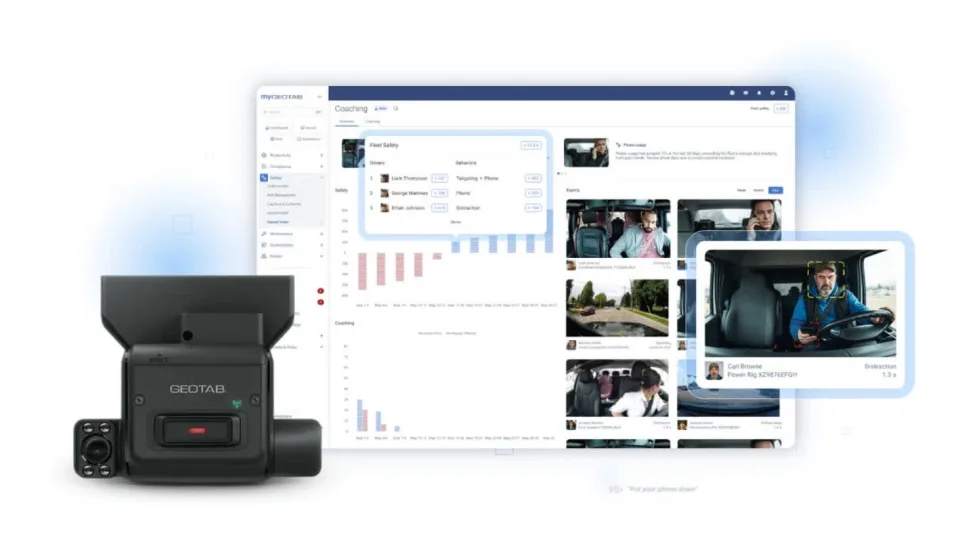
Geotab Expands Fleet Safety Tools With Video Coaching, Risk Insights
New safety and video capabilities aim to help fleet managers assess risk, support drivers, and take targeted action through video coaching, red-light violation detection, and more.
Read More →

How to Build a Better School Bus Driver Training Program
Is it time to strengthen your driver training? Here’s how to pick the right talent and improve recruitment, retention, and safety. This video is brought to you by IC Bus.
Read More →
Recent School Bus Accidents Leave 2 Dead, 2 Injured
Four school bus crashes in Florida, Illinois, and Georgia highlight risks in transportation lots, at bus stops, and during student loading and unloading.
Read More →
When Every Second Matters, Clarity Keeps Routes Moving
From routine delays to urgent incidents, strong communication practices help drivers, dispatchers, schools, and families respond with confidence.
Read More →
What Happens When a School Bus Catches Fire — and What Can Help
School bus fires are rare but can be devastating. Learn how advances in fire suppression and asset protection help fleets detect fires earlier, reduce damage, and improve safety.
Read More →
Geotab Launches Tool to Help Fleets Investigate Road Incidents
Geotab Investigations combines telematics data, video, documents, and other evidence to help fleets reconstruct incidents, resolve claims, and determine what happened.
Read More →
Texas Sixth Grader Wins 2026 National School Bus Safety Poster Contest
Sai Darshana Yekolu of Moseley Middle School in Prosper, Texas, was named the newest winner for her artwork, bringing the theme of “Safe Rides, Everyday Heroes” to life.
Read More →
Doing More With Less: How Transportation Directors Can Prioritize Safety Amid Budget Uncertainty
With diesel prices soaring and nearly one-third of transportation directors expecting budget cuts, maintaining student safety has never been more challenging. Download this guide to learn how leading districts are prioritizing risk, funding critical safety technology, and building stronger budget cases with data.
Read More →