




Exhaust Studies:Just Hot Air?
In the span of a week, the results of two major studies on school bus emissions were released and drew national attention. Both the Union of Concerned...

In the span of a week, the results of two major studies on school bus emissions were released and drew national attention. Both the Union of Concerned Scientists’ (UCS) “Pollution Report Card” and Yale professor Dr. James Wargo’s report challenged the safety of school bus fumes. Charlie Gauthier, executive director of the National Association of State Directors of Pupil Transportation Services (NASDPTS), has become a central figure in this debate after appearing on ABC’s “Good Morning America” to talk about the studies. He discussed with SBF PLUS the position of NASDPTS on this issue. SBF Plus: What is your take on these two recent emissions studies? Gauthier: In the last year, we’ve had four studies published on diesel school buses and the potential health effects on children. We had the one by the NRDC (Natural Resources Defense Council) that got this whole thing going. A couple of months later, a new one was done in Fairfax County, Va. Their conclusion was that diesel-powered school buses do not pose a health risk to students riding the bus. Then we had Dr. Wargo’s study. He concluded that in some instances children were exposed to five to 10 times dirtier air on the school bus. So after the UCS study, we still have people saying there is and people saying there isn’t a problem. I think we need to have a peer review by scientists who know what they are looking at and understand the data to find out if there really is a problem with diesel emissions. SBF Plus: How are the state directors reacting to these studies? Gauthier: Everybody feels the same way about it. You really don’t know who or what to believe. These studies were conducted by qualified organizations and individuals who seemed to follow approved or appropriate protocols. Yet, they each came up with very different conclusions. SBF Plus: What kinds of questions are the media asking you about this? Gauthier: They are all asking the same thing, which is: What should parents be thinking when they hear these reports? My standard response to them is that we have conflicting information from environmental health people. Common sense and good science says we have to figure out who’s right and who’s wrong before we go out and start scaring the public. SBF Plus: Is the media coverage fair and balanced on each side? Gauthier: I don’t know. I don’t think those are the right questions to ask right now. I think it’s good that the media is even asking us and airing our side. I’m not faulting them for ignoring us. Ideally, you would like more time to explain a bit more about your views, but at least our number one concern has been introduced and is sufficient to raise doubt about which side is correct. SBF Plus: Will this lead to major changes in school transportation? Gauthier: I really don’t know for sure at this time. For more information, go to http://www.nasdpts.org.
More Alternative Fuels
Bipartisan Bill Seeks to Extend Clean School Bus Program Through 2031
The proposed legislation would renew federal support for cleaner school buses as districts navigate funding uncertainty, rising fuel and infrastructure costs, and fleet replacement needs.
Read More →
Alt-Fuel Moves: Electric Bus Rollouts, Bidirectional Charging & Propane Growth
See which fleets are adding electric and propane school buses as districts and operators invest in charging infrastructure, bidirectional technology, and alternative-fuel expansion.
Read More →
Nobody Told Diesel Prices They Were Supposed to Come Down
With diesel prices surging, school bus fleets have new reason to stress-test fuel costs, consider diversification, and calculate what each route really costs to operate.
Read More →
Why Gasoline School Buses Are Making a Comeback
Gasoline is gaining ground in full-size school buses. See how today’s options stack up against diesel on cost, maintenance, emissions, performance, and more.
Read More →
EPA Opens $180M DERA Funding Round for Diesel Upgrades
The 2026 Diesel Emissions Reduction Act program seeks applications from eligible organizations to accelerate the retirement of legacy diesel vehicles.
Read More →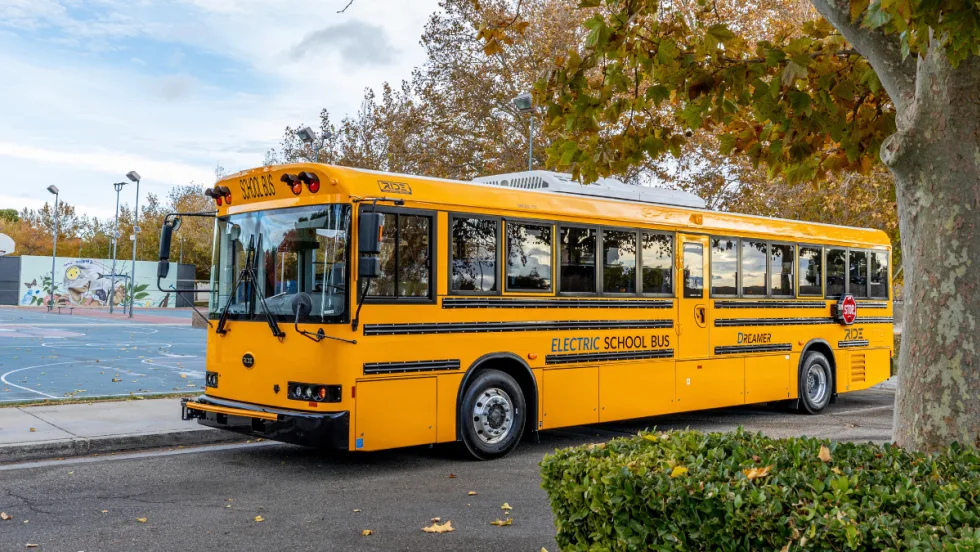
The Secret Life of an Electric School Bus Battery
Batteries change throughout years of daily routes, but degradation doesn’t necessarily mean the end. Here’s what operators should know about performance, safety, and second life.
Read More →
CALSTART and Forth Combine to Form Catalyst Mobility
The new name represents a renewed vision for the nonprofit focused on advancing clean, equitable, and affordable transportation solutions that move people and goods.
Read More →
Alt-Fuel Moves: New Buses, Charging Hubs & Real-World EV Testing
Propane and electric school bus deployments continue to grow as districts add new vehicles, expand charging infrastructure, and gather more real-world operating data.
Read More →
Fewer Electric School Bus Models Reshape the U.S. Market
WRI’s latest buyer’s guide points to a consolidating electric school bus market, but fewer options may reflect a maturing industry rather than fewer meaningful choices for school bus operators.
Read More →
The Fuel Budget You Can Actually Predict: How Propane Autogas Keeps Money in the Classroom
Learn how propane autogas helps school districts manage fuel costs with predictable pricing, lower maintenance, and reduced emissions from former transportation director Joel Stutheit.
Read More →