





EV Tech Company, Blue Bird Partner on Electric School Bus Leasing Model
Electric School Bus Roundtable: Trevor Rudderham (Blue Bird)
The senior vice president of product planning and electrification says his company continually improves processes to gain efficiency.
October 27, 2021

5 min to read
From building new factories to pushing to reclaim momentum lost during the pandemic shutdown of 2020, electric school bus manufacturers are rolling forward with ambitions to make their vehicles more accessible and affordable.
Those ambitions could get a boost thanks to the federal government in August passing bipartisan infrastructure legislation, which includes billions of dollars for electric and low-emission school buses.
School Bus Fleet asked several manufacturers to give their forecasts for the coming year as we emerge from the COVID-19 pandemic:
Trevor Rudderham (Blue Bird)
SBF: How would you assess school bus industry market conditions for 2022?
Trevor Rudderham: We believe that 2022 will see the school bus industry continue to recover since the lows seen in 2020 due to the pandemic. While orders were up in 2021, global supply chains shortages stymied a full recovery. As the global situation improves, we expect the market to bounce back to pre-pandemic levels.
SBF: What kind of feedback has your company received at demonstrations/deployments of its electric bus?
Rudderham: Customer feedback has been very positive and we’re now seeing several repeat purchases of our EV’s. Customers appreciate that we offer EV products in Type A, Type C, and Type D, which is one reason we are the market leader with over 800 EV’s sold since introduction and 450 deployed. The desire to electrify is very high and is not just focused on the ‘traditional’ green markets like California – it is nationwide. We now have sales in 25 states and 4 Canadian provinces and we’re seeing growing interest in new markets every day.
SBF: Since August, the U.S. Senate is working on the bipartisan Infrastructure Investment and Jobs Act, which includes $5 billion for electric and low-emissions school buses. How do you think the increase in funding will impact the transition to zero-emission/electric buses for school transportation?
Rudderham: The federal funding available for electric school buses will obviously lead to greater adoption across America. We are optimistic that this will also serve as a catalyst to continue the transition to electrification beyond the initial funding. Another great aspect of this is that the opportunity will be highly inclusive and allow less well funded school districts to start the transition to electric.
SBF: With more funding available comes an increase in demand. How is your company working to meet the increasing demand for zero-emissions/electric buses?
Rudderham: We are already tooling up to substantially increase EV manufacturing capacity at our Fort Valley, Ga., plant and are continually improving our processes in order to make the assembly more efficient. We are also investing in the infrastructure requirements to meet the charging and testing needs of a much higher production rate. Included in this will V2G capability so we can contribute to grid resilience.
SBF: What lasting impacts do you think the COVID-19 pandemic will have on the manufacturing side of school transportation? Particularly for electric school buses?
Rudderham: One of the first areas for any EV manufacturer to had to immediately pivot to was the diversification of the supply chain for parts. Due to shortages all across the world, well established intermediaries struggled to keep up with demand and new avenues had to be explored. Some vendor/supplier partners have gone out of business, thereby causing reevaluation on what parts were available for manufacturing, without compromising quality. The COVID-19 pandemic has inflicted some lasting effects that haven’t just affected us, but the entire EV bus industry.
SBF: How is your company addressing performance concerns, such as surmounting hilly terrain and coping with cold weather impacts on batteries and regenerative braking?
Rudderham: We have already deployed hundreds of EV buses across the country and they have been performing very well in cold climates and hot climates as well as mountainous terrain in Colorado and flat terrain in the mid-West. We have been making numerous improvements to further refine the product as a result of the feedback we have received. This is more about an education process to reassure potential customers that an EV can not only match the performance of traditional buses but in many cases significantly exceed those expectations.
SBF: What other kinds of changes or new developments do you see in the coming years for the industry?
Rudderham: We believe that the transition to electrification will continue and, as a result, schools will be looking for additional ways to utilize their buses. We have intentionally standardized vehicle-to-grid functionality so that our customers can use their buses for revenue generation, offsetting energy usage behind the meter, or for supply of power during disaster response. Also, fast charging and increased battery capacity will allow the buses to be used on longer routes and even field trips.
SBF: Are there any new developments at your company that you would like to share?
Rudderham: The Blue Bird team is preparing today for tomorrow, every day. From the new talent we hire to the goals that we set, our focus is to create a safe and quality product, no matter the size or drivetrain of the bus. We are always investigating ways to improve the efficiency and reduce the cost of all of our products, but especially the electric bus. Technology is rapidly evolving in the EV industry and we want to remain at the forefront of it.
Subscribe to Our Newsletter
More Alternative Fuels

CALSTART and Forth Combine to Form Catalyst Mobility
The new name represents a renewed vision for the nonprofit focused on advancing clean, equitable, and affordable transportation solutions that move people and goods.
Read More →
Alt-Fuel Moves: New Buses, Charging Hubs & Real-World EV Testing
Propane and electric school bus deployments continue to grow as districts add new vehicles, expand charging infrastructure, and gather more real-world operating data.
Read More →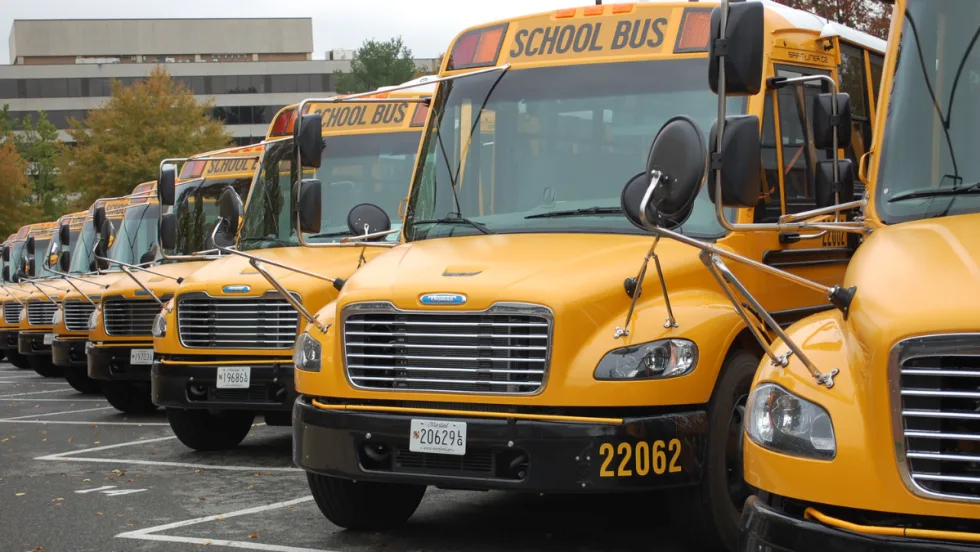
Fewer Electric School Bus Models Reshape the U.S. Market
WRI’s latest buyer’s guide points to a consolidating electric school bus market, but fewer options may reflect a maturing industry rather than fewer meaningful choices for school bus operators.
Read More →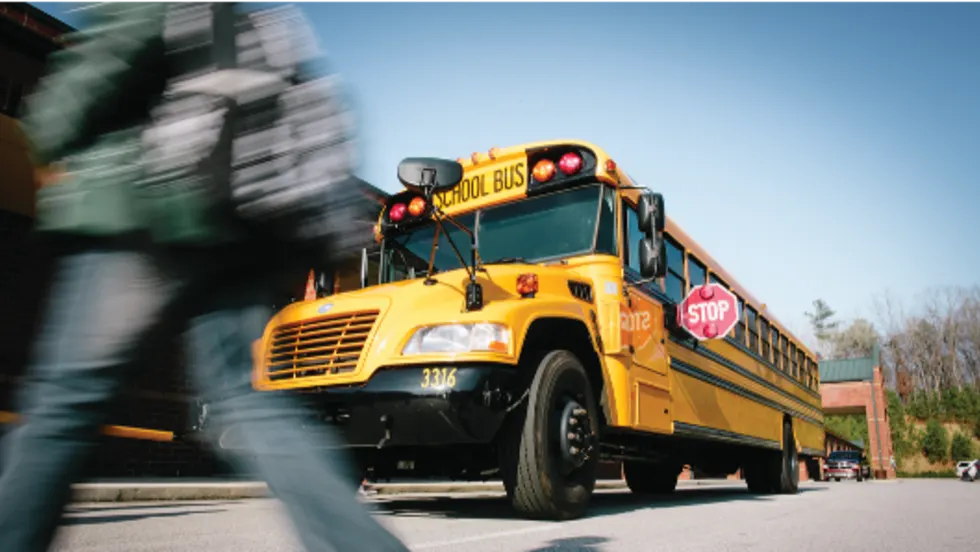
The Fuel Budget You Can Actually Predict: How Propane Autogas Keeps Money in the Classroom
Learn how propane autogas helps school districts manage fuel costs with predictable pricing, lower maintenance, and reduced emissions from former transportation director Joel Stutheit.
Read More →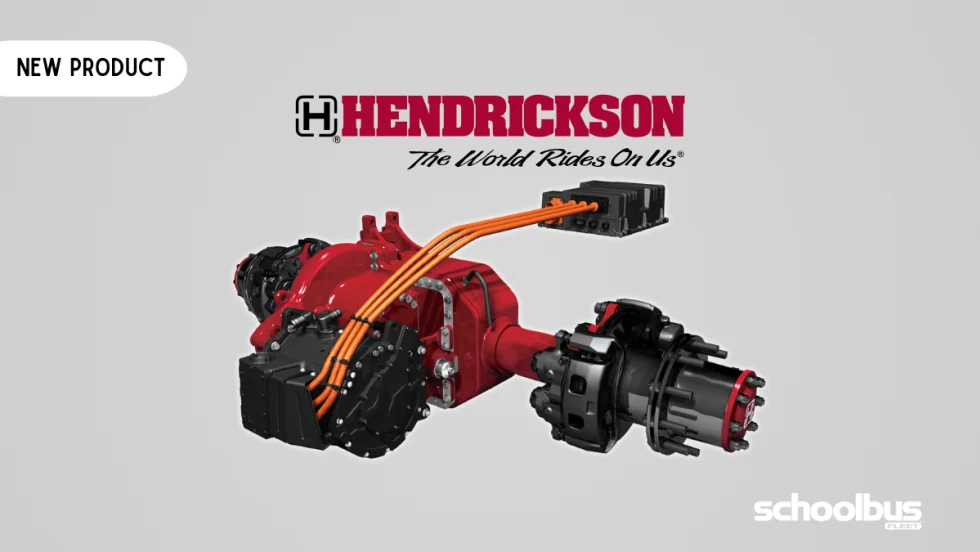
Hendrickson, Driventic Introduce New Electric Powertrain for School Buses
ELECTRAAX, the electrified, lightweight drive axle offers integrated ePowertrain efficiency and modular flexibility for Class 6–7 school bus use.
Read More →
The Mobility House Joins PowerFlex in Fleet Electrification Deal
The acquisition combines intelligent charging software, bidirectional charging expertise, and fleet electrification services to support the growing adoption of electric school buses across North America.
Read More →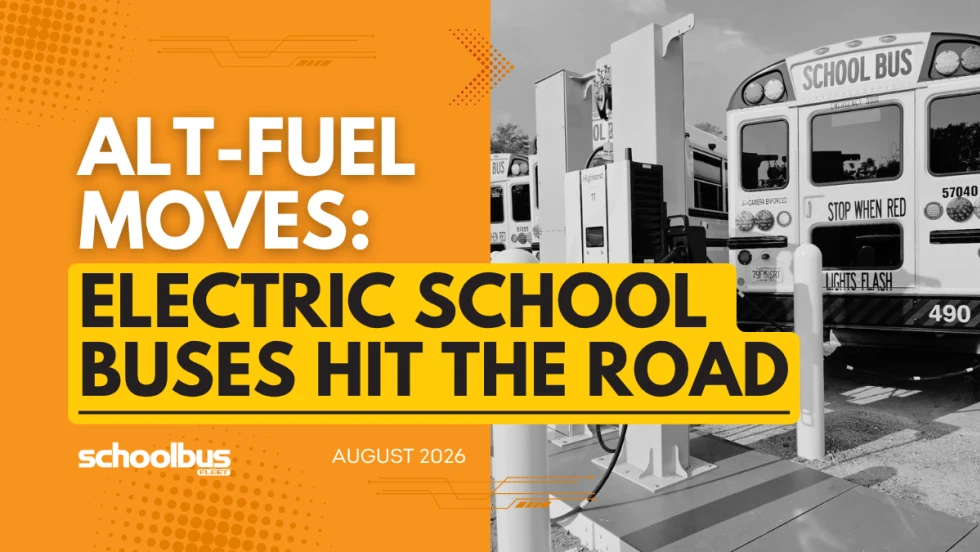
Alt-Fuel Moves: Electric School Bus Investments Hit the Road
See which districts across the U.S. are putting electric school buses into service, expanding charging infrastructure, and planning the next phase of fleet electrification.
Read More →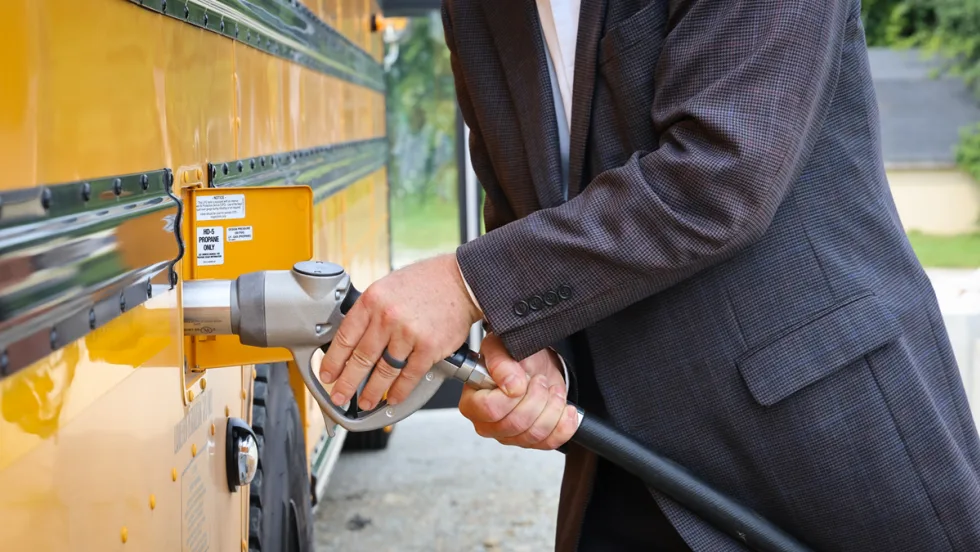
With Fuel Volatility Ahead, School Districts Turn to Propane
While diesel prices peaked above $5 this spring, districts with propane autogas-powered fleets paid under $2 per gallon, according to PERC.
Read More →
EPA Unveils Proposed Changes to 2027 Heavy-Duty Engine Rules
The federal agency has proposed changes to next year’s targets that would eliminate DEF derates, ease warranty requirements, and retain current NOx emissions standards.
Read More →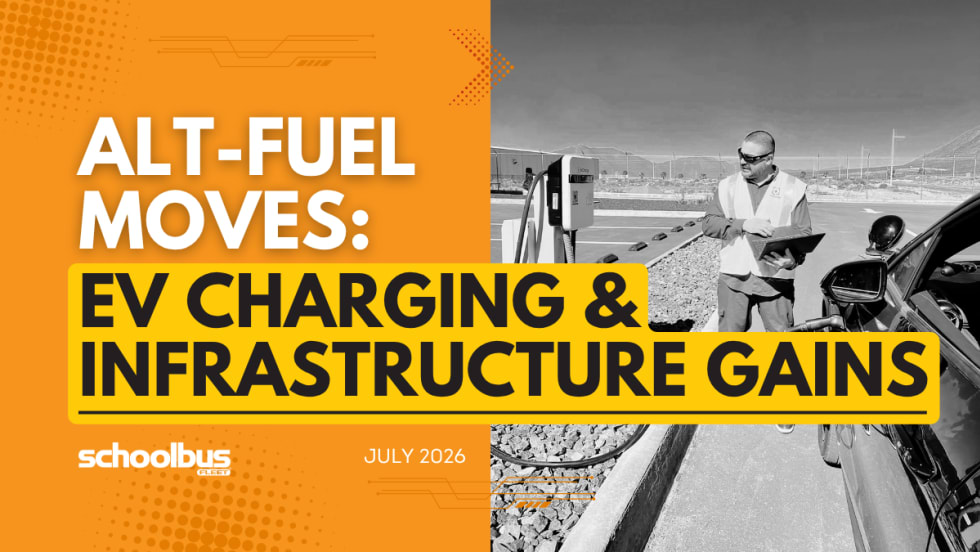
Alt-Fuel Moves: EV Charging & Infrastructure Projects Gain Momentum
The latest developments include new funding, charging infrastructure, utility investments, and fleet technologies designed to support the transition to electric school buses nationwide.
Read More →