




Early Buzz on High-Tech Engines Is Positive
The shape of things to come has already arrived. It's a box, more or less, and it contains enough computer wizardry to monitor a wide range of engine ...
The shape of things to come has already arrived. It's a box, more or less, and it contains enough computer wizardry to monitor a wide range of engine functions, diagnose problems, communicate fault codes to the operator and, if necessary, protect the system by automatically powering down. This clever box, called the electronic control module (ECM), is featured in new mid-range engines for the school bus market. These electronic engines are the byproduct of the Environmental Protection Agency's continuing mission to reduce diesel emissions. The latest set of standards took effect Jan. 1, meaning that all new mid-range engines will have electronic controls. School bus operators who would prefer to order the non-electronic counterparts are out of luck. The electronic engine age has officially begun, with no looking back. Optimism prevalent
Most school bus operators are embracing this leap in technology. Some have had a head start, putting electronic engines into operation as soon as they became available in the past few years. Others have delayed as long as possible the move to the high-tech motors and are reserving judgment until they've tested the new engines for performance and ease of maintenance. "The perception is that we're going to see significant gains in fuel economy and performance," says Rick Ring, transportation director at St. Vrain Valley School District in Longmont, Colo. The district's 86-bus fleet is just beginning its move into electronic engines. So far, it's received three - two T 444Es and one DT 466E - from Navistar International in Chicago. Ring says he's seen quicker acceleration and slightly improved fuel mileage. Less black smoke is what transportation managers at Los Angeles Unified School District (LAUSD) expect to see. "It's hard to get an electronic engine to smoke, period," says Larry Turgeon, LAUSD's automotive maintenance specialist. That's a comforting thought for a school district located in one of the nation's smoggiest cities. "They don't smoke, so you don't have the AQMD (Air Quality Management District) and the public getting mad at you," he says. "Plus, black smoke is unburned fuel, so we save money by getting better fuel economy." Binford Sloan, transportation director at Pitt County Schools in Greenville, N.C., expects the new crop of electronic engines to "make everyone's life a little easier." He believes the engines will last longer because of reduced wear and tear and earlier recognition of problems. Diagnostics simplified
"The way diagnostics are treated today are much different from the way they were handled yesterday," says Bob Carso, communications manager for Navistar's engine division. With the handheld service tool, a diagnostic process that used to take hours - or days - can now be performed in minutes, without turning a wrench or applying a pressure gauge. Pitt County recently received a dozen buses with electronic engines, a combination of 3126s manufactured by Caterpillar Engine Co. in Mossville, Ill., and Navistar DT 466Es. Another 13 engines are on order, Sloan says. Sloan's main concern is that his technicians become familiar and comfortable with the upkeep of the engines. In-service training will be a priority. "You have to get educated," he says. Customers seeking hands-on training can avail themselves of special manufacturer programs, such as Navistar's mobile training truck. "Basically, it's a self-contained classroom that comes right off the back of a truck," Carso says. "We have a fleet of these trucks around the country that provide service training at dealerships and for major customers." Key functions monitored
The ECM also can be used to monitor and regulate engine functions, such as rpm, fuel delivery, oil pressure and coolant level and temperature. As a driver management tool, the module can be programmed to limit road speed. At Pitt County Schools, bus drivers are not allowed to push their vehicles beyond 45 mph. With the electronic engines, Sloan says he will no longer have to install mechanical governors. This will save time and money. "If you can think of something that has to have a control based on these inputs, then a software program can be written," says Carso. The engine's computer will also record performance data such as sudden decelerations, idling time and fuel economy. This information is linked to the ECM's real-time clock and provides a detailed history of each outing. Using an industry-standard tool called a Prolink 9000, operators can then download this information and generate reports. The data can be used to review a driver's on-the-road habits, such as excessive speed. "If you suspect that a driver has been cowboying the equipment, you can go in and check the speed and rpm," says Jay Adams, vehicle maintenance supervisor at Anchorage (Alaska) School District.
More Maintenance
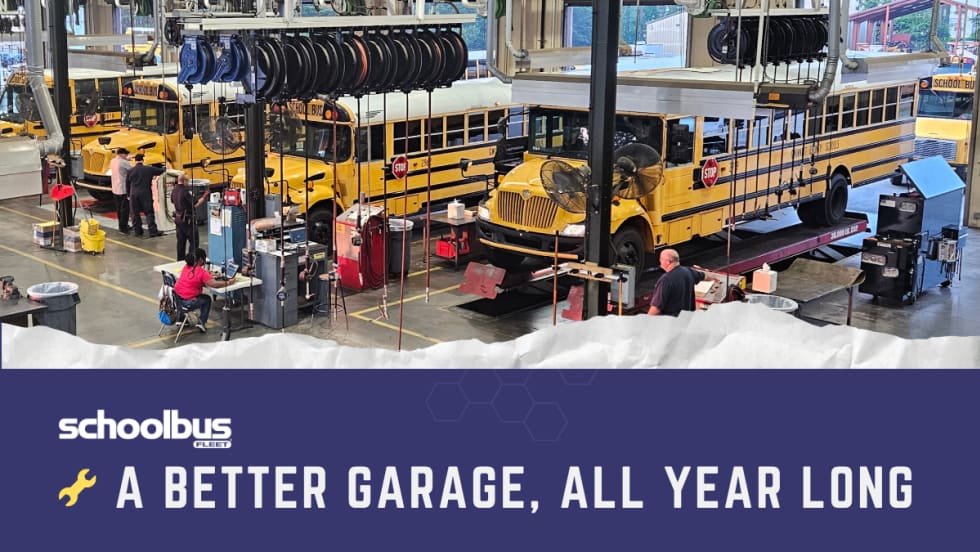
Tips for Ensuring School Bus Garages Are Safe and Warm Year-Round
Cold maintenance bays and rising heating costs? Learn how school bus garages can improve comfort with targeted heating, better airflow, and winter preparation.
Read More →
ASE Highlights School Bus Technician Certification Requirements
ASE is encouraging school bus maintenance professionals to maintain their certifications, highlighting seven specialized tests and five-year renewal requirements.
Read More →
International Adds E-Commerce Capabilities to Fleetrite.com
IC Bus customers can now browse, buy, and track shipments for more than 400,000 aftermarket parts online.
Read More →
The Most Expensive Thing You Do Before Selling a School Bus: Wait
When should you sell an aging school bus? Learn how maintenance, mileage, corrosion, specifications, and timing can affect resale value long before the auction.
Read More →
The Evolution of DEF Header Technology: What School Bus Operations Should Know at Replacement Time
See what school bus fleets should consider when replacing DEF headers to improve reliability, reduce repeat repairs, and control maintenance costs.
Read More →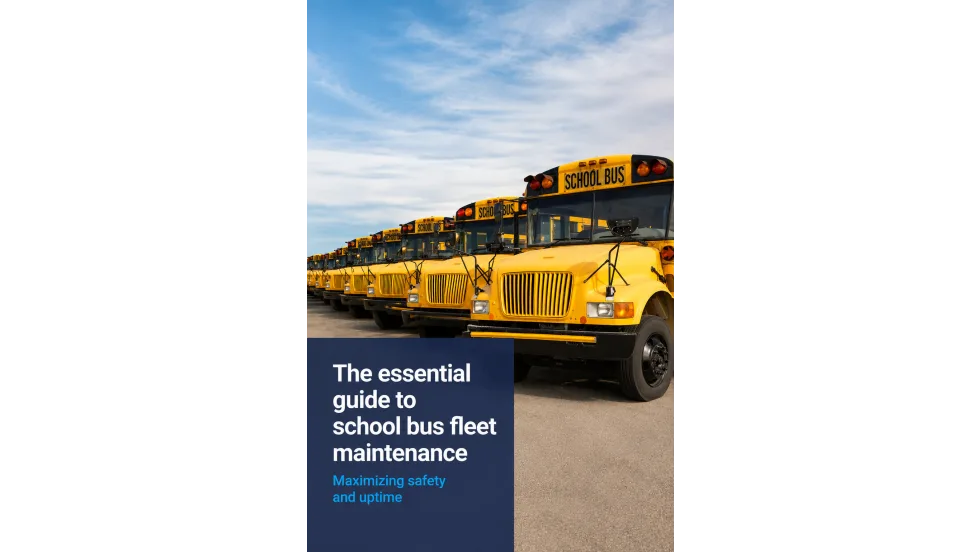
The Essential Guide to School Bus Maintenance and Student Safety
Your district's buses carry students to school every day. This guide shows how predictive maintenance powered by fleet data helps keep buses reliable, drivers accountable and students safer from the first bell to the last stop.
Read More →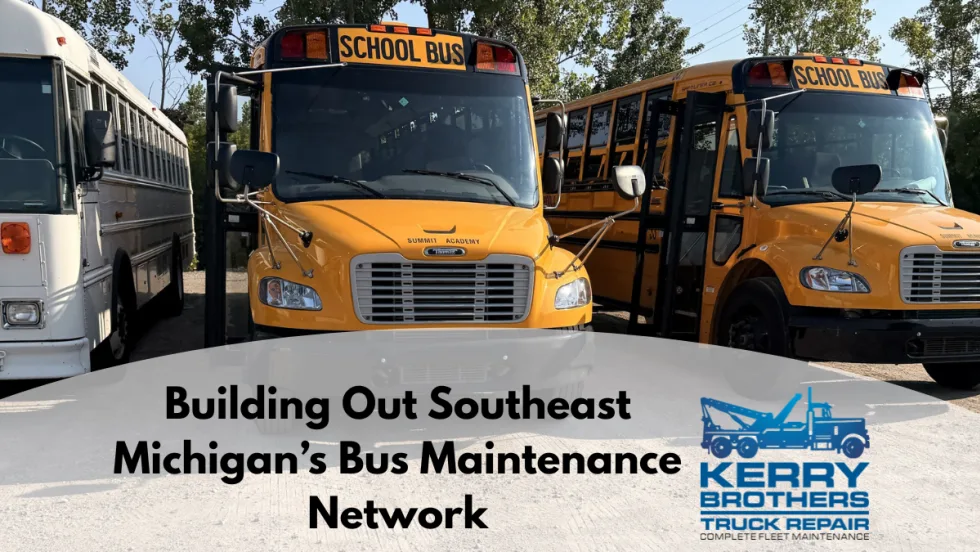
Kerry Brothers Grows Michigan School Bus Repair Network
The acquisition of Downriver Truck and Bus expands Kerry Brothers’ school bus maintenance footprint across southeast Michigan, adding repair capacity, diagnostic resources, and state inspection support.
Read More →
Noregon Introduces CAN Bus Diagnostic Tool, Expands JPRO Features
CAN Mentor and the latest JPRO update aim to simplify vehicle network diagnostics and improve repair efficiency for technicians of all experience levels.
Read More →
Cummins on Smarter, Simpler Engine Innovation
Cummins discusses its first-ever gasoline engine for school buses, EPA 2027, and why bus fleets still want durable, simpler internal combustion options.
Read More →
Report: 72% of Diesel School Buses Now Use Advanced Low-Emission Engines
New data shows advanced low-emission diesel technology continues expanding across school bus fleets, even as electric bus adoption gains momentum.
Read More →