




Create a Safe Traffic Stream around School Sites
The proper application of traffic engineering can help school bus fleets increase their safety margins.
School buses operate in all kinds of traffic - automobile traffic, truck traffic, bicycle traffic and pedestrian traffic. The proper applications of traffic engineering (or to use the more modern name, "transportation engineering") principles and practices can enhance both safety and convenience for all who mingle in the traffic stream, including school bus operators. To design a good school transportation vehicle, the designer must know the attributes of the "parts" of the school bus "system." The parts include not only the physical properties of materials and the mechanical properties of engines, but also the properties of the riders and the driver, such as their dimensions and weight. To design a good traffic system, the designer has to know the attributes of drivers, vehicles and pedestrians - and how a roadway can accommodate these attributes and limitations.
Keys to good layout
One cause of traffic problems found around so many schools is inadequate design - inadequate layout of the site or the streets. Sometimes the location and arrangement of streets and parking areas with respect to surrounding developments and to the school building cause problems.
The following list can be considered by someone planning a new school site or evaluating an existing one.
1. Do people arriving at a school in cars tend to park near the main entrance? If so, a school bus loading area located near the main entrance may be occupied by parked cars. Unless people driving up to the school have an obvious alternative parking area, do not locate the bus loading area near the school's main entrance.
2. Separate the school bus parking/loading areas from the automobile parking areas. This separates both buses and bus riders from automobile traffic.
3. Provide sight distance - advance distance for drivers to see things ahead and avoid crashes. Are parked vehicles blocking drivers' views of children about to enter a crosswalk? Are shrubs or tree limbs blocking views of warning signs? Parking prohibitions and limb trimming may help.
4. Give the driver time and distance to see and react to upcoming decision points, such as turns, crosswalks or any place a driver may have to take some action. Don't surprise a driver. For instance, after turning a corner (whether on a street or in a parking lot), there needs to be some distance for the driver to straighten the vehicle and look ahead before reacting to anything. So don't require yet another turn or locate a crosswalk right after a turn is made.
5. Related to #4, driveways should not be located too close to nearby street intersections. Doing so will create offset or dog-leg intersections with other streets or high-volume driveways. Offset intersections can create erratic traffic patterns and detract from drivers' abilities to look out for pedestrians.
6. Skewed driveway and street intersections (those not at right angles) can cause problems. Intersection angles should be between 75 and 90 degrees.
7. It is often desirable for parking lot exit driveways to have two lanes, one for left-turning vehicles and one for right turners. This helps reduce congestion, because the right-turning cars can proceed while the left turners are waiting for traffic from the right to clear.
8. Lane-use signs and pavement markings specified by the federal Manual on Uniform Traffic Control Devices (MUTCD) should be employed to demark traffic lanes. The examples in the MUTCD represent decades of experience with what works and what doesn't.
9. Signs, utility poles and other appurtenances should not be too close to the edge of the traffic lanes or parking areas. Objects within striking distance of an overhanging bumper will be struck. Even for low-speed situations, the major engineering manuals recommend at least a 1.5- to 2-foot clearance from the face-of-curb top the near edge of any roadside appurtenance. It is not unusual to see sign installation crews place the sign pole behind the curb, but not allow for the width of the sign, so the sign itself protrudes out into the space occupied by vehicles.
10. A school bus is wider and longer than a passenger car, so it requires more room to maneuver. School buses also have much greater offtracking on sharp turns. Lanes and aisles intended for school buses need to be wider so the bus will not sideswipe other vehicles. The designer must check driveways and streets intended for school bus use to make sure that all intersections and curves provide plenty of room for the bus to turn. The designer may even need to make measurements of the turning path taken by school buses and provide a margin in excess of the minimum space needed for school buses. Recently published results of field tests conducted at the University of Arkansas included drawings of the measured turning paths of the largest Type C and D school buses. The researchers observed that the buses rear ends "kick out" past the trace of the wheels during the beginning of a turn.
Reallocating bus space
If the available space for school buses to drive or park in is inadequate and causing problems, school bus operations sometimes can be improved by reallocating the existing space. Two ways to do this are prohibiting parking and converting to one-way operation. Parking prohibitions can eliminate parked cars from along the curb, freeing-up more space for school buses to move or to park. On-street parking prohibitions may be opposed by businesses or residences that rely on curbside parking, but if the business owner or residents feel they have enough off-street parking to satisfy their needs, they may support on-street parking prohibitions as a way to clear up street congestion. Cars parked at inappropriate places within the school's own parking lots and drives can also cause problems. But before you install No Parking signs within parking lots, make sure the local policies and ordinances permit the necessary enforcement, such as ticketing or towing. Whether the parking restrictions are on a public street or in a parking lot, the prohibitions must be frequently enforced to be effective. There will be fewer hard feelings among the driving public if the police can wave away potential parking violators before they exit their cars, rather than ticketing them after they have parked.
The one-way solution
If traffic is currently blocking a relatively narrow street adjacent to a school site, one possible solution is to convert the street to one-way operation. The street may operate as one-way only during the school rush hours, or it may be a one-way street 24 hours a day. One-way operation has both advantages and disadvantages. One-way operations may not be appropriate or feasible under the following circumstances:
The street is a major or through street. In such a situation, conversion to one-way may disrupt area or city-wide traffic patterns, and have an adverse effect on many motorists. On the other hand, if a situation permits the creation of a pair of one-way streets, one in each direction, it may work out.
There is no convenient alternative route. A one-way conversion may require motorists to drive out of their way, or in extreme cases, may make it impossible to drive to certain sites because there is no other route. The traffic problems can be addressed by other means. However, it may be feasible to implement one-way operations when the following conditions exist:
Owners of residences and businesses along the street are inconvenienced by the school traffic, and an overwhelming majority has expressed a preference for a conversion to one-way. A city may wish to obtain signatures from owners along the street, expressing support for one-way conversion.
The section of street to be converted is relatively short, and much of the traffic is school-related.
There are easily available alternate streets to use in lieu of the one-way street.
The street to be converted has few or no intersecting streets and driveways, so there is a reduced possibility that a driver will pull out into the one-way street going the wrong direction. You may find that converting driveways inside the school site to one-way operation will also help clear up congestion and eliminate safety problems. Whether on-street or within the site, check to see if the one-way pattern will orient school buses or other vehicles so children exiting the right side of the vehicle have to cross more traffic streams than before; sometimes, this extra crossing distance may be objectionable. When determining where to install signs, check to see that no matter which route incoming traffic comes from, drivers can see either a One Way or a Do Not Enter sign.
Safety is in the details
One experience we can appropriate from the safety experts is that it takes attention to small and subtle details to eliminate hazards. A ceiling-high stack of unsteady watermelons at the grocery store may attract attention, but over time it's more likely that the small bit of fruit peel on the floor will be what knocks more people off their feet. It's hard to get someone to pay attention to the banana peel on the floor when everyone is pointing up to the watermelon pile. Hopefully, you can find a moment when there are no big stacks of watermelons, so some attention can be given to these "details" that can improve your school bus operation.
J.L. Gattis is associate professor of civil engineering at the University of Arkansas in Fayatteville, Ark.
More Safety
How To Build a More Secure School Bus Yard During and After Hours
As thefts and overnight security threats continue, school transportation leaders are combining stronger operational practices with AI-enabled surveillance to better protect buses, facilities, and staff.
Read More →
FMCSA Names New Chief Safety Officer: What School Bus Operators Should Know
Steve Dowling is set to lead the federal agency's efforts to advance commercial motor vehicle safety and reduce crashes, fatalities, and injuries on the nation's roadways.
Read More →
New Study Finds School Zone Speed Safety Cameras Cut Speeding Violations 97%
A Florida university's research demonstrates that Verra Mobility's automated enforcement changes driver behavior and significantly improves school zone safety.
Read More →
What Changed in DOT’s New National Roadway Safety Strategy?
The federal agency's new plan shifts its focus to safer people, roads and vehicles, with a new three-pronged approach instead of five. One outlined action even addresses a key industry concern around illegal school bus passing.
Read More →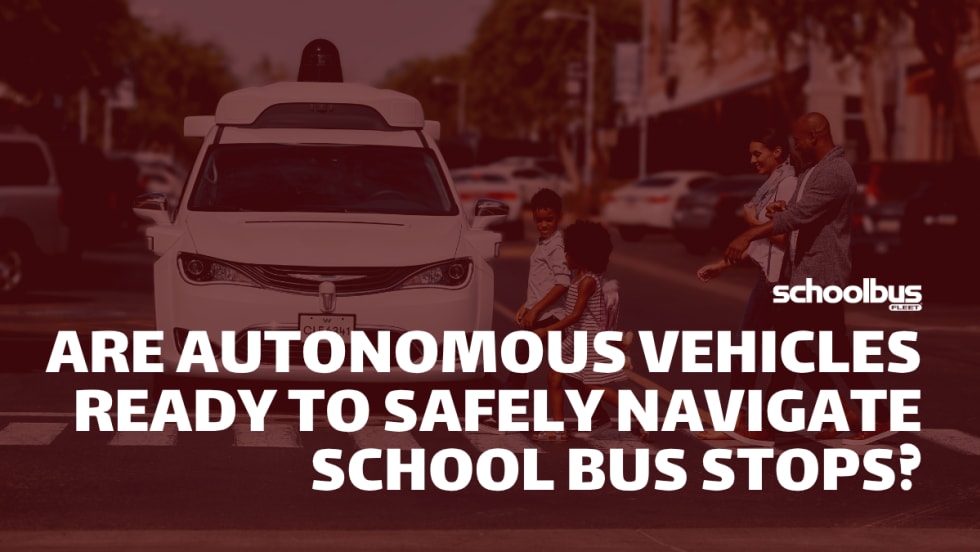
Are Autonomous Vehicles Ready to Safely Navigate School Bus Stops?
NHTSA is accelerating autonomous vehicle deployment through new safety standards and commercial approvals. See why school transportation leaders are watching.
Read More →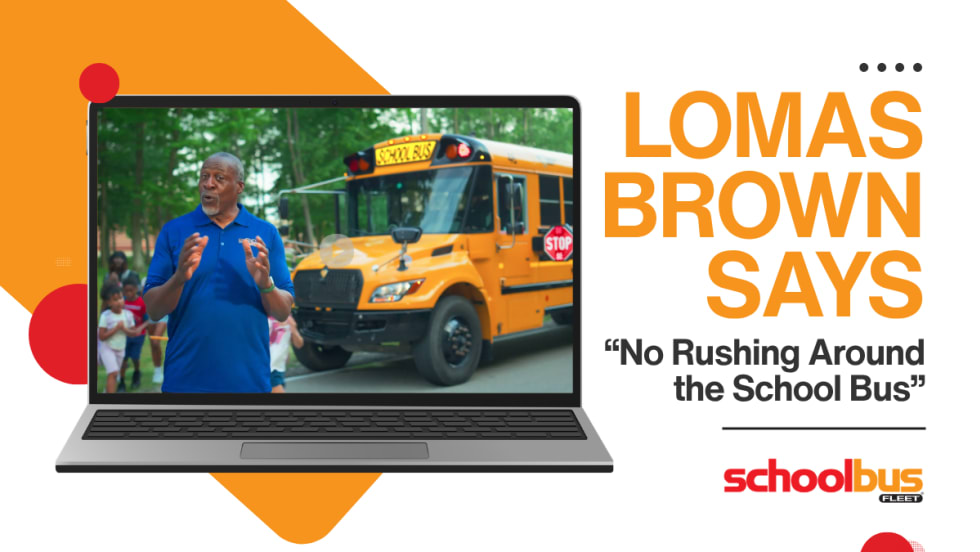
NFL Star Lomas Brown Kicks Off New Illegal School Bus Passing PSA
Just in time for the back-to-school season, the former Detroit Lions offensive tackle took time to record a video encouraging motorists to slow down around school buses.
Read More →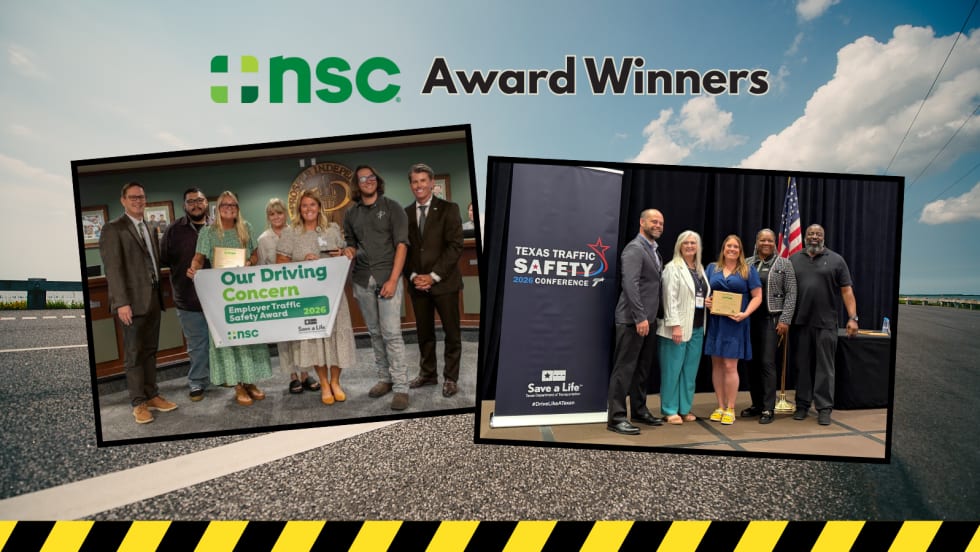
How Two Texas Districts Built Award-Winning Safety Programs
Learn how Prosper ISD and Rockwall ISD earned National Safety Council honors through hands-on training, safety culture, and strategies that reduced transportation incidents.
Read More →
NHTSA Releases 10-Year Review of Fatal School Bus Crashes
The latest federal analysis reinforces the safety of school buses while identifying where school-age pedestrians and other motorists remain most at risk.
Read More →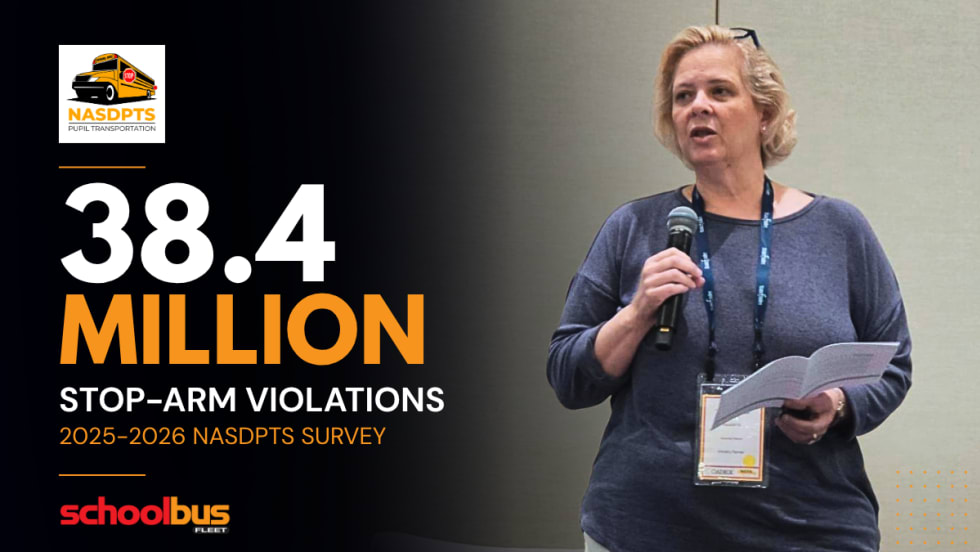
2026 NASDPTS Survey: Data Shows Further Reduction of Illegal Passing
New data is in! School bus stop-arm passings are down to 38.4 million violations per year, about a 2.3% decrease from last school year — but passings on the right side of the bus are higher than ever.
Read More →
Another School Bus Fatality Reported in Monsey, New York
A 7-year-old girl died after being struck by a school bus in Rockland County, New York while crossing the street. Here's what we know.
Read More →