




Confronting the Top 10 Safety Concerns
Although stop-arm violations are a top safety concern for school bus operations across the nation, other transportation-related issues can be just as vexing. The following list identifies the most common challenges pupil transporters face and effective ways of dealing with them.
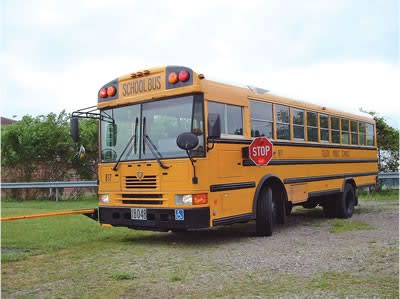
You are not alone. Your colleagues across the country are dealing with some of the same issues you deal with on a daily, weekly or monthly basis. Whether it’s the unruly behavior of middle school students or a driver with a substance-abuse problem, faulty equipment or a challenging school site issue, many of your peers experience the same challenges.
Keeping the lines of communication open — meaning sharing ideas to tackle these common and sometimes recurring problems — is the best policy. Furthermore, knowing exactly what to do before a problem occurs can mean the difference between futile panic or a tactfully approached solution.
In an online survey, we asked pupil transporters to identify their top safety concerns. The following list presents those concerns in the order that the 91 respondents ranked them. Additionally, we followed up with several respondents to uncover how they take on these challenges.
Share these ideas with your staff and neighboring districts or contractors. Working together to solve common problems is the best way to ensure that children stay safe on the way to and from school each day.
1. Stop-arm violations
As one of the leading causes of danger-zone fatalities, stop-arm violations show no signs of slowing down.
Drivers and attendants have to be more vigilant than ever when unloading students, especially near highways with shoulders where cars may pass on the right side of the school bus.
Many operations have involved law enforcement in an effort to curtail the problem. Ordinances have been passed through which drivers can receive hefty fines for first and repeat offenses, but even these have barely entered the radar for some commuters who are in a rush to get where they’re going. It’s all very frustrating to say the least.
David Stoeger, transportation specialist at Wyoming Child and Family Development in Guernsey, Wyo., has mixed feelings about the response from authorities near his operation. Drivers are instructed to complete a form whenever a violation occurs. The form, complete with the violator’s license plate number, is then turned over to police.
“Law enforcement is supposed to follow up, but they don’t,” Stoeger says. “It isn’t a real priority.” Stoeger has called for weeks trying to get results, but it has been to no avail. One officer told him the offender couldn’t be found, but Stoeger’s driver passes near the offender’s home and sees him during her route.
Stoeger encourages his drivers to not lose hope and to continue doing their jobs. He calls the police weekly to check on the status of particular cases, engages the city attorney occasionally about the problem and has considered advances in technology, such as stop-arm cameras to help identify offenders.
2. Student behavior
Middle school students are the worst when it comes to poor student behavior, says Nancy Porzio, driver representative at Glastonbury (Conn.) Independent School District (GISD). Although middle school students aren’t the only ones behaving badly on school buses, they do hold the reputation for being the most visible in this area. The types of behavior, from walking in the aisles when the bus is moving to fighting, range from region to region and bus to bus. But the level of frustration these situations cause is pervasively high.
Ray Tinkey, driver trainer for First Student in Woodburn, Ore., sees great potential for liability when those who drive only for the paycheck sit behind the wheel of a bus with unruly students aboard. But the behavior of the driver is often tolerated because of a driver shortage.
“It’s tough not having manpower so that you can discipline drivers who don’t follow the rules,” Tinkey says. “Kids walk over these drivers, which leaves room for liability and poor safety standards.”
A driver’s duty is to mind the road and maintain order on the school bus.
“We’ve been informed to make paper trails,” says Porzio at GISD. “They say if we don’t do that, then there is no proof.”
Paper trails begin with referrals to school officials regarding the behavior of a particular student. A series of referrals should end with some meaningful action, beginning with warnings all the way up to suspension or a student losing his or her privilege to ride the bus.
Porzio says drivers have come up with their own solutions when they can’t get results from school administration. Some drivers turn down their radios, pull their buses over or drive to the nearest police station.
3. Properly trained drivers
Adults and children have similar learning styles; one of the most common is the need for repetition. Tracy Rothrock, a school bus driver and driver trainer at South Central Community Action Program, a Head Start in Bloomington, Ind., constantly reminds her drivers of the vital responsibilities they carry as school bus drivers. She’s unnerved by the rate of fatalities that occur in the danger zone, and she emphasizes to drivers the need to constantly check mirrors before moving the bus. Rothrock sees a level of variance in the way different operations train drivers and believes that there should be a universal training method.
Rothrock first noticed the inconsistencies through perusal of several school district Websites. “I’ve looked at other schools’ training Websites, and they are different,” she says.
While different geographical locations call for different measures, certainly some training requirements can be standardized.
[PAGEBREAK]
4. Rail grade crossing
Collisions between school buses and trains are rare, but proper training for drivers in areas with rail crossings is a necessity. Trainers need only to reflect on the Conasauga, Tenn., collision in 2000 that claimed three lives, and the Fox River Grove, Ill., incident in 1995 that caused seven fatalities. The dangers of highway-rail grade crossings require the full attention of school bus drivers.
To optimize training, consult with state coordinators for Operation Lifesaver, a national, non-profit education and awareness program dedicated to ending rail-crossing collisions and fatalities (visit www.oli.org for more information).
5. Children left on the bus
The media love to bring to the public’s attention an incident in which a child is stranded on a school bus. Problem is, these incidents occur too frequently.
News accounts appear almost weekly with a story of a child being left alone on a school bus for hours at a time. Post-trip inspections are, of course, the solution here. But regardless of how much training takes place in this area, incidences of children being left behind still occur. Reminders to check the bus before and after routes are common during driver training sessions nationwide. The penalties for stranding a child range from reprimands to immediate dismissal.
To circumvent human error, manufacturers have equipped buses with electronic devices, including those that install directly into the bus’ electrical system. Some operations have flags or placards that must be displayed at the end of routes as proof that an inspection has taken place.
Some buses have alarms that sound if a door is engaged before the child-check system is deactivated. Trainers must be especially vigilant to stress to new drivers the importance of post-trip inspections. (For more information on this topic, see “Bus Empty?” beginning on pg. 22 in our August 2006 issue.)
6. Faulty equipment
Dealing with faulty equipment starts with the knowledge and skill set of technicians. Technicians must develop a preventive maintenance program that is suitable for the fleet size and manpower available. Having an effective preventive maintenance program in place can be a major cost-saver for any operation.
A good starting point for shop managers is the manufacturer’s suggested preventive maintenance program. Some school bus operators will modify this schedule, depending on the circumstances of their fleet.
Techs should also monitor the fleet for common problems through their own observations and through feedback from drivers. Drivers must perform their pre-trip inspections of the steering system, parking brakes, tires, horn, mirrors, lights and other key items on the bus. Technicians should use the drivers’ reports to enhance their preventive maintenance schedules. Repairs in any of these areas should be done before the vehicle returns to the road.
7. School site safety
The potential for an incident taking place in the danger zone in the school bus loop is just as prominent as it is on the highway. Pupil transporters and site administrators must be aware of children lingering or playing in the danger zone, which can result in injuries or, worse, a fatality. Sufficient adult supervision can effectively deter horseplay around school buses. Children are less likely to break bus loop rules if site administrators consistently uphold the rules.
Backing up buses should be avoided whenever possible. This usually occurs when buses are parked too tightly.
There should also be a system in place that dictates an order for when buses are released from the loop. Buses should leave as a group as opposed to individually, and they should not tailgate one another. For the most efficient bus loop systems, transportation personnel should be involved in the design.
Jim Beck, shop foreman at Forest Lake (Minn.) Area Schools, has seen the mayhem caused when school officials don’t involve transportation officials during the design of a bus loop.
“We’ve had all kinds of congestion problems,” says Beck. “Students have had fender benders with school buses inside the loop and have had collisions with one another in a rush to get past the congestion caused by the poorly designed loop.”
8. Bus route safety
Each school year, route coordinators should review bus routes and stops for safety and efficiency. Drivers, parents and other members of the public, as well as law enforcement, should be included in the process.
With regard to route safety, visibility is of primary concern. Drivers should take note of hanging tree branches, debris in the road and road features such as hills and curves. Placement of stops should be carefully deliberated over if for some reason the safety or efficiency of a site changes. Cul-de-sacs and dead ends should be avoided in routes, as they create maneuverability issues for the driver.
Route coordinators should be mindful of stops near the residences of sex offenders. Some states have laws that dictate how far a bus stop must be from the addresses of registered sex offenders, and some companies have mapping software that can help in avoiding those addresses.
9. Driver substance abuse
Background checks and screenings of drivers must be a part of the hiring process. Federal law requires drug and alcohol testing, both pre-hiring and on the job.
Random inquiries should also be instituted at school bus operations to ensure that drivers with a history of substance abuse or arrest records for prior infractions involving alcohol or drug use have not slipped through the cracks.
10. Reducing emissions
Studies indicate that the pollutants emitted by diesel engines, especially older models, can be harmful to the health of children, both on and off the bus. It’s important to try to reduce the emission of pollutants by minimizing idling times and replacing older vehicles with new ones that feature cleaner-burning engines.
Beginning in 2007, the EPA will require newly manufactured heavy- and medium-duty diesel engines to be approximately 10 times cleaner than past ones, a significant step in preserving the environment. One consequence, however, is that these cleaner-burning engines will be more expensive than their predecessors.
Programs such as the EPA’s Clean School Bus USA provide resources to obtain funding for retrofitting and other solutions to help in the reduction of diesel emissions. The Clean School Bus USA Website is www.epa.gov/cleanschoolbus. The site offers information on how to submit proposals to gain access to the millions of dollars in funding available for school bus operators as well as information on state supplemental environmental projects and private funding.
More Safety
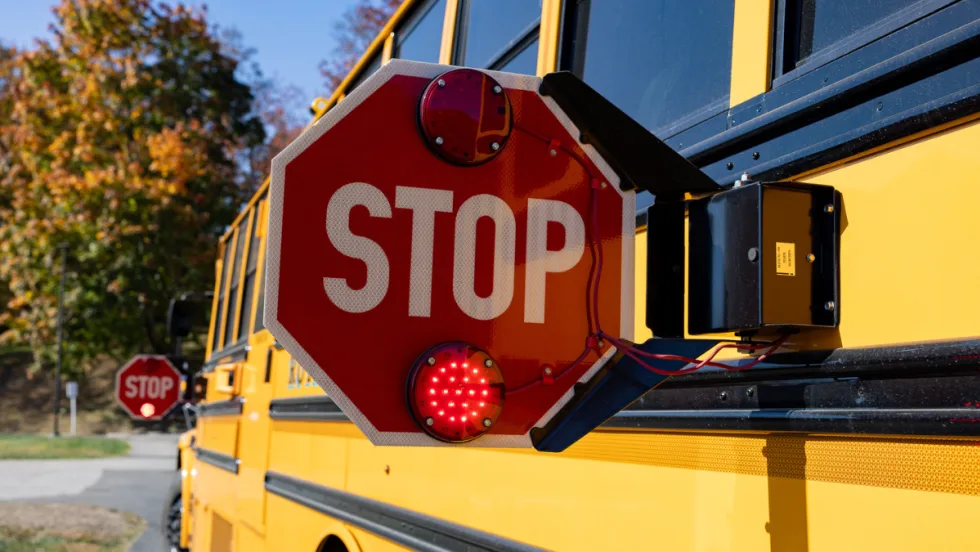
Illegal School Bus Passing Drops 24% in New York Districts
With fewer than 5% of citations involving repeat offenders, Westchester County officials said enforcement, education, and community partnerships are helping change driver behavior.
Read More →
School's Back. Here's What Happened to Traffic, Speeding & Distraction
What happens to traffic when school resumes? New data analysis examines changes in distracted driving, congestion, and speeding around schools.
Read More →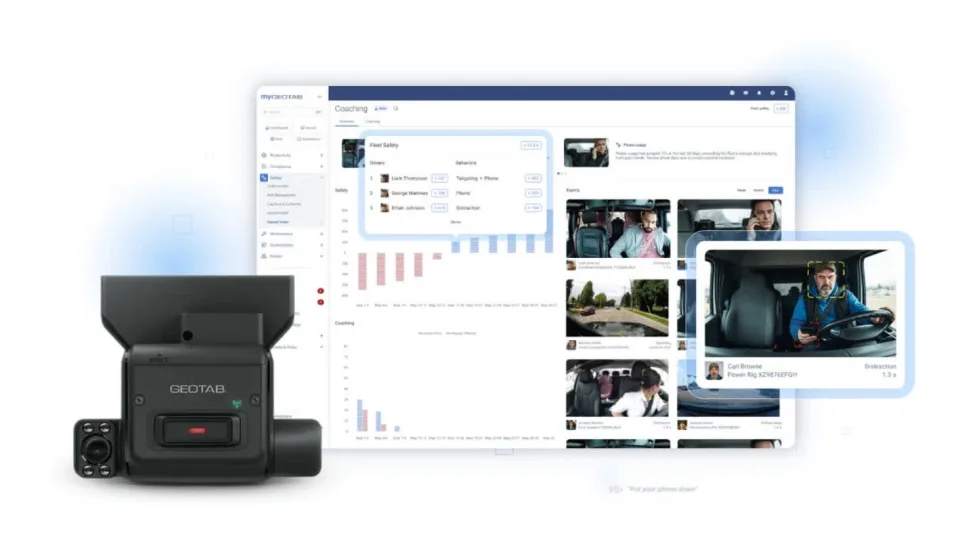
Geotab Expands Fleet Safety Tools With Video Coaching, Risk Insights
New safety and video capabilities aim to help fleet managers assess risk, support drivers, and take targeted action through video coaching, red-light violation detection, and more.
Read More →

How to Build a Better School Bus Driver Training Program
Is it time to strengthen your driver training? Here’s how to pick the right talent and improve recruitment, retention, and safety. This video is brought to you by IC Bus.
Read More →
Recent School Bus Accidents Leave 2 Dead, 2 Injured
Four school bus crashes in Florida, Illinois, and Georgia highlight risks in transportation lots, at bus stops, and during student loading and unloading.
Read More →
When Every Second Matters, Clarity Keeps Routes Moving
From routine delays to urgent incidents, strong communication practices help drivers, dispatchers, schools, and families respond with confidence.
Read More →
What Happens When a School Bus Catches Fire — and What Can Help
School bus fires are rare but can be devastating. Learn how advances in fire suppression and asset protection help fleets detect fires earlier, reduce damage, and improve safety.
Read More →
Geotab Launches Tool to Help Fleets Investigate Road Incidents
Geotab Investigations combines telematics data, video, documents, and other evidence to help fleets reconstruct incidents, resolve claims, and determine what happened.
Read More →
Texas Sixth Grader Wins 2026 National School Bus Safety Poster Contest
Sai Darshana Yekolu of Moseley Middle School in Prosper, Texas, was named the newest winner for her artwork, bringing the theme of “Safe Rides, Everyday Heroes” to life.
Read More →
Doing More With Less: How Transportation Directors Can Prioritize Safety Amid Budget Uncertainty
With diesel prices soaring and nearly one-third of transportation directors expecting budget cuts, maintaining student safety has never been more challenging. Download this guide to learn how leading districts are prioritizing risk, funding critical safety technology, and building stronger budget cases with data.
Read More →