




Bus yard safety, inside and out
Physical security such as fences and video surveillance, in addition to providing your drivers and other staff with ID badges and safety training, can go a long way in securing your bus yard.
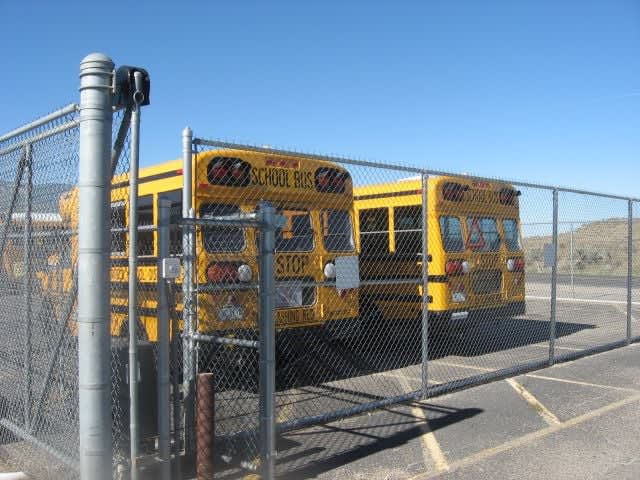
Garfield School District Re-2’s bus yard is fully fenced in and monitored using Bensoftware’s SecuritySpy
video surveillance software.
The typical school bus yard is teeming with potential safety hazards that must be managed carefully. Drivers, mechanics and other staff navigate the yard while buses and other vehicles regularly enter and exit. The sheer size of some yards — which must be large enough to accommodate a number of buses — can be problematic: potential vandals or thieves could take advantage of unmonitored areas.
So how do you protect your staff, visitors and equipment from potential security threats? To find out, SCHOOL BUS FLEET spoke with transportation directors from three operations about their yards’ security technology, policies and training. If secured and managed properly, they say a bus yard will operate smoothly.
Identify your personnel
The people who come to the bus yard every day — drivers, aides, mechanics and administrators — should be easy to spot. This is relatively simple to achieve, according to administrators.
“Our facility is small enough that we can visually identify anyone new or out of place,” says Sanja Morgan, director of transportation at Garfield School District Re-2 in Rifle, Colo. Even so, she says, “All of our district staff has name badges.”
This is also true of Fairfax County Public Schools in Lorton, Va., according to Assistant Director of the Office of Transportation Services Timothy Parker. In addition to enforcing an identification badge rule, “staff is encouraged to wear bright as opposed to dark clothing for greater recognition.” Many staff members also sport logoed apparel that makes them easier to spot.
At Niagara Wheatfield Central School District in Niagara Falls, N.Y., driver ID badges are inserted into a clear plastic pocket in the front of a reflective vest, Transportation Director Michael Dallessandro says.
Make staff easy to spot
Niagara Wheatfield’s reflective vest policy was the result of a tragedy at the district where Dallessandro previously worked, Lake Shore Central School District in Angola, N.Y. In 2008, longtime bus driver Brenda Chiappetta was struck by a bus while she was walking in the yard at 6 a.m. to start her morning run. She was killed instantly.
“When I came to Niagara Wheatfield, they did not have a safety vest policy,” Dallessandro explains. “At our first driver safety meeting as the new director, I gave about an hour PowerPoint presentation on the fatality — what led up to it, the situation itself and how we healed the district and moved forward from that.”
Now, drivers and monitors are required to wear a reflective safety vest while on the clock.
Similarly, Fairfax County encourages “drivers to buddy-up and avoid being at a remote location alone,” Parker says. Being in groups and wearing bright clothes makes drivers and monitors easier to see, which is especially important during bad weather or when it is dark outside.
[PAGEBREAK]
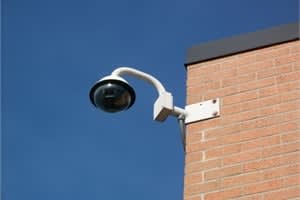
Niagara Wheatfield Central School District’s transportation yard has a video surveillance system that is monitored in the transportation and dispatcher offices.
Keep track of visitors
Even if your staff is equipped with reflective vests, there are times when non-transportation personnel come to the bus yard. In those cases, it is important to keep these visitors safe or alert the proper authorities if those visitors are not authorized to be in the yard.
At Niagara Wheatfield, visitors are required to report to the main office before entering the yard. They are then escorted by transportation staff to where they need to be. “The only exception is parts salesmen that go directly to the mechanics shop to see the lead mechanic,” Dallessandro explains.
Morgan points out that the Garfield transportation facility is set up so that all of the vendors must come through the yard to make deliveries. “It is not a good situation and something we are constantly looking at where we can improve,” she says. In order to cope with the situation, “All of our staff is trained to challenge any unfamiliar people visiting the yard.”
Fairfax County faces a similar problem, as buses are parked at more than 100 sites — many of which are not fenced in. “Questioning someone’s presence or reporting a suspicious person is the main approach [to addressing this problem],” Parker says.
At the district’s larger yards, electronic gates and door controls are used to keep out unwanted people, he adds.
Secure, monitor your perimeter
Garfield utilizes Bensoftware’s SecuritySpy with its bus yard security cameras to capture intruders. While there are no cameras in the facility’s office or shop, the surveillance system at a high school across the street helped police capture a burglar who broke into the transportation office.
“We have a close working relationship with our local police department,” Morgan explains. “They certainly keep a close eye on all of the district’s facilities.”
In addition, the maintenance department has designated staff to regularly check the facility for open doors and other problems.
Niagara Wheatfield’s yard and garage are fully fenced and lighted, and the garage is equipped with a security alarm system. A video surveillance system is monitored in the transportation office and in the dispatcher office as well.
“The camera basically sweeps in a standard sweep pattern, and it photographs a variety of points in the bus garage parking lot and the employee parking lot,” Dallessandro says. “I believe it carries 48 hours of video back-up.”
Fairfax County has installed AVL on all its buses so they can be tracked if stolen. The buses are parked at several school sites, which allows the schools’ video surveillance to be used to monitor them. At the transportation office, the doors are monitored by a security system so that intrusions can be detected after hours.
“Our school security staff is advised of our regular parking locations — on and off of school property — so they can include these in their patrol schedules,” Parker says.
Prepare for emergencies
Even if you’ve done everything right in your bus yard, bad things can still happen. This is why it is important to train staff to act appropriately in emergency situations.
Drivers for Garfield receive training on fuel fires, as the fueling site for buses is in the front of the yard.
“We do provide training each year on suspicious activity in the yard and along their route,” Morgan says. “If they have any concerns, they can contact the mechanic on duty, the driver trainer or director. We also have the ‘Eyes and Ears’ training program, which informs the public that all of our buses can be a safe haven in the community. “
Parker says that Fairfax County includes general yard safety reminders in its newsletters and team meetings. Its “School Bus Watch” program puts an emphasis on monitoring and reporting suspicious activity.
“All buses are equipped with two-way radios. All staff is trained in the use of radios,” Parker adds. “A variety of scenarios are used during training, including tornado, bomb, general terrorism awareness and hostage awareness. Emergency evacuation drills are conducted at least twice a year.”
Furthermore, the state of New York requires school bus drivers to complete three emergency drills annually. Because of this, Niagara Wheatfield drivers “have extensive experience in evacuation, using the fire extinguisher and reporting incidents on the radio,” Dallessandro says. “Those skills that they learn from the three bus drills annually carry over to their role here at the bus yard.”
Other articles related to bus yard safety and security:
More Safety

How to Build a Better School Bus Driver Training Program
Is it time to strengthen your driver training? Here’s how to pick the right talent and improve recruitment, retention, and safety. This video is brought to you by IC Bus.
Read More →
Recent School Bus Accidents Leave 2 Dead, 2 Injured
Four school bus crashes in Florida, Illinois, and Georgia highlight risks in transportation lots, at bus stops, and during student loading and unloading.
Read More →
When Every Second Matters, Clarity Keeps Routes Moving
From routine delays to urgent incidents, strong communication practices help drivers, dispatchers, schools, and families respond with confidence.
Read More →

What Happens When a School Bus Catches Fire — and What Can Help
School bus fires are rare but can be devastating. Learn how advances in fire suppression and asset protection help fleets detect fires earlier, reduce damage, and improve safety.
Read More →
Geotab Launches Tool to Help Fleets Investigate Road Incidents
Geotab Investigations combines telematics data, video, documents, and other evidence to help fleets reconstruct incidents, resolve claims, and determine what happened.
Read More →
Texas Sixth Grader Wins 2026 National School Bus Safety Poster Contest
Sai Darshana Yekolu of Moseley Middle School in Prosper, Texas, was named the newest winner for her artwork, bringing the theme of “Safe Rides, Everyday Heroes” to life.
Read More →
Doing More With Less: How Transportation Directors Can Prioritize Safety Amid Budget Uncertainty
With diesel prices soaring and nearly one-third of transportation directors expecting budget cuts, maintaining student safety has never been more challenging. Download this guide to learn how leading districts are prioritizing risk, funding critical safety technology, and building stronger budget cases with data.
Read More →
Walton County Schools Adds Gatekeeper Stop-Arm Enforcement System
The Florida district will deploy Gatekeeper’s updated Student Protector technology, which now incorporates AI to improve video evidence.
Read More →
How To Build a More Secure School Bus Yard During and After Hours
As thefts and overnight security threats continue, school transportation leaders are combining stronger operational practices with AI-enabled surveillance to better protect buses, facilities, and staff.
Read More →
FMCSA Names New Chief Safety Officer: What School Bus Operators Should Know
Steve Dowling is set to lead the federal agency's efforts to advance commercial motor vehicle safety and reduce crashes, fatalities, and injuries on the nation's roadways.
Read More →