




7 Steps to Greater Flexibility in Responding to Pandemic Changes
Contending with COVID-spurred challenges such as conflicting and constantly changing policies that upend schedules can amplify stress. Measures such as clearly defining responsibilities, establishing a central communication hub, and regular meetings can help staff members adjust.
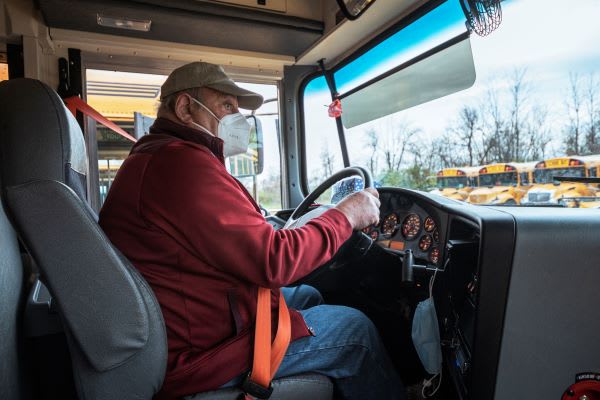
Photo courtesy Alex Potemkin via iStock/Getty Images
Since the COVID-19 pandemic began around this time last year, school district transportation departments across the nation have had to make several fundamental and complicated shifts and adjustments in their operations.
In addition, given that this pandemic is the first of this magnitude in decades to hit the U.S., we are learning, experimenting, and adjusting our responses. Yet, due to our lack of experience as school districts in this situation, these shifts sometimes seem illogical or contrary and come with little or no notice or explanation. This is a difficult reality to function in for any operation involving complicated logistics.
Moreover, the emotional nature of the situation results in various constituencies — local, state, and federal governments, unions, parents, media, and the medical community — putting pressure on school transportation operations. This cannot be understated, given what we have personally experienced in this surreal pandemic world where typically simple situations can become highly emotional and polarizing. Transportation departments in many school districts are underfunded and understaffed and often at the bottom of the food chain of priorities and communication. This makes operating in a normal world challenging.
An even greater hurdle emerges for the hardworking people that operate in this world during these times: Everyone seems to be working with a heightened level of anxiety and this has become their “normal.”
After talking to several districts nationwide, I have heard that challenges consistently faced by transportation departments include:
• Seating restrictions levels that can force double and triple runs. These measures, while aimed at safety, can cause other safety risks. Those include students, especially younger ones, getting on the wrong bus, and limited bus availability for overflow students, transfers, and other trips.
• Attendance schedules that vary from one to four days per week, changing bell schedules by school and grade level. That makes modifying bus routes — which if are not well designed in a solid routing software system — extremely difficult. Add to that the loosening of these schedules, changes in class size, and distancing restrictions, which cause significant complications.
• Personal protective equipment (PPE) requirements (some employees report discomfort wearing the equipment) and shortages.
• Emotional parental interactions.
• A wide range of employee responses to the pandemic, from hypervigilance (turning people in for perceived violations) to believing a mask mandate violates personal freedom.
• Conflicting directions from district offices and schools.
• Changing interpretation and enforcement of policies on testing and quarantining within districts, facilities, and departments, and lack of communication on changes.
• Other district employees not being familiar with transportation logistics.
• Requirements to create seating charts for contact tracing with constantly changing student riders, intermittent riding, and lack of communication regarding these students.
• Students are required to be taken home by bus if their temperature is too high and a lack of communication on when students are quarantined and when they are expected to return to school.
• A different set of restrictions is placed on sports and field trips in some cases. Also, due to many districts having modified bell/staggered attendance schedules, finding route buses to cover these extracurricular trips becomes difficult.
Add to all these challenges a typically semi-retired driver workforce that may struggle with multiple changes with their route maps and times, seating arrangements and restrictions, and varying applications of restrictions and PPE.
Positioning transportation departments for greater success can be challenging even in normal times. However, by creating systems, processes, technology-supported communications, and providing good training — most of which requires very little capital — your staff can adapt to changes and crises more effectively.
Moving forward, departments will not function well with practices such as having one go-to person who has everything memorized and/or is the only staff member who can adjust, coordinate, and communicate, using a few paper cheat sheets.
Positioning transportation departments for greater success can be challenging even in normal times. However, by creating systems, processes, technology-supported communications, and providing good training — most of which requires very little capital — your staff can adapt to changes and crises more effectively.
Here are seven suggestions to help transportation departments adapt more smoothly as schools reopen but COVID concerns continue:
1. Building communication — both electronic and in-person — with parties that transportation staff frequently works with is vital. Ideally, it is best to do this during “non-crisis” times.
2. Clearly set responsibilities for dispatchers, routers, field trip staff, and administrative staff so that efficient coordination is considered normal and not an exception.
3. Seek strong management support to ensure transportation operations get a voice on key decisions and timely notifications that have major impacts on transportation, so they can be implemented safely.
4. Ensure a central hub for communicating vital information. Make sure essential communication tools are available, including computer terminals and printers for routine paperwork and a large operations screen with real-time updates on weather, substitute routes, vehicles and locations, announcements, safety tips, driver and assistant assignments, construction, and other constantly changing rules, restrictions, policies, and processes.
5. Develop and practice emergency procedures so staff functions in muscle memory rather than panic mode.
6. Hold frequent staff meetings to foster teamwork and communication among team members working on various projects. This can be tough for most departments, due to daily demands and the nature of schedules, but is essential to function effectively.
7. Take your time and get it right. When work gets busy, remember: Slow is smooth, and smooth is fast. Respond, don’t react. This has to be trained into staff and reinforced.
If a team can use this current operating environment to shed light on necessary operational areas for improvement, it can be a valuable learning experience and inform future enhancements.
There are no easy answers to meeting these challenges in the environment that most school district transportation departments function normally, not to mention in the pandemic. To the extent that department staff can employ some of these suggestions, they can be much better prepared to adapt.
Stuart Vogelman is a dispatcher for a school district in Washington state. He has also worked as an emergency medical dispatcher, motorcoach and school bus driver, senior executive, international business consultant, pastor, and chaplain for a state police agency.
More Management

How to Build a Better Driver Training Program
Ready to boost up your school bus instructor training? Here’s how to pick the right talent and improve recruitment, retention, and safety.
Read More →
CALSTART and Forth Combine to Form Catalyst Mobility
The new name represents a renewed vision for the nonprofit focused on advancing clean, equitable, and affordable transportation solutions that move people and goods.
Read More →
What Makes a Great School Bus Driver Trainer?
Choosing the right school bus driver trainer takes more than experience. Learn six keys to selecting and developing trainers and evaluating program effectiveness.
Read More →


School Bus Contractors Expand Through New Deals, Acquisitions & Partnerships
STA's Canadian division acquires Ontario-based G&L Stevenson Transport while Durham School Services adds a new district contract in California, First Student adds a New Jersey contract, and Minnesota Coaches acquires Halo Transportation.
Read More →
Logan Bus Company Rolls Out AI Phone System for NYC School Bus Families
A summer pilot found that AI agents could handle most routine calls, freeing up time for customer service staff to focus on emergencies and complex family concerns.
Read More →
From Intent to Impact: What I Learned About Leadership from TAPT
A Texas transportation supervisor shares lessons on self-awareness, accountability, managing stress and building trust — and why investing in leadership development matters at every stage of your career.
Read More →
NAPT Names 2026 Award Recipients, Hall of Fame Inductee
Who earned national recognition for their work in student transportation? This year, NAPT named five recipients of its 2026 awards for service, safety, and leadership, plus its newest Hall of Famer.
Read More →
2026 State of Student Transportation Report
Driver shortages. Rising costs. Growing safety expectations. More data, but not enough time to act on it. The 2026 State of Student Transportation Report reveals what transportation leaders say is putting the most pressure on their operations—and where they’re investing next. See how your priorities compare.
Read More →
How to De-Escalate an Angry Person: 5 Steps for Handling Workplace Conflict
What makes emotions run high, and how should you handle an angry colleague or parent? Follow these steps for staying calm, listening, showing empathy, and resolving conflict.
Read More →
What Readiness Looks Like This School Year
Learn about the challenges shaping the 2026–2027 school year, from persistent driver shortages and budget pressure to technology and readiness gaps. See how school districts are responding and adapting in Zonar’s 2026 Back-to-School Readiness Report.
Read More →