




4 Tips for Leading Through Tough Times
During the challenges brought about by the pandemic, leaders should remember to keep their role in perspective, focus on a positive outlook of the future and their team’s strengths, and give themselves a break.


Staying future-oriented is a key pillar to strong leadership.
Photo courtesy martin-dm via iStock/Getty Images
These are challenging times that are testing the patience, ingenuity, and resilience of us all.
As leaders, we hold even greater responsibility to support our team members, make well-informed decisions, and be a beacon of light to others. You may be asked to make difficult decisions amid contradictory information, impending deadlines, and pressures from your diverse constituents. How do you stay focused and “together” despite such pressure?
I have put together a few recommendations that I hope will help.
First, keep perspective on your role. In remarkable times such as these, it is important to remember that you play an especially important role in other people’s lives.
When you “clock in” for work or arrive at the office, you are stepping into a role and are responsible for handling certain duties or tasks associated with that role. Whatever your position is — manager, superintendent, lead driver, trainer, finance officer — there are expectations and responsibilities attached to the position. You may need to create new safety protocols and standard operating procedures and ensure they are followed; slash budgets or enhance services with a slashed budget; or simply motivate and inspire road-weary staff.
You are doing this work because the role requires it, but keep in mind that you are not the role. You are fulfilling a role for your organization. You have a life and an identity beyond this role that you play. Do the very best that you can in your position, but know that at the end of your shift, you step out of this role and step into a different one: spouse, partner, golfer, mom/dad, sister/brother, hiker, cook. It is important that you do this and put a bit of distance between this role and the others that you play. It is not healthy to be always intertwined in your leadership role. You need space and distance to bring a fresh perspective and energy to the role of leader.
Serve your role with integrity, but make sure you take care of yourself and fulfill your other obligations, too.
Next, stay future-oriented. Vision is one of the most important — and powerful — aspects of leadership. We are struggling through a painful moment in time, but it is a moment in time, and we are actually still moving forward. As a leader, if you can instill in others that we are moving towards something new —and perhaps exciting — it will reduce some of the fear and anxiety your team members may be experiencing.
The hardest part about change is the grief: we grieve the loss of what was familiar, comfortable, and secure. The most effective leaders paint a picture of what will be for their team and keep their team focused on that.The industry will be forever changed by this pandemic, that is true, but can you foresee positive changes ahead? Identify ways that the industry will change for the better, and paint that picture for others, so they can make decisions with the future in mind. Do not sugarcoat it or give flimsy or phony visions for the future, but genuinely share what can be and help team members understand how they will benefit from the change.
You have a choice: wallow in how hard things presently are or boldly lead your team into the future.
In addition, focus on the brilliance around you. Now more than ever it is important that we come together, support each other, and stay flexible. Things are not happening the way they used to. As you are aware, we have all adapted and figured out how to be productive despite the loss of our regular shifts, systems, and routines.
What is interesting to me, though, is that your team has not only continued to perform technically, they have also adapted in new ways. If you shift your focus to look for positive examples of performance, you will be surprised by what you find. Some team members have stepped up in ways you never could have expected. Some may have become more innovative or creative. Others have displayed tenacity and patience. Still others have taken the role of cheerleader, motivating the team, helping others, and stepping up in ways they didn’t before.
When you see examples of this sort of brilliance (which is different from the technical skills you expect from them), call it out, praise it, and show appreciation. These are the small gestures that are needed right now, so don’t be bashful. Let your team know that you appreciate the many ways they bring their brilliance to work.
Lastly, while you’re at it, give yourself a break. You thought leading a team before the pandemic was hard? Leading through a pandemic is even trickier, but you’re doing it. You are stepping up, providing vision, clarity, and motivation to others despite mounting pressures, ambiguity, and uncertainty. You are staying engaged and involved with your team and are maintaining good, open communication. You are remaining positive and keeping an eye out for brilliance (instead of focusing on mistakes).
We are not going to make it through these tough times perfectly, but with your leadership, we’ll get through it together. I think that is what matters the most.
Karen Main is a professional speaker, writer, trainer, and consultant who specializes in developing effective leaders and high-performing teams. Her company, Innovations in Training, provides custom leadership development training to leaders and teams across the country.
More Management

How to Build a Better Driver Training Program
Ready to boost up your school bus instructor training? Here’s how to pick the right talent and improve recruitment, retention, and safety.
Read More →
CALSTART and Forth Combine to Form Catalyst Mobility
The new name represents a renewed vision for the nonprofit focused on advancing clean, equitable, and affordable transportation solutions that move people and goods.
Read More →
What Makes a Great School Bus Driver Trainer?
Choosing the right school bus driver trainer takes more than experience. Learn six keys to selecting and developing trainers and evaluating program effectiveness.
Read More →

School Bus Contractors Expand Through New Deals, Acquisitions & Partnerships
STA's Canadian division acquires Ontario-based G&L Stevenson Transport while Durham School Services adds a new district contract in California, First Student adds a New Jersey contract, and Minnesota Coaches acquires Halo Transportation.
Read More →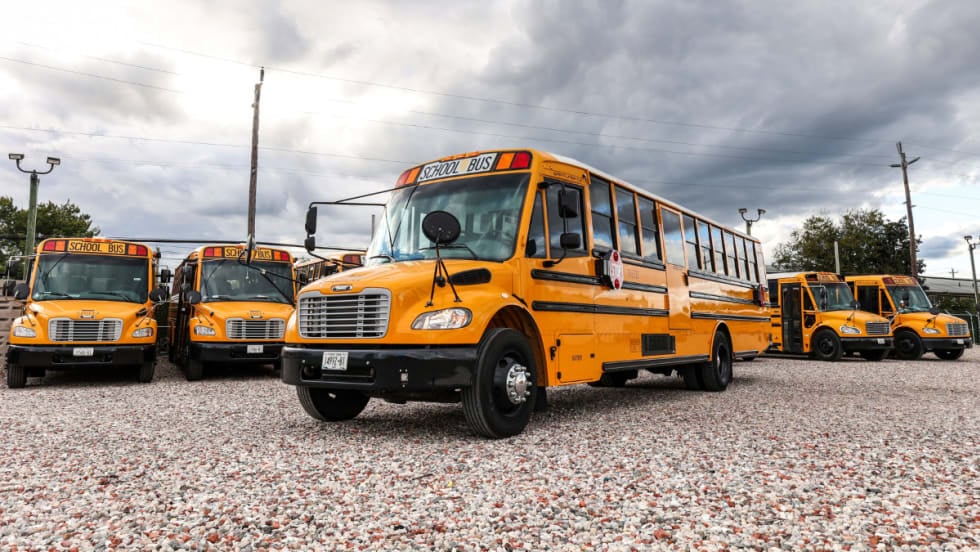
Logan Bus Company Rolls Out AI Phone System for NYC School Bus Families
A summer pilot found that AI agents could handle most routine calls, freeing up time for customer service staff to focus on emergencies and complex family concerns.
Read More →
From Intent to Impact: What I Learned About Leadership from TAPT
A Texas transportation supervisor shares lessons on self-awareness, accountability, managing stress and building trust — and why investing in leadership development matters at every stage of your career.
Read More →
NAPT Names 2026 Award Recipients, Hall of Fame Inductee
Who earned national recognition for their work in student transportation? This year, NAPT named five recipients of its 2026 awards for service, safety, and leadership, plus its newest Hall of Famer.
Read More →
2026 State of Student Transportation Report
Driver shortages. Rising costs. Growing safety expectations. More data, but not enough time to act on it. The 2026 State of Student Transportation Report reveals what transportation leaders say is putting the most pressure on their operations—and where they’re investing next. See how your priorities compare.
Read More →
How to De-Escalate an Angry Person: 5 Steps for Handling Workplace Conflict
What makes emotions run high, and how should you handle an angry colleague or parent? Follow these steps for staying calm, listening, showing empathy, and resolving conflict.
Read More →
What Readiness Looks Like This School Year
Learn about the challenges shaping the 2026–2027 school year, from persistent driver shortages and budget pressure to technology and readiness gaps. See how school districts are responding and adapting in Zonar’s 2026 Back-to-School Readiness Report.
Read More →