




5 Questions: Guiding School Bus Fleets on the Path to Electrification
Discover expert advice on electrifying school bus fleets, from fleet assessments to charging infrastructure, route planning, and training staff for a greener future.

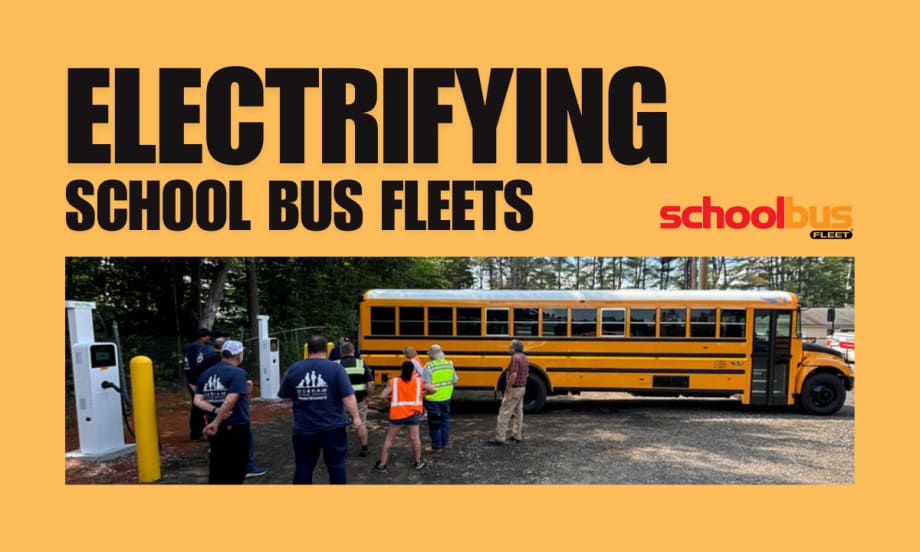
The first step in the school bus electrification process? A comprehensive fleet assessment.
Photo: Durham School Services | School Bus Fleet
As the demand for greener and more sustainable transportation grows, school districts nationwide are looking to electric buses as a solution. But electrifying a school bus fleet is more than just buying new buses.
Fleet managers must consider charging infrastructure, route adjustments, and personnel training.
Electrifying School Bus Fleets
To help guide school bus fleets through the process of adding electric school buses your fleet, we talked with John Juniker, fleet services manager at Durham School Services, who shared his insights on the steps and challenges of switching to electric school buses.
1. What are the first steps fleet managers should take once they adopt electric school buses?
The first step in the school bus electrification process? A comprehensive fleet assessment.
"School bus fleet managers need to evaluate their current fleet's needs, such as how many buses will be replaced, which routes they'll cover, and the typical daily mileage. This process ensures the fleet selects the right number of electric buses with the correct battery capacity," Juniker shared.
Next, work closely with school district administrators, local governments, and stakeholders. This step is key to communicating the transition plan.
"Partnering with energy providers and infrastructure experts ensures smooth installation of charging stations," Juniker added.
He also stressed the importance of understanding the infrastructure timeline.
"It's not a quick process. Depending on site complexities, fully implementing charging infrastructure can take 12 to 18 months. Finally, you need to factor in budget planning. Research available grants or subsidies for electric vehicle adoption and make sure to account for potential route changes, staff training, and infrastructure upgrades," he said.
2. How do electric school buses impact daily route planning and operational efficiency, and what strategies have you employed to optimize this?
Electric school buses bring a new set of challenges regarding range and charging.
"For instance, in winter months, the range may drop due to electric heater usage. Route planning teams need to account for that by strategically incorporating mid-day charging stops," he said.
Durham uses telematics to monitor energy consumption and optimize routes, extending range through regenerative braking and efficient driving habits.
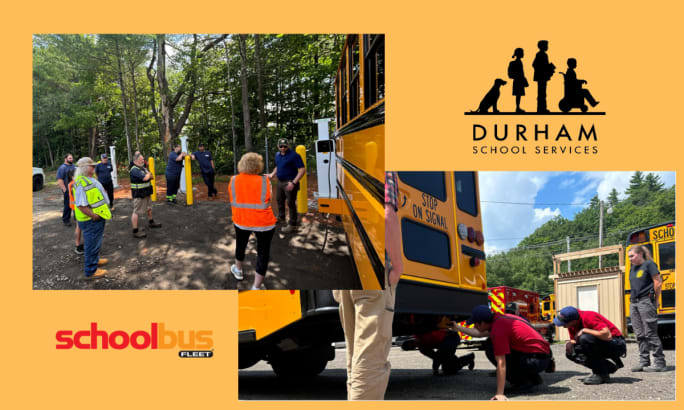
Fleet managers can also help with “change” anxiety by involving leadership and anyone who touches the vehicles early on.
Photo: Durham School Services | School Bus Fleet
3. What challenges have you encountered regarding training drivers and maintenance personnel, and how did you address them?
Juniker emphasized that a key challenge is shifting driver and technician responsibilities.
"Drivers require specialized training on electric vehicles, while maintenance teams must upskill to handle high-voltage systems. For maintenance staff, it's a completely different skill set. Working with high-voltage systems and electric powertrains requires upskilling. We've partnered with bus manufacturers to provide hands-on training for drivers and technicians," he said.
Fleet managers can also help with “change” anxiety by involving leadership and anyone who touches the vehicles early on.
"Getting operational and maintenance teams involved from the start helped ease concerns and allowed them to familiarize themselves with the new technology," Juniker recommended.
4. What fundamental infrastructure changes are needed to support an electric school bus fleet, and how should fleet managers prioritize them?
Juniker said the priority is installing on-site charging stations.
"The installation process requires close coordination with utility companies to ensure you have adequate electricity capacity. Another critical piece is vehicle-to-charger interoperability — ensuring the buses and chargers work seamlessly together," he noted.
He also mentioned potential grid upgrades and depot redesigns.
"Fleet managers may need grid upgrades and depot redesigns to handle charging efficiently and accommodate growth," he said.
5. What key performance metrics should fleet managers monitor post-deployment to ensure the electric fleet meets expectations?
Monitoring battery health is essential to anticipate replacements and avoid unexpected downtime.
"Battery degradation is inevitable over time, so keeping an eye on health metrics allows us to make informed decisions about route changes or replacements," he added. "Tracking energy consumption per mile is crucial to evaluate how different routes and driving habits affect battery usage."
Juniker said to track the total cost of the electric fleet, including electricity costs versus diesel and bus reliability.
"We focus on uptime and reliability metrics to ensure our electric fleet performs on par with diesel buses," he added.
Wrapping Up the Ride
Transitioning to electric school buses requires strategic planning, training, and investment. From fleet assessments to post-deployment, think strategically, and you’ll be ready to roll with the addition of electric school buses into your fleet.
More Alternative Fuels

CALSTART and Forth Combine to Form Catalyst Mobility
The new name represents a renewed vision for the nonprofit focused on advancing clean, equitable, and affordable transportation solutions that move people and goods.
Read More →
Alt-Fuel Moves: New Buses, Charging Hubs & Real-World EV Testing
Propane and electric school bus deployments continue to grow as districts add new vehicles, expand charging infrastructure, and gather more real-world operating data.
Read More →
Fewer Electric School Bus Models Reshape the U.S. Market
WRI’s latest buyer’s guide points to a consolidating electric school bus market, but fewer options may reflect a maturing industry rather than fewer meaningful choices for school bus operators.
Read More →
The Fuel Budget You Can Actually Predict: How Propane Autogas Keeps Money in the Classroom
Learn how propane autogas helps school districts manage fuel costs with predictable pricing, lower maintenance, and reduced emissions from former transportation director Joel Stutheit.
Read More →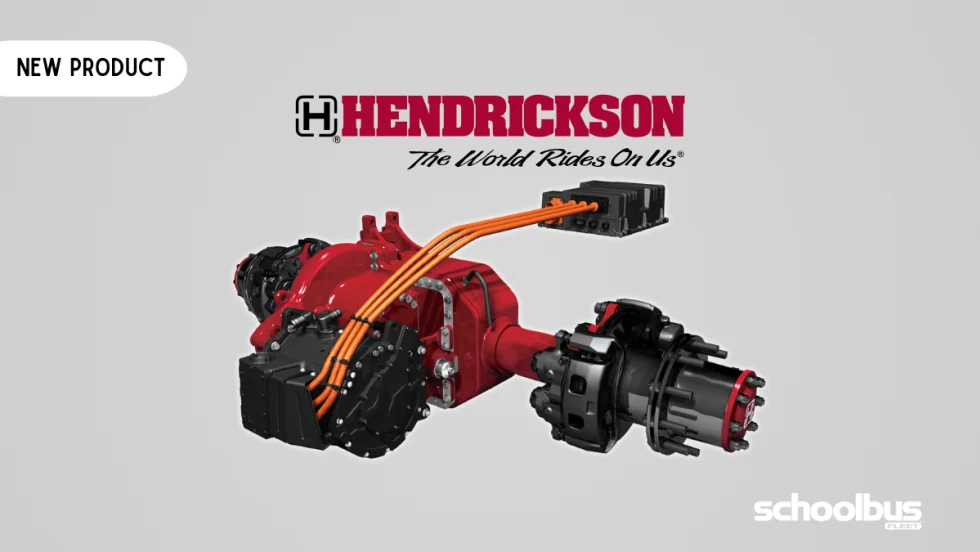
Hendrickson, Driventic Introduce New Electric Powertrain for School Buses
ELECTRAAX, the electrified, lightweight drive axle offers integrated ePowertrain efficiency and modular flexibility for Class 6–7 school bus use.
Read More →
The Mobility House Joins PowerFlex in Fleet Electrification Deal
The acquisition combines intelligent charging software, bidirectional charging expertise, and fleet electrification services to support the growing adoption of electric school buses across North America.
Read More →
Alt-Fuel Moves: Electric School Bus Investments Hit the Road
See which districts across the U.S. are putting electric school buses into service, expanding charging infrastructure, and planning the next phase of fleet electrification.
Read More →
With Fuel Volatility Ahead, School Districts Turn to Propane
While diesel prices peaked above $5 this spring, districts with propane autogas-powered fleets paid under $2 per gallon, according to PERC.
Read More →
EPA Unveils Proposed Changes to 2027 Heavy-Duty Engine Rules
The federal agency has proposed changes to next year’s targets that would eliminate DEF derates, ease warranty requirements, and retain current NOx emissions standards.
Read More →
Alt-Fuel Moves: EV Charging & Infrastructure Projects Gain Momentum
The latest developments include new funding, charging infrastructure, utility investments, and fleet technologies designed to support the transition to electric school buses nationwide.
Read More →