




5 Questions: Ted Finlayson-Schueler on Driver Training, NTSB Recommendations
Ted Finlayson-Schueler, founder of the Pupil Transportation Safety Institute and Safety Rules, talks about the need to improve driver training, ways to curtail stop-arm running, and his take on some recent National Transportation Safety Board safety recommendations.


Finlayson-Schueler says that the student transportation industry has to “convey the benefits of being employed in school transportation to attract and keep quality drivers and managers.”

Finlayson-Schueler says that the student transportation industry has to “convey the benefits of being employed in school transportation to attract and keep quality drivers and managers.”
Initially recognized post-college for his driving abilities, Ted Finlayson-Schueler left behind a series of odd jobs to drive a school bus. Soon after, he transitioned to the safety training side of student transportation, and eventually helped found the Pupil Transportation Safety Institute (PTSI). He formed Safety Rules, his own safety consulting nonprofit organization, in 2004, and has been helping to improve student safety on the bus ever since. Finlayson-Schueler also serves as an expert witness.
In this interview with School Bus Fleet, Finlayson-Schueler talks about the need to improve driver training, ways to curtail stop-arm running, and his take on some recent National Transportation Safety Board (NTSB) safety recommendations.
1. How did you get your start in pupil transportation?
I was drifting in that “I-haven’t-finished-my-degree” wasteland and had done car sales, construction, and served as an assistant chaplain. I was helping a friend return a rental truck and he commented on how well I drove it. He suggested I apply for a bus driver job where his wife worked. I did — and I finished my degree.
I got into safety because I was at a wedding reception and my wife’s boss’s wife, who worked at a regional education entity, remembered that I drove buses and told me they received a grant for a safety center and I should apply. Fast forward four years and I was a safety expert.
2. What do you like most about your work?
Since 1985, I have been on the safety side, first running a state regional safety office for over 200 school districts in New York state, and then at PTSI and Safety Rules. I have met scores of wonderful people who are doing great things and have great ideas. I have tried to repurpose these into training and guidance in my writing and teaching. I enjoy hearing of or seeing a driver or attendant do or say the right thing and thinking that the materials I developed might have had some part in their learning.
3. This is an extremely safety-sensitive industry. There are many pressing issues — stop-arm running, bus fires, etc. What is the most urgent?
The low unemployment rate has heightened a longtime issue: driver quality. The jobs of school bus drivers and attendants are very difficult. The damage done by poor or poorly trained employees includes driving and bus stop accidents, children left on buses or dropped off miles from their homes, and being bullied or abused.
We have to figure out a way to convey the benefits of being employed in school transportation to attract and keep quality drivers and managers.
4. The NTSB recently made recommendations based on a fatal school bus fire in Iowa, mainly requiring fire suppression systems, annual physical performance tests, and reporting drivers with medical conditions that may make operating a school bus unsafe. What are your thoughts?
Fire suppression systems have been standard equipment on transit buses for years, so adding them to school buses operating in the same environment — and potentially with a more vulnerable passenger mix — makes sense. The systems will save buses, but there has been virtually no loss of life in school buses that would have been prevented by such a system. Other than the Iowa fire, which was entirely survivable with an able driver, we have the Carrollton, Ky., fire [in 1988], which was caused by a ruptured fuel tank, and would not have been suppressed by an engine compartment system advocated for by NTSB.
New York’s physical performance test model has been made standard by other states and large contractors. It seems clear that the Iowa driver would not have passed even this minimal standard.
A big weakness in the driver physical is that it allows drivers to self-report medical history and medications. I have seen this in multiple cases I have worked on. The examiner has no other source of information.
5. Are you seeing any new training requests?
The “new” requests are for the old stuff. So many new issues have arisen over the last 20 years that it seems like the focus has shifted away from basics like bus stop safety and defensive driving. We’ve been talking about it for decades, but school bus stops need to be executed better.
We, of course, need to get motorists to stop passing school buses that are loading or unloading, but we can’t let that obscure the fact that there are two solutions that we can implement without the aid of motorists.
California’s driver crossing system has been successful for decades.
Also, the commercial driver’s license (CDL) manual in almost every state is based on the federal recommendation for the “S” endorsement and includes a crossing procedure that drivers and students can use to avoid accidents. I have only seen one deposition of a driver in a court case who understands this procedure, and I have never had a case that would not have been avoided by using the procedure properly.
More Safety

How to Build a Better School Bus Driver Training Program
Is it time to strengthen your driver training? Here’s how to pick the right talent and improve recruitment, retention, and safety. This video is brought to you by IC Bus.
Read More →
Recent School Bus Accidents Leave 2 Dead, 2 Injured
Four school bus crashes in Florida, Illinois, and Georgia highlight risks in transportation lots, at bus stops, and during student loading and unloading.
Read More →
When Every Second Matters, Clarity Keeps Routes Moving
From routine delays to urgent incidents, strong communication practices help drivers, dispatchers, schools, and families respond with confidence.
Read More →

What Happens When a School Bus Catches Fire — and What Can Help
School bus fires are rare but can be devastating. Learn how advances in fire suppression and asset protection help fleets detect fires earlier, reduce damage, and improve safety.
Read More →
Geotab Launches Tool to Help Fleets Investigate Road Incidents
Geotab Investigations combines telematics data, video, documents, and other evidence to help fleets reconstruct incidents, resolve claims, and determine what happened.
Read More →
Texas Sixth Grader Wins 2026 National School Bus Safety Poster Contest
Sai Darshana Yekolu of Moseley Middle School in Prosper, Texas, was named the newest winner for her artwork, bringing the theme of “Safe Rides, Everyday Heroes” to life.
Read More →
Doing More With Less: How Transportation Directors Can Prioritize Safety Amid Budget Uncertainty
With diesel prices soaring and nearly one-third of transportation directors expecting budget cuts, maintaining student safety has never been more challenging. Download this guide to learn how leading districts are prioritizing risk, funding critical safety technology, and building stronger budget cases with data.
Read More →
Walton County Schools Adds Gatekeeper Stop-Arm Enforcement System
The Florida district will deploy Gatekeeper’s updated Student Protector technology, which now incorporates AI to improve video evidence.
Read More →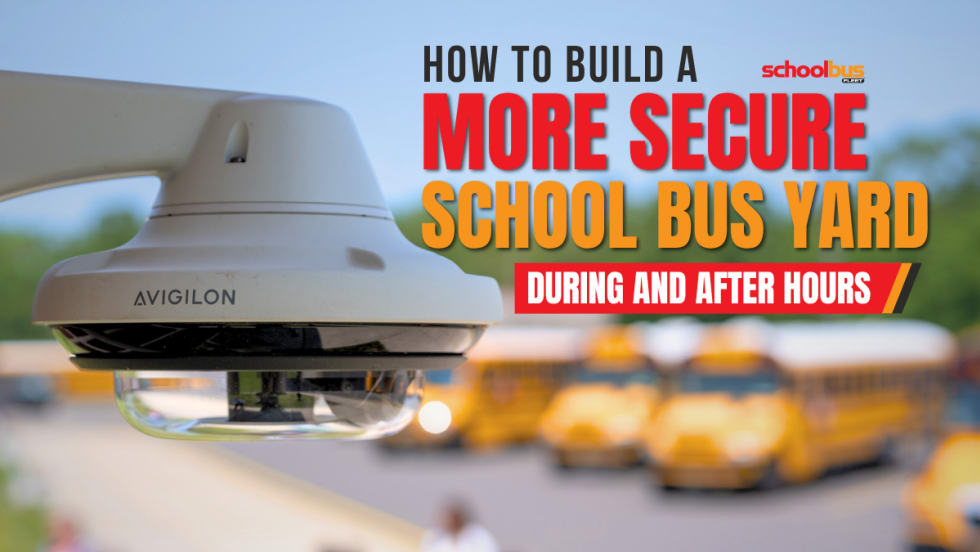
How To Build a More Secure School Bus Yard During and After Hours
As thefts and overnight security threats continue, school transportation leaders are combining stronger operational practices with AI-enabled surveillance to better protect buses, facilities, and staff.
Read More →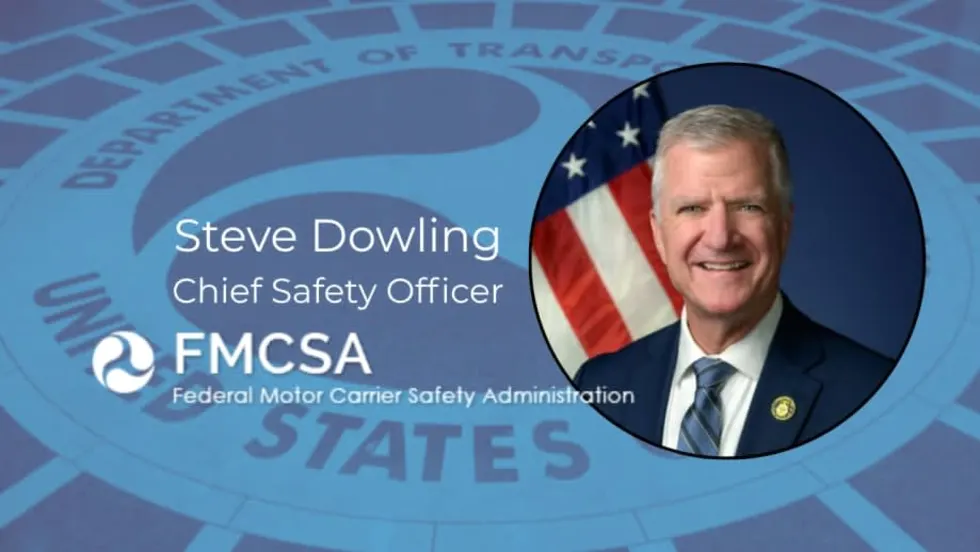
FMCSA Names New Chief Safety Officer: What School Bus Operators Should Know
Steve Dowling is set to lead the federal agency's efforts to advance commercial motor vehicle safety and reduce crashes, fatalities, and injuries on the nation's roadways.
Read More →