




5 Questions: Mike LaRocco on Seat Belts, Safety Regulations
Mike LaRocco, president of the National Association of State Directors of Pupil Transportation Services, discusses the association’s position on lap-shoulder belts on buses, partnering with other industry associations to address regulations for school reopening, and how much pupil transporters contribute to their communities.

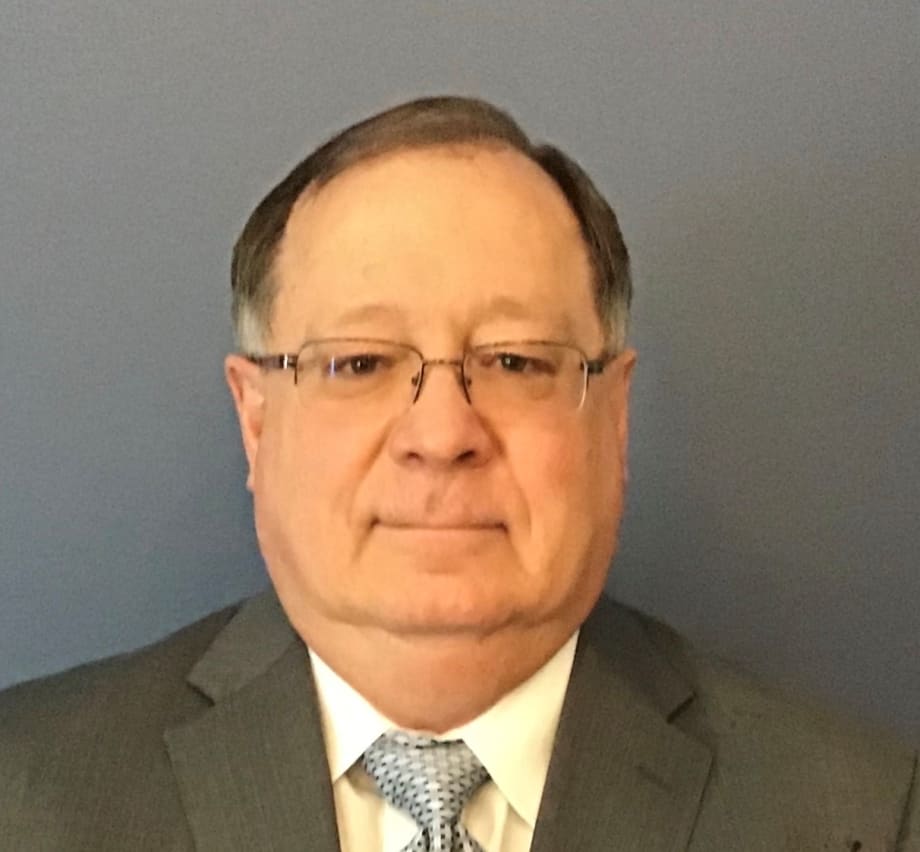
Mike LaRocco says that the COVID-19 pandemic has brought unprecedented challenges to the education community, and that they “are even more pressing for the school transportation community.”
Photo courtesy Mike LaRocco
Initially hired as an assistant transportation director at an Indiana school district in part for computer skills he gained in the military, Mike LaRocco quickly moved up to the director position and continued to take on leadership roles in pupil transportation, including his current one as president of the National Association of State Directors of Pupil Transportation Services (NASDPTS).
In this interview with School Bus Fleet, LaRocco discusses the association’s position on lap-shoulder belts on buses, partnering with other industry associations to address regulations for school reopening, and how much pupil transporters contribute to their communities.
1. How did you get your start in pupil transportation?
You could say it was destiny, but really it was dumb luck. Upon returning to the Indianapolis area after eight years in the U.S. Army, my wife was offered an elementary teaching position at Hamilton Southeastern Schools in Fishers, Ind. The district was also looking for an assistant transportation director with computer skills to implement their new electronic routing system. I had spent my last four years in the Army as a computer programmer and in software support — the first four years were in tanks where I was frequently allowed to blow something up or run something over — so I applied for the position and was hired on November 1, 1993.
After about six months, I was moved to the director position when the previous director retired, and I have been in school transportation ever since, rising to the position of director of transportation for the Indiana Department of Education.
2. NASDPTS just released a new position paper on seat belts. What updates stand out compared to the association’s 2014 position paper on the topic?
The biggest change is that NASDPTS is unequivocal about recommending the “required installation and use of lap-shoulder belts in new school buses.” We believe that lap-shoulder belts greatly enhance the benefits of compartmentalization in all crash scenarios and thus should be mandated on all new school buses.
3. The National Transportation Safety Board (NTSB) released in April its final report on the fatal crash in Rochester, Ind. in 2018. The agency issued several recommendations, including four to NASDPTS. What actions has NASDPTS taken in response?
NASDPTS has already shared with its members the NTSB’s final report on the Rochester, Ind; Baldwyn, Miss.; and Hartsfield, Ga. crashes, and emphasized the recommendations directly related to state directors.
As to the recommendations related to bus driver training, NASDPTS published a position paper in May 2018 on driver licensing, qualifications, and training mainly centered around safe bus stop practices and procedures.
We have also partnered with the National Association for Pupil Transportation (NAPT) and the National School Transportation Association (NSTA) to lend our voice to federal legislation that would further enhance school bus safety, some of which relates directly to many of the recent fatal school bus crashes (e.g. electronic stability control, emergency braking systems, lane departure warning systems, etc.).
4. The Centers for Disease Control and Prevention (CDC) has released recommendations for social distancing on school buses. What are your thoughts on those recommendations?
NASDPTS has partnered with NAPT and NSTA to create the Student Transportation Aligned for Return to School (STARTS) Task Force to address COVID-19 recommendations specific to school transportation as created by professionals across the spectrum directly involved in school transportation. Those guidelines will be specific to the needs of school bus operations.
The COVID-19 pandemic has presented unprecedented challenges to the education community. When you consider that school transportation is critical to our children accessing educational opportunities, those challenges are even more pressing for the school transportation community. The CDC guidelines provide a framework for the return to school, but it is only a framework, and many of the recommendations, while possibly feasible, may be unrealistic in an educational environment. For now, we are looking forward to STARTS completing its initial work.
5. What do you wish people outside the world of pupil transportation knew about it?
First and foremost, that the individuals who provide school transportation services for your district or schools are part of the community; they are not just someone doing a job. Most live in the community they serve; they have, or have had, children going to the same schools as children of the parents for whom they provide service. They pay taxes to that same school board — they help pay their own salaries. They volunteer in those same schools and around their communities. They are part your local fabric. Please give them the same respect that you expect as a community member.
Finally, for all motorists: that red, eight-sided sign that reads “Stop” is not a suggestion!
More Management

How to Build a Better Driver Training Program
Ready to boost up your school bus instructor training? Here’s how to pick the right talent and improve recruitment, retention, and safety.
Read More →
CALSTART and Forth Combine to Form Catalyst Mobility
The new name represents a renewed vision for the nonprofit focused on advancing clean, equitable, and affordable transportation solutions that move people and goods.
Read More →
What Makes a Great School Bus Driver Trainer?
Choosing the right school bus driver trainer takes more than experience. Learn six keys to selecting and developing trainers and evaluating program effectiveness.
Read More →

School Bus Contractors Expand Through New Deals, Acquisitions & Partnerships
STA's Canadian division acquires Ontario-based G&L Stevenson Transport while Durham School Services adds a new district contract in California, First Student adds a New Jersey contract, and Minnesota Coaches acquires Halo Transportation.
Read More →
Logan Bus Company Rolls Out AI Phone System for NYC School Bus Families
A summer pilot found that AI agents could handle most routine calls, freeing up time for customer service staff to focus on emergencies and complex family concerns.
Read More →
From Intent to Impact: What I Learned About Leadership from TAPT
A Texas transportation supervisor shares lessons on self-awareness, accountability, managing stress and building trust — and why investing in leadership development matters at every stage of your career.
Read More →
NAPT Names 2026 Award Recipients, Hall of Fame Inductee
Who earned national recognition for their work in student transportation? This year, NAPT named five recipients of its 2026 awards for service, safety, and leadership, plus its newest Hall of Famer.
Read More →
2026 State of Student Transportation Report
Driver shortages. Rising costs. Growing safety expectations. More data, but not enough time to act on it. The 2026 State of Student Transportation Report reveals what transportation leaders say is putting the most pressure on their operations—and where they’re investing next. See how your priorities compare.
Read More →
How to De-Escalate an Angry Person: 5 Steps for Handling Workplace Conflict
What makes emotions run high, and how should you handle an angry colleague or parent? Follow these steps for staying calm, listening, showing empathy, and resolving conflict.
Read More →
What Readiness Looks Like This School Year
Learn about the challenges shaping the 2026–2027 school year, from persistent driver shortages and budget pressure to technology and readiness gaps. See how school districts are responding and adapting in Zonar’s 2026 Back-to-School Readiness Report.
Read More →