




2010 Emissions Choices: Looking Under the Hood
Jan. 1, 2010, the final phase-in of the U.S. Environmental Protection Agency (EPA) 2007 Heavy Duty Diesel rule will take eff...
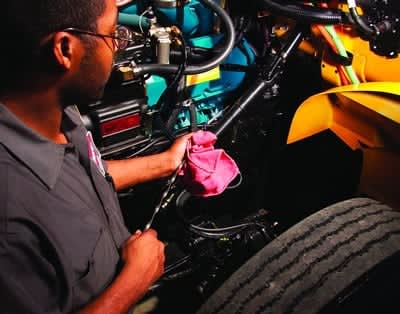
Jan. 1, 2010, the final phase-in of the U.S. Environmental Protection Agency (EPA) 2007 Heavy Duty Diesel rule will take effect. This rule requires all diesel engines to be at or below 0.20 grams per brake horsepower-hour (g/bhp-hr) of oxides of nitrogen (NOx). In the first part of this article [SBF-April/May ‘09, pg. 38] I introduced the two different solutions that bus manufacturers will use to make their engines compliant with 2010 requirements, and described how each technology works: MaxxForce® Advanced Exhaust Gas Recirculation (EGR), which IC Bus will use to meet 2010, and Selective Catalytic Reduction (SCR), which all other manufacturers will use. In Part 2, I’ll further compare these two solutions and how they will impact you and your business.
Before we get started, let’s recall how these technologies differ in reducing emissions. Advanced EGR takes place within the engine and increases the EGR flow rate, cooling in-cylinder temperatures and decreasing NOx. SCR takes place outside the engine, reducing NOx by adding aftertreatment, which uses urea, to the engine’s current EGR system and eliminating NOx downstream in the exhaust process.
Better for my bottom line?
In this economy, bus operators are concerned about every penny that goes out their door. So let’s examine the cost of 2010 compliance on your operation.
We all know that when something different is added to our operations, it has the potential to affect our bottom line. Something familiar usually has less of an impact, whereas something very different usually means a greater impact. Advanced EGR engines include updates to components with which bus operators and service technicians are familiar: interstage cooling (some ratings), twin turbos, EGR coolers, water pump, oil filter housing and oil pan (on V-8s), and a revised cooling package. Your techs are familiar with these as they are simply an evolution of existing components. You do not need to worry about the cost of new training, additional maintenance intervals, storage for aftertreatment hardware or the ongoing cost of urea when it comes to Advanced EGR from IC Bus.
Alternatively, SCR adds unfamiliarity. SCR would be a new technology to your staff requiring new training for drivers and service technicians. Also, the cost of storage for the additional hardware and the ongoing cost of handling and purchasing urea impacts your bottom line.
SCR proponents claim that you will save money with improved fuel economy over 2007 engines. But it is misleading to look solely at fuel economy. Since urea gets consumed as you go down the road, like diesel fuel, it needs to be replenished. That costs money. Information available from operators using SCR in Europe indicates two to five gallons of urea will be consumed for every 100 gallons of diesel burned. I have seen vehicle urea cost around $12 per gallon in Europe and as much as $35 per gallon domestically. Industry experts estimate that the cost of urea could come down at some point, but that remains to be seen. The cost per mile for SCR includes the ongoing cost of urea, and you should calculate that impact on your bottom line.
Looking at both options, we can conclude that even if SCR improves fuel economy and if urea costs come down at some point, then the additional costs of training service techs, storing and purchasing replacement parts for the urea system, and adding a urea infrastructure to your business will add unfamiliarity and costs that are not good for your bottom line.
Which is less of a hassle?
Aside from the costs to your bottom line, let’s weigh the options in terms of hassle for you, your technicians and drivers.
With Advanced EGR buses, the technology used to meet 2010 standards is an evolution of the same technology used by all manufacturers to meet 2007 EPA standards. 2010 emissions are met with advanced fuel injection technology, proprietary combustion bowl design on the pistons, advanced air management and electronic calibration strategies. It is the next step in the technology path, so service technicians are already well-versed on these engines. Also, the EGR diagnostic requirements and service intervals are unchanged from today’s engines. For drivers, the same driver display on the buses today will be used. In other words, the familiarity of Advanced EGR engines means less hassle for you.
As for SCR, drivers and technicians will need training on the SCR system. For example, because diesel engines with SCR could run with empty urea tanks but would not meet 2010 requirements, EPA rules call for vehicles to be equipped with sophisticated sensors to detect NOx in exhaust. If the sensors detect bad or no urea solution, there will be progressive stages of warning and vehicle response, beginning with warning lights and, a few stages later, ending with vehicle shutdown. Can you afford to have your buses shut down? Operators, drivers and technicians for buses with SCR need to be prepared to be part of the EPA compliance equation, because without urea the vehicle cannot run legally and will eventually lose power if the fluid is unavailable.
Many operators I speak with want to keep driver distractions minimized. A blinking light on the dash can be cause for alarm and an unwanted distraction. Did you know that SCR systems require EPA-mandated warning lights, all of which will be new to your drivers and service technicians?
As mentioned earlier, SCR requires additional hardware, including: urea storage tanks, tank heaters and connections, tank level sensors and sensor cables, electric cables, heated lines, a urea filter, stainless steel line connectors, inline filters, stop flow valves, screw fittings, and electrical connectors, all of which are new to your bus. The additional hardware takes up space. Think about your buses with wheelchair lifts, air conditioning systems and rear engine configurations where space is at a premium. Where will you put that SCR equipment? As for Advanced EGR, because 2010 adjustments happen in cylinder, these engines take up no added space on your buses.
Do both require urea?
No, only SCR systems require urea. The addition of this fluid, which currently has limited U.S. availability, is the critical component to making SCR buses 2010 compliant and also a major reason IC Bus chose not to follow the SCR path. “We wanted our engines to meet 2010 compliance without urea. Urea is too big of a burden to put on our customers,” said John McKinney, president, Global Bus Operations, at IC Bus.
Have you thought about how you would handle and store urea? Urea is not as tame as, say, windshield washer fluid. In fact, the International Organization for Standardization created a nine-page document (ISO 22241-3) prescribing the correct handling and storage procedures and a 43-page document (ISO 22241-2) detailing testing required to confirm quality levels needed for vehicle-grade urea. These documents bring up important guidelines about urea, including:
Urea freezes at 12 degrees Fahrenheit. SCR-equipped vehicles will require a tank heater and heated lines to prevent the urea from freezing.
Urea begins to break down at 85 F, decomposes into an ammonia gas beginning at 122 F and shouldn’t be stored for prolonged periods above 80 F.
Urea storage tanks must be insulated and shielded from direct sunlight to avoid algae growth.
So there are clear differences in SCR and MaxxForce Advanced EGR. Only one solution has less financial impact on you, is virtually hassle-free and doesn’t require you to add urea to be compliant. “We believe Advanced EGR is the more customer-friendly solution. It’s better for the bottom line and it’s less hassle,” McKinney added. McKinney advises that you ask your bus dealer the questions on your mind when it comes to this decision and your next bus purchase, such as:
How will my buses be different in 2010?
Will there be added space required to fit your system that will impact my bus?
What additional training and maintenance will be needed with your system?
Why are some leading European bus manufacturers now preferring Advanced EGR to SCR?
What does your 2010 solution mean for resale value?
When you weigh both options for meeting 2010 standards, it seems that the choice is clear.
David Hillman has worked in the North American commercial vehicle industry for 20 years and is a founding member of the American School Bus Council.
More Alternative Fuels
Alt-Fuel Moves: Electric Bus Rollouts, Bidirectional Charging & Propane Growth
See which fleets are adding electric and propane school buses as districts and operators invest in charging infrastructure, bidirectional technology, and alternative-fuel expansion.
Read More →
Nobody Told Diesel Prices They Were Supposed to Come Down
With diesel prices surging, school bus fleets have new reason to stress-test fuel costs, consider diversification, and calculate what each route really costs to operate.
Read More →
Why Gasoline School Buses Are Making a Comeback
Gasoline is gaining ground in full-size school buses. See how today’s options stack up against diesel on cost, maintenance, emissions, performance, and more.
Read More →
EPA Opens $180M DERA Funding Round for Diesel Upgrades
The 2026 Diesel Emissions Reduction Act program seeks applications from eligible organizations to accelerate the retirement of legacy diesel vehicles.
Read More →
The Secret Life of an Electric School Bus Battery
Batteries change throughout years of daily routes, but degradation doesn’t necessarily mean the end. Here’s what operators should know about performance, safety, and second life.
Read More →
CALSTART and Forth Combine to Form Catalyst Mobility
The new name represents a renewed vision for the nonprofit focused on advancing clean, equitable, and affordable transportation solutions that move people and goods.
Read More →
Alt-Fuel Moves: New Buses, Charging Hubs & Real-World EV Testing
Propane and electric school bus deployments continue to grow as districts add new vehicles, expand charging infrastructure, and gather more real-world operating data.
Read More →
Fewer Electric School Bus Models Reshape the U.S. Market
WRI’s latest buyer’s guide points to a consolidating electric school bus market, but fewer options may reflect a maturing industry rather than fewer meaningful choices for school bus operators.
Read More →
The Fuel Budget You Can Actually Predict: How Propane Autogas Keeps Money in the Classroom
Learn how propane autogas helps school districts manage fuel costs with predictable pricing, lower maintenance, and reduced emissions from former transportation director Joel Stutheit.
Read More →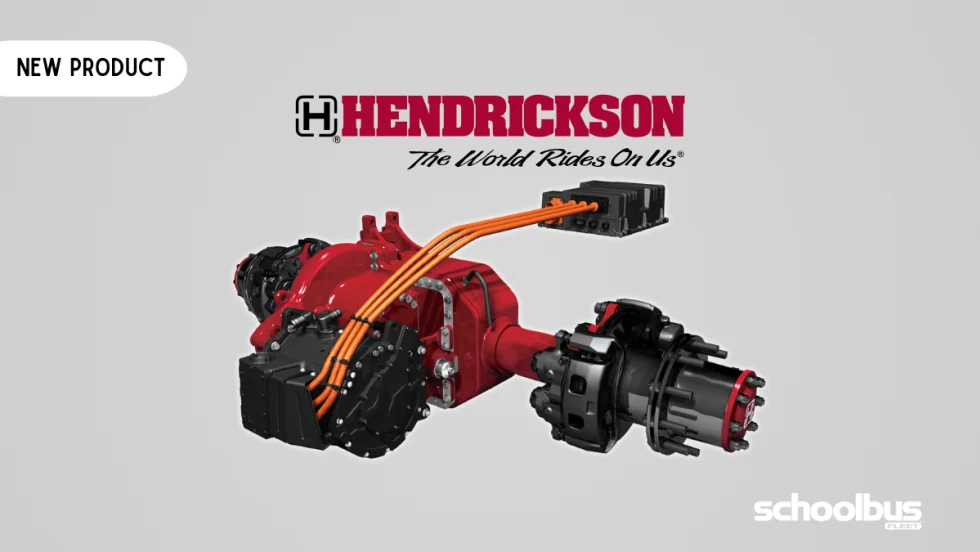
Hendrickson, Driventic Introduce New Electric Powertrain for School Buses
ELECTRAAX, the electrified, lightweight drive axle offers integrated ePowertrain efficiency and modular flexibility for Class 6–7 school bus use.
Read More →