SBF 70 years logo
MenuMENU
SearchSEARCH

Are You Prepared for a Critical Incident?

What you need to know about preparing for an emergency involving a school bus.

by Eileen Danahy
August 1, 1999
6 min to read


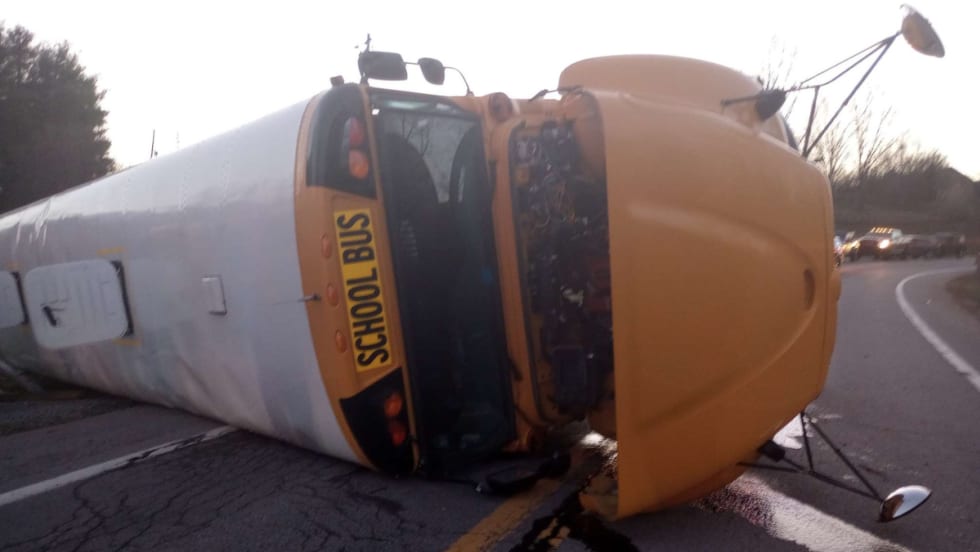
The likelihood of a fatal or serious injury accident involving a school bus is relatively small, but school systems need to be prepared for any eventuality. At Montgomery County Public Schools in Maryland, we respond to these emergencies with what we call a critical incident team. The purpose of the team is to address the needs of the students and other passengers on the bus and to ensure proper incident investigation. This team should also protect the interests of the school system and minimize civil liability. This team comprises individuals who are specially prepared to handle critical incidents likely to result in media attention, civil liability or criminal charges. A working partnership among intergovernmental agencies — such as police departments, fire departments, insurance agencies and legal offices — is essential.

Team has 2 functions
In the event of a critical incident, the team handles administrative duties as well as accident investigation. Let’s first discuss these administrative assignments. Because an accident scene can quickly become an area of hysteria and confusion, a written policy assigning basic tasks is a necessity. Here are several basic questions that need to be answered through administrative policy.

Ad Loading...
  • Who calls the police and ambulance service?

  • What are the responsibilities of the driver and attendant?

  • Who maintains the list of students on the bus, the transportation department or the school?

  • Who maintains the list of emergency phone numbers to contact parents?

  • Who notifies parents that their child was involved in a serious crash?

Ad Loading...
  • Who documents the hospital name and address where each child is transported?

  • What do you do when a collision occurs in the afternoon after school has dismissed and all school telephones are now on an answering machine?

  • Who maintains a manifest or passenger list for after-hours operations (e.g., field trips, athletic trips or activity buses)? More often than not, fire departments will be at the accident scene well before transportation personnel. Do you have a plan to work with the fire department or ambulance service in your area so you can determine the answers to these questions?


Compliance is critical
In a recent meeting concerning a special-needs student, the principal was asked if she had a list of the special-education students and their assigned buses. Her response was that she had them for all the regular-education students, but not for the special-needs students. In this case, a policy mandate was not followed. This would have compounded confusion had there been a serious incident. Written policies and procedures can and will assist you in the event of a critical incident. Administrative and school offices need to understand the importance of transportation policies and be willing to share the responsibilities. Here are some areas of planning that require mutual agreement:

  • Radio dispatch responsibilities

Ad Loading...
  • Driver and attendant responsibilities

  • School notification

  • Parent notification

  • Media response

  • Release of students from the incident scene

Ad Loading...
  • Psychological needs for trauma for students and all staff The person taking the initial call (dispatcher or transportation supervisor) should have a checklist of all parties to be notified. All information should be collected and referred to this central point to ensure current and accurate information. This location would be the communication hub. The undocumented release of students from a serious incident scene could be a source of intense confusion. You need to determine how to address the following questions:

  • Will parents be allowed to take students from the scene?

  • Who will keep track, especially if a parent also takes a neighbor’s child?

  • How would the parent of a non-verbal child be positively identified?

  • Transporting students back to their school to be released to their parents is one option.

Ad Loading...
  • If students are not seriously injured, children may be delivered to their home by a relief bus. Other administrative considerations include consulting a crisis intervention group. Consisting of psychologists and/or therapists, this group should be prepared to offer counseling to all school system parties. In one case involving a fatality, this service was offered to everyone except the bus driver. This unfortunate oversight has changed standard operating procedure in one jurisdiction, and a school system psychologist may report directly to an incident scene as appropriate.

[PAGEBREAK]

Crash probe basics
Investigation of a collision is an extremely technical process. A working partnership with public safety personnel is invaluable. Establishing a mutual protocol with emergency services at the incident scene is essential and can be done properly only through planning. Also, remember that school personnel should never hinder the critical work being done by police and fire departments. A trained collision investigator is an asset to any transportation system. There are generally three levels of collision investigation:

  • At scene

  • Advanced

Ad Loading...
  • Reconstruction Although there may be different titles for these levels of instruction, you could check with your state’s highway administration, state police or even your local jurisdiction to see what courses are offered through its police department. Inquire if they would make seats available for someone on your staff to attend their classes. Perhaps they would work with you to develop a course specifically tailored to school bus transportation. You may want to have an informational packet developed for each driver, so data can be collected immediately by the driver or attendant, before supervisory staff arrives. For example, a checklist with drivers’ responsibilities, the passenger position chart, cards with other driver information and insurance information. An investigator’s accident kit for team members should be readily available and include the following:

  • 35mm camera with flash (and extra film)

  • 100-foot measuring tape

  • Flashlights

  • Extra reflectors or fuses

Ad Loading...
  • Note pads, pens, pencils

  • Collision scene checklist

  • Passenger injury list

  • Grease pencils to mark final rest of vehicles and skid marks Scene photographs are critical to document a collision. Investigators should take lots of pictures. Remember, film is cheap compared to what you may face in settling civil litigation. From the photos, a collision reconstructionist can determine what actually occurred. Measuring of skidmarks is also extremely important. Learn how to read and measure them. If your state law has degrees of liability, this may become an important factor. Vehicle inspection and notation of any damage may be helpful later. Photos, though important, are not the only recording method. A video camera is also an option. Record the dates and times of day you have taken notes or filmed the video. Keep all evidence secured to maintain chain of custody. In the event that you testify in court, questions relating to the scene, time of day, weather conditions, road conditions, etc., will be asked. Photography will help to refresh your memory, particularly because civil or criminal cases may not be presented in court for two or three years after the incident. Attorneys may take advantage of the extended time to confuse your recollection. A standard operating procedure should be developed and maintained so there is no question of on-scene responsibilities.


A quick summary
If you are interested in forming a critical incident team, here is what you need to do:

Ad Loading...
  • Recognize the need for partnerships with school administrators, public safety personnel, school insurance carriers and legal counsel.

  • Prepare written policies and procedures and review them periodically.

  • Practice by conducting mock drills.

  • Run through a debriefing to see if the developments are useful and initiate corrections if appropriate.

  • Make a dedicated effort to train staff in collision investigation. A critical incident team with assigned responsibilities is essential in order to diminish confusion the day of the event as well as years later.

Ad Loading...


Author Eileen Danahy is a transportation specialist for Montgomery County Public Schools in Rockville, Md.


Subscribe to Our Newsletter

More Safety

The side of a school bus with a retracted stop signal.
Safetyby Elora HaynesMarch 4, 2026

National Action Plan Aims to End Illegal School Bus Passings Across the U.S.

See how a new 50-state roadmap outlines 69 strategies for districts, law enforcement, and policymakers to reduce the 39 million illegal school bus passings reported each year.

Read More →
A school bus graphic with text reading "Iowa Student Killed, 14 Injured in Oklahoma Bus Crash."
Safetyby StaffMarch 3, 2026

11-Year-Old Student Dies After Falling Under School Bus

Recently, an Iowa student died after falling under a school bus, while 14 Oklahoma students were injured days later when a semi-truck rear-ended their bus.

Read More →
school bus driver
SponsoredMarch 2, 2026

7 Key Criteria for Choosing a School Bus Fleet Technology Partner

Download this white paper for clear guidance on evaluating your organization’s needs and selecting a partner who delivers long-term value.

Read More →
Ad Loading...
Graphic of a yellow school bus above the headline “The Real Cost of Downtime,” with icons illustrating overtime costs, frustrated parents and administrators, repair expenses, and route delays, emphasizing the operational and financial impact of communication failures in school transportation fleets.
SponsoredMarch 2, 2026

The Real Cost of Bus Fleet Downtime

When school bus communication systems fail, the consequences extend far beyond equipment repairs. Downtime can increase safety risks, strain dispatch operations, and erode driver confidence. Explore how proactive radio lifecycle management and managed services are reducing disruptions, supporting driver retention, and delivering predictable budgeting for school transportation fleets.

Read More →
Graphic showing the EverDriven logo and “SafeOps Council Launches” text over an image of a vehicle driving on a curved road, with School Bus Fleet branding in the corner.
Safetyby News/Media ReleaseFebruary 25, 2026

EverDriven Launches New Council to Standardize Safety Across 36 States

EverDriven has launched a new safety council aimed at standardizing and strengthening student transportation practices across all states it operates in.

Read More →
a photo of a school bus driving down a suburban street with houses in the background and green grass pictured
Safetyby News/Media ReleaseFebruary 23, 2026

Thomas Built Buses Awards “If You Pass” Safety Campaign Funds to Ga. District

The OEM's three-week campaign during National School Bus Safety Week has awarded nearly $6,000 to Bryan County Schools to support increasing student safety around the bus.

Read More →
Ad Loading...
Kids need more from a driverless ride graphic comparing “Getting from A to B” vs “Student Transportation,” with a Waymo-style autonomous car image and School Bus Fleet logo.
SafetyFebruary 11, 2026

Autonomous Vehicles Aren’t Built for Student Transportation [Op-Ed]

Driverless cars may feel the future, but student transportation requires more than navigation. Here’s why it demands human judgment, empathy, and oversight.

Read More →
Graphic showing the front of a yellow school bus with cracked-glass overlay and headline reading “Fatal School Bus Hit & Run in New York,” dated February 5, 2026, alongside the School Bus Fleet logo.
Safetyby Staff and News ReportsFebruary 10, 2026

New York Girl Killed by School Bus Hit & Run

An 11-year-old in Brooklyn was killed crossing the street. Meanwhile, the school bus driver faces misdemeanor charges after he left the scene.

Read More →
2026 Disaster Response Guide Call for Experts is Open.
Safetyby StaffFebruary 9, 2026

Disaster Readiness Starts Before the Storm [Call for Experts]

The 2026 Disaster Response Guide is officially underway, and we’re now opening a Call for Insights and Experts.

Read More →
Ad Loading...
School Transportation
SponsoredFebruary 9, 2026

How Supplemental Transportation Helps Close Driver Gaps

Ongoing driver shortages nationwide are forcing tough transportation decisions. See how districts are using supplemental transportation to maintain coverage for high-needs students.

Read More →