





Miss This?Student Transportation of America Announces 6 New Acquisitions
How Training the Trainers is Boosting School Bus Safety at STA
See how Student Transportation of America's Precision Skills Training Program empowers trainers with hands-on tools and techniques, leading to safer roads, fewer injuries, and more confident drivers.
August 28, 2025
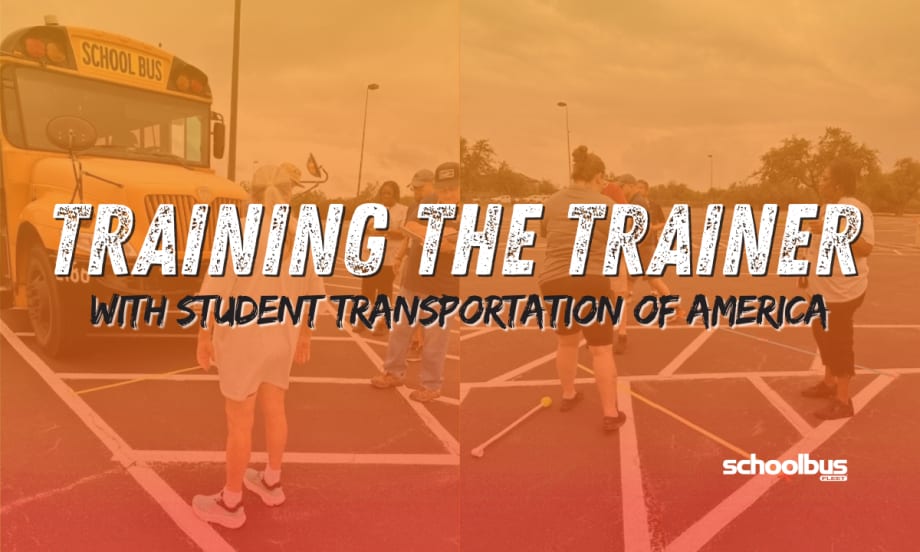
STA's Precision Skills Training Program has certified 300+ trainers over 21 sessions in three years.
Photo: Student Transportation of America/School Bus Fleet
6 min to read
What does it take to cut school bus accidents by a quarter? For Student Transportation of America (STA), the nation’s third-largest school bus contractor, the answer lies in training the trainers — a strategy that has reshaped how new drivers learn the skills needed to transport students safely.
STA has introduced a new approach for driver instruction with its Precision Skills Training Program. This specialized initiative is designed to elevate the skills of its bus drivers by empowering the trainers who guide them.
This dual-purpose program combines behind-the-wheel training for new hires with train-the-trainer instruction to strengthen core instructional techniques. The program equips instructors with the proper guidance to practice and master core driving maneuvers before teaching them to candidates.
According to Shelly Hall, VP of safety at STA, "By combining world-class safety standards with state-of-the-art training, the goal of our Precision Skills Training course is to not only ensure the highest skill levels in our driver workforce, but also train drivers to have fewer accidents, higher morale, and lower turnover."
The result? Consistency, confidence, and safety in each lesson delivered.
With 21 sessions over the last three years, over 311 trainers have earned STA's precision certification.
Inside STA's Precision Skills Training Program
A pillar of school bus safety is a robust training program for drivers. With this in mind, Hall noted the shift in STA's program offerings a few years back was made to ensure that the training experience for drivers was "top notch" and prepared trainers to deliver a better experience for its drivers.
"I don't think the general public and even parents of students realize what goes into training their bus drivers," Hall said in an interview with School Bus Fleet. "We take pride in ensuring that we give them a well-rounded training experience."
The program, which offers three and a half days of classroom and behind-the-wheel instruction, educates trainers on how to teach others about operating a school bus, but also how to handle emergencies and challenging student behavior.
In the classroom, training begins with preparing attendees for what the expectations are while going over the manual of the entire program. STA also teaches trainers how to develop a lesson plan and deliver precision driving training in a closed course.
The closed course, typically set up in a designated parking lot, is where trainers help drivers master various maneuvers during training. Trainers are taught how to set up the closed course and how to perform every key maneuver a driver would need to obtain their CDL or compete in a roadeo.
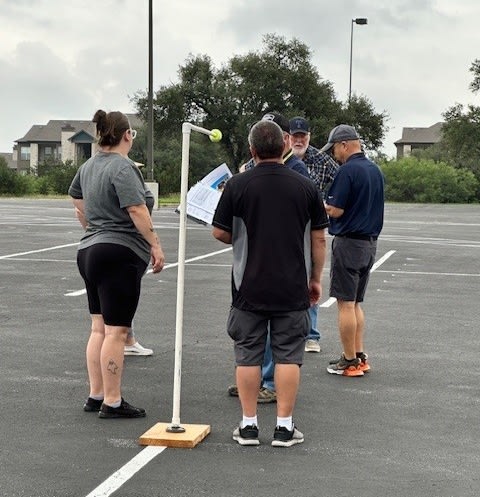
STA's program provides three and a half days of classroom and hands-on training to prepare instructors to teach safe bus operation, emergency response, and student management.
Photo: Student Transportation of America
The Precision Skills Training Program primarily focuses on learning how to deliver and demonstrate those skills, while also identifying any deficiencies during the training process. During a regional precision driving certification, trainers use tools like stanchions (poles with tennis balls attached) to provide visual feedback on maneuvers and help correct mistakes in real time. Trainers are also taught how to properly set up and equip these courses with materials like tape measures and clipboards for consistent instruction.
STA also offers a half-day add-on to help trainers properly investigate accidents, which may be helpful for roles that go out in the field.
The amount of training opportunities offered throughout the year depends on region, complexity, and size, but they most commonly occur in the summer. For example, a recent training session in Texas had 10-12 people in the class, which may not seem huge in volume, but multiple sessions in a single region can boast 40 new trainers.
However, Hall said, "We want to make sure each trainer has good one-on-one time with the folks attending to give them adequate instruction and attention."
If there are even larger groups in attendance, STA sends multiple certified instructors to assist, ensuring a balanced student-to-trainer ratio.
"Once they go through the class, they feel so much more confident," Hall said. "That's important for them, to feel like they know how to teach someone how to drive a bus in a standardized way."
How Trainer Preparation Translates to Safer Roads
Although there are other aspects to safety programs, driver training, especially in student transportation, is a significant component. Preparing trainers and drivers inevitably impacts safety numbers, but what has STA seen?
STA reports a 25% reduction in its recordable accident frequency rate and a 53% reduction in lost time injuries since implementing the Precision Skills Training Program. It all boils down to unique learning techniques and a supportive experience.
"My regional directors take great pride in being able to certify their trainers," Hall said. "The trainers really embrace it. It just makes them feel so confident to go out and train their driver workforce."
Hall recalled when STA first rolled out the program by bringing STA's regional directors of safety to California. Hall and her team led a three-and-a-half-day training session, teaching them how to deliver the program across multiple regions.
"It gave my regional directors a new tool in their toolbox to influence safety programs in their regions," Hall said. She recounted their excitement about the new training and listened to them discuss the experience.
The approach made a significant difference to their outlooks on safety and helped the regional directors grow professionally. "Some of them had never been through anything like this before, and they were seasoned safety professionals," Hall said.
From there, the impact rippled out across the organization.
"When we bring drivers on board at STA, the trainers are the first people that they spend a lot of time with," Hall said. "So, they set the tone for our entire organization. We want that experience to be impactful and meaningful, and ensure that those drivers are prepared to perform their duties safely at every step."
Positioning STA as a Safety Partner
Although there are countless school bus driver training programs, and rightfully so, STA provides another layer to the training to promote consistency and confidence.
As a service provider for many districts and schools, Hall is confident in the Precision Skills Training Program as a differentiator. She noted that as STA is approached for more opportunities, she hopes districts see through the bid process and learn that, outside of providing training products, STA can be a safety partner.
"I don't know if they always realize what it is that's going on behind closed doors," Hall said. "Districts just see that they have a successful contractual relationship with us. They see that we have outstanding safety performance. That speaks volumes to why we renew so much business and keep some of our districts as partners for a long time."
STA's program is designed to provide trainers with structured instruction, practical tools, and hands-on experience to better prepare drivers for the road. Hall describes it as both comprehensive and professional.
"We transport precious cargo," Hall said. "We want to ensure that drivers are being safe, and this program allows us to do that.
Subscribe to Our Newsletter
More Management

How to Build a Better Driver Training Program
Ready to boost up your school bus instructor training? Here’s how to pick the right talent and improve recruitment, retention, and safety.
Read More →
CALSTART and Forth Combine to Form Catalyst Mobility
The new name represents a renewed vision for the nonprofit focused on advancing clean, equitable, and affordable transportation solutions that move people and goods.
Read More →
What Makes a Great School Bus Driver Trainer?
Choosing the right school bus driver trainer takes more than experience. Learn six keys to selecting and developing trainers and evaluating program effectiveness.
Read More →


School Bus Contractors Expand Through New Deals, Acquisitions & Partnerships
STA's Canadian division acquires Ontario-based G&L Stevenson Transport while Durham School Services adds a new district contract in California, First Student adds a New Jersey contract, and Minnesota Coaches acquires Halo Transportation.
Read More →
Logan Bus Company Rolls Out AI Phone System for NYC School Bus Families
A summer pilot found that AI agents could handle most routine calls, freeing up time for customer service staff to focus on emergencies and complex family concerns.
Read More →
From Intent to Impact: What I Learned About Leadership from TAPT
A Texas transportation supervisor shares lessons on self-awareness, accountability, managing stress and building trust — and why investing in leadership development matters at every stage of your career.
Read More →
NAPT Names 2026 Award Recipients, Hall of Fame Inductee
Who earned national recognition for their work in student transportation? This year, NAPT named five recipients of its 2026 awards for service, safety, and leadership, plus its newest Hall of Famer.
Read More →
Sponsored•September 2, 2026
2026 State of Student Transportation Report
Driver shortages. Rising costs. Growing safety expectations. More data, but not enough time to act on it. The 2026 State of Student Transportation Report reveals what transportation leaders say is putting the most pressure on their operations—and where they’re investing next. See how your priorities compare.
Read More →
How to De-Escalate an Angry Person: 5 Steps for Handling Workplace Conflict
What makes emotions run high, and how should you handle an angry colleague or parent? Follow these steps for staying calm, listening, showing empathy, and resolving conflict.
Read More →
Sponsored•September 1, 2026
What Readiness Looks Like This School Year
Learn about the challenges shaping the 2026–2027 school year, from persistent driver shortages and budget pressure to technology and readiness gaps. See how school districts are responding and adapting in Zonar’s 2026 Back-to-School Readiness Report.
Read More →