





A 50-Year Impact: Susan Moorehead on the Role of School Bus Drivers
New Driver Training as a Foundation, Not a Box to Check
Go beyond CDL and ELDT training and find out how in-depth training can encourage school bus drivers to be safety pros, mentors, crisis managers, and more.
July 29, 2025
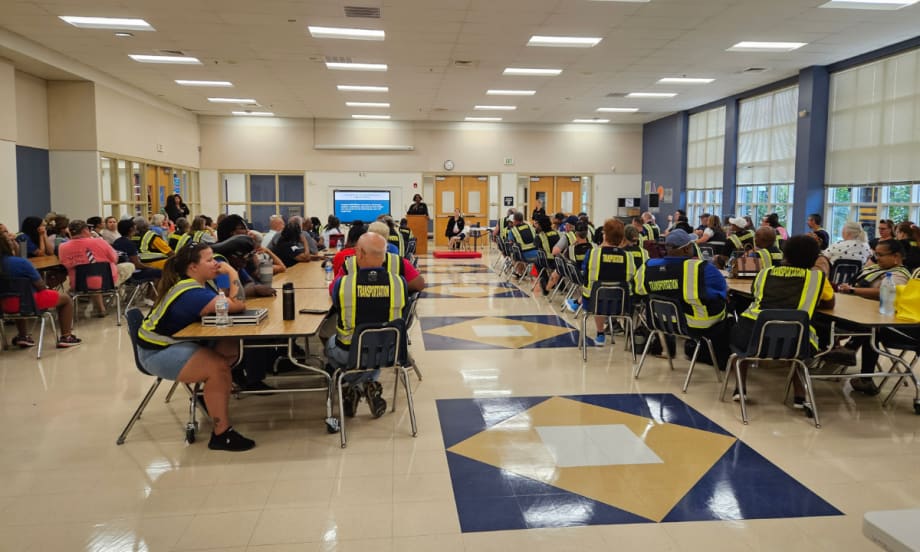
Many school bus safety veterans recommend both initial and ongoing refresher training throughout the school year.
Photo: Teena Mitchell
9 min to read
For those tasked with safely carrying the nation's students, driver training is more than a checkbox to make the state and feds happy. It's a complex, evolving program that blends technical expertise, emotional intelligence, and community engagement into one high-stakes mission. Well, maybe it's not a Bond-level mission, but it's close enough — and important enough.
One theme is clear across interviews conducted by School Bus Fleet with transportation directors and industry consultants: driver training is the beating heart of school transportation operations.
It's not static. Instead, it's a dynamic system built to adapt, whether to new regulations, the rising expectations for student safety, or the shifting realities of modern school environments.
Ask any transportation leader how vital driver training is, and the answer is emphatic.
"New driver training is absolutely critical to our operation," said Dr. Alana Shackelford of Michael's Transportation Service, Inc. (MTS).
Her organization runs a 12-month apprenticeship with over 2,150 hours of on-the-job learning and 320 hours of classroom instruction. It's a rigorous program designed to integrate real-world driving with the theory behind safe operations. Dr. Shackelford clarifies that training at MTS is not a "one-and-done" event. Instead, it's viewed as a continuous, career-long process.
That sentiment echoes nationwide. For veteran industry consultant Alexandra Robinson, new driver training isn't just functional — it's transformative.
"New driver training is the foundation for everything. It's not just creating an excitement for safety and responsibility, but also an opportunity to instill the importance of the school bus as an extension of the classroom," Robinson said.
The Rise of Soft Skills
What do pre-trip inspections, defensive driving, and emergency procedures all have in common? They fall under the technical expertise crucial to operating a school bus. However, soft skills have quickly become the most impactful difference in new driver training.
"Industry-wide, emotional intelligence and student engagement strategies are often overlooked," Dr. Shackelford said. "A competent school bus driver must also be a compassionate caretaker and a community ambassador."
Teena Mitchell, special needs transportation coordinator at Greenville County Schools and SBF Editorial Advisory Board member, goes further. She uses bus video footage and skits to train drivers in de-escalation and emotional awareness.
"We encourage reflection on staff responses and support positive behavior strategies," Mitchell said.
Nikki Patterson, safety and training supervisor at Pearland ISD in Texas, underscores the need for soft skills and building confidence when coaching drivers on communication with parents.
"One of our drivers is outstanding at her job and has a strong connection with her students, but she often feels nervous about calling parents to discuss unsafe behavior," Patterson said
She explained that the driver should approach the conversation in a way that she'd want someone to speak to her about her child — with respect, concern, and a collaborative mindset.
"Framing the conversation as 'I need your help' helps open the door to a productive dialogue and encourages the parent to become a partner in addressing the issue," Patterson said.
A Culture of Continuous Learning
If there's one practice consistent across interviewees, it's the commitment to ongoing, layered training. The concept of "train once, done forever" has no place in modern school transportation. Some practices include:
- Monthly professional development sessions at MTS allow drivers to revisit earlier topics and incorporate new regulatory updates.
- Pearland ISD runs annual in-service training at the start of the school year, coupled with dynamic workshops responding to emerging issues like bullying or route changes.
- According to Rosalyn Vann-Jackson, chief support services officer at Broken Arrow Public Schools in Oklahoma, the district holds training every first Friday of the month during distance learning days, except in August when they conduct a three-day in-service training.
- Anthony Shields, director of transportation for San Marcos CISD, based in San Marcos, Texas, ensures his department offers monthly professional development days, including hands-on driving events.
"Learning is never stagnant," Dr. Shackelford said of continuous training. "Drivers remain sharp, aware of evolving regulations, and confident in both routine and emergency scenarios."
"I would recommend both initial training and ongoing refresher training through each school year, especially as new safety issues and state or federal regulations are updated," Robinson said.
This philosophy reflects a growing recognition that fellow transportation professionals operate in a constantly shifting landscape. Regulations change. Vehicle technology evolves. Student populations become more diverse. Training must keep pace.
Special Needs: A Priority and a Challenge
Another major theme in new driver training conversations is the emphasis on training related to transporting students with disabilities. From physical procedures like securing wheelchairs to the emotional intelligence required to de-escalate a distressed student, special needs transportation demands specialized expertise.
Mitchell's program in South Carolina devotes an entire four-day block of training solely to special needs, culminating in a written exam and a Special Needs Physical Performance Test (SNPPT). Drivers must demonstrate physical skills like securing equipment and conducting emergency evacuations — even dragging 125 lbs. to simulate evacuating a student.
Pamela McDonald, an industry veteran who retired from a California district almost five years ago, emphasizes going beyond the state's mandatory training.
"We liked to train more," she said. "Topics included, but were not limited to, transporting students with special needs, PPE, emergency preparedness, highjacking, sexual harassment prevention, mountain driving, chaining up in the snow, bullying, Child Safety Restraint Systems (CSRS), ergonomics, etc."
The list goes on. Even though some topics are listed in California's training manual, McDonald liked to have her drivers spend more time on issues that were scarcely touched on.
And yet, as Mitchell notes: "Training related to students with disabilities and soft skills is often underemphasized. Districts need more focus on de-escalation strategies and recognizing behavior triggers — not just in students, but in staff as well."
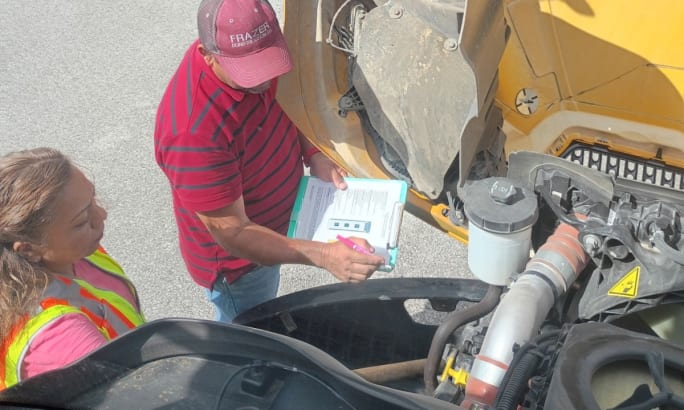
Pre-trip inspections fall under the technical expertise crucial to operating a school bus, but training doesn’t stop there.
Photo: Anthony Shields
New-to-District Drivers: A Unique Challenge
A subtle challenge in driver training arises with drivers new to a district but not new to the job. While they may bring years of experience, those habits sometimes conflict with local practices.
"We conduct a transition orientation that focuses on MTS's culture, values, and protocols," Dr. Shackelford said. "We often find that drivers from other districts bring practices that may not align with our safety-first standards or ESOP mission of inclusion and ownership."
Mitchell's team requires all drivers, regardless of experience, to complete the entire training program.
"We believe our standards exceed state and federal minimums, so all of our drivers and attendants are required to have the same training to help ensure consistent, safe practices," Mitchell said.
"When drivers join us from a different district, they are paired with a trainer to receive comprehensive training on our operational standards, departmental expectations, and route procedures," Patterson said.
She explains that it's common for new drivers to reference practices from previous districts. If those practices align with Pearland ISD's current protocols, they continue training as normal. Still, if major differences exist, they clearly communicate their district's expectations and ensure proper training is available
These approaches help eliminate confusion and ensure every driver, new or veteran, adheres to the same standards of safety and professionalism.
Staying Current in a Changing Landscape
Now that training every new driver has been established, you may wonder how training rapidly adapts to new regulations or best practices. Whether it's changing federal requirements like the Entry-Level Driver Training (ELDT) rule or local safety protocols, these updates should be quickly woven into training programs.
MTS directly implements changes from organizations like CASTO (California Association of School Transportation Officials) and CSTA (California School Transportation Association) into monthly sessions. Pearland ISD customizes its approach depending on the size of the change, using written memos for minor updates and mandatory meetings for larger shifts
Vann-Jackson notes that Broken Arrow Public Schools deploys a combination of monthly meetings, weekly recorded calls, daily written memos, emails, and radio communication.
Robinson also suggests short, effective "brown-bag" sessions, in addition to in-depth annual trainings, which are lunchtime meetings for quick safety updates to keep training current without overwhelming staff.
Information overload is a genuine concern, especially for new drivers. To combat it, transportation leaders can employ strategies like:
- Quizzes and written exams.
- Scenario-based role plays.
- Ride-alongs and mentoring programs.
- Regular reviews and coaching sessions.
Shields has a structured system of scheduling 30-, 60-, and 90-day reviews to check in with new drivers.
"These check-ins allow us to revisit key training topics, with a strong focus on student management," he said.
"Retention is built into our model," Dr. Shackelford said. "During the apprenticeship, drivers undergo frequent check-ins, evaluations, knowledge assessments, and field coaching."
Training Through Industry Connections
Professional development extends beyond internal training. Interviewees emphasized the value of national and regional groups like CASTO (or your own state association), NAPT (National Association for Pupil Transportation), NASDPTS (National Association of State Directors of Pupil Transportation Services), network and learning events like School Bus Fleet ConneX (SBFX), and role-specific workshops.
"These events enhance professional development and align with our mission to disciple the school bus industry through leadership and excellence," Dr. Shackelford said.
Mitchell views school bus roadeo events as invaluable for building technical skills and team morale.
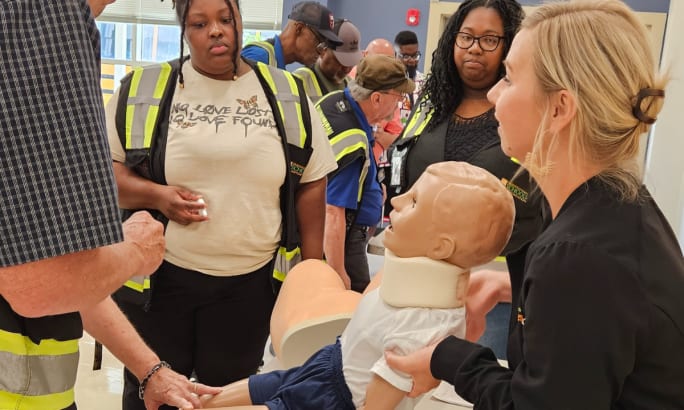
Some districts leverage school-based professionals like nurses, behavior specialists, and physical therapists to add an extra layer of training.
Photo: Teena Mitchell
Where Funding Ends, Creativity Begins
It's no secret funding varies widely across districts. Some have dedicated budgets, while others patch together resources from general funds, grants, insurance partnerships, and vendor-sponsored training. Mitchell explains that training doesn't have to be costly.
"We send key staff to conferences, who then train others internally. We also partner with our special needs department and leverage school-based professionals like nurses, behavior specialists, and physical therapists," she said.
Shackelford notes that MTS funds specialized programs through grants and partnerships with insurance companies. Plus, external vendors may provide subsidized or no-cost training opportunities.
On the other hand, individuals like Nelson Smith, founder and CEO of Student Transport, demonstrate how creativity often fills the gaps when formal resources fall short. He recounts how his journey into training began unexpectedly while working as a school bus driver in Indiana
"They asked me to start training their incoming drivers," he said. "All they handed me was the manual."
Confronted with limited official materials, Smith took it upon himself to build new tools and resources from scratch, eventually launching Student Transport to provide online specialized training resources and support for school districts lacking robust in-house programs.
Smith describes himself as immersed in "school bus training 24/7," offering services that go beyond the bases of CDL preparation. Student Transport focuses on practical, real-world training solutions and custom virtual materials, yet, like many small providers, Smith faces challenges in expanding its reach.
What's Still Missing in the Road Ahead?
Pupil transportation is more than getting students from point A to point B. It's about trust, safety, and building positive relationships. As regulations tighten and student needs grow more complex, transportation should continue raising the bar on driver training.
Despite robust programs, nearly all interviewees agreed on two things the industry still struggles to train well:
- Soft skills: Emotional intelligence, conflict resolution, and communication remain challenging. "Common sense isn't always common!" Robinson quipped.
- Understanding diverse disabilities: Knowing how to support students with different behavioral or physical needs is vital, but often under-trained.
"They're not just drivers — they're mentors, role models, and often the first district representative a student interacts with each morning," Patterson said.
Investing in their growth isn't optional. It's essential. From rigorous technical instruction to deeply human conversations about empathy and connection, the message is clear: the road to safety, professionalism, and student success begins long before the engine starts.
Subscribe to Our Newsletter
More Management

How to Build a Better Driver Training Program
Ready to boost up your school bus instructor training? Here’s how to pick the right talent and improve recruitment, retention, and safety.
Read More →
CALSTART and Forth Combine to Form Catalyst Mobility
The new name represents a renewed vision for the nonprofit focused on advancing clean, equitable, and affordable transportation solutions that move people and goods.
Read More →
What Makes a Great School Bus Driver Trainer?
Choosing the right school bus driver trainer takes more than experience. Learn six keys to selecting and developing trainers and evaluating program effectiveness.
Read More →


School Bus Contractors Expand Through New Deals, Acquisitions & Partnerships
STA's Canadian division acquires Ontario-based G&L Stevenson Transport while Durham School Services adds a new district contract in California, First Student adds a New Jersey contract, and Minnesota Coaches acquires Halo Transportation.
Read More →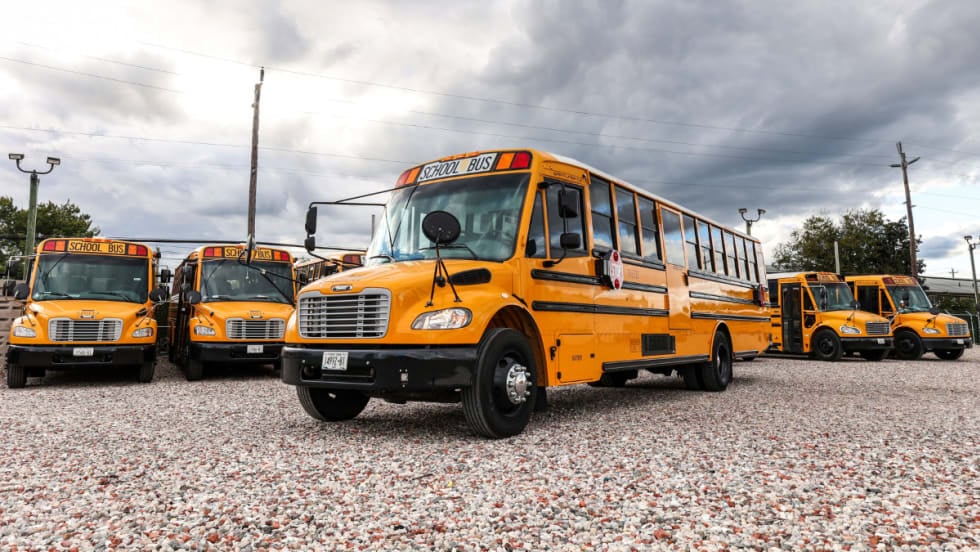
Logan Bus Company Rolls Out AI Phone System for NYC School Bus Families
A summer pilot found that AI agents could handle most routine calls, freeing up time for customer service staff to focus on emergencies and complex family concerns.
Read More →
From Intent to Impact: What I Learned About Leadership from TAPT
A Texas transportation supervisor shares lessons on self-awareness, accountability, managing stress and building trust — and why investing in leadership development matters at every stage of your career.
Read More →
NAPT Names 2026 Award Recipients, Hall of Fame Inductee
Who earned national recognition for their work in student transportation? This year, NAPT named five recipients of its 2026 awards for service, safety, and leadership, plus its newest Hall of Famer.
Read More →
Sponsored•September 2, 2026
2026 State of Student Transportation Report
Driver shortages. Rising costs. Growing safety expectations. More data, but not enough time to act on it. The 2026 State of Student Transportation Report reveals what transportation leaders say is putting the most pressure on their operations—and where they’re investing next. See how your priorities compare.
Read More →
How to De-Escalate an Angry Person: 5 Steps for Handling Workplace Conflict
What makes emotions run high, and how should you handle an angry colleague or parent? Follow these steps for staying calm, listening, showing empathy, and resolving conflict.
Read More →
Sponsored•September 1, 2026
What Readiness Looks Like This School Year
Learn about the challenges shaping the 2026–2027 school year, from persistent driver shortages and budget pressure to technology and readiness gaps. See how school districts are responding and adapting in Zonar’s 2026 Back-to-School Readiness Report.
Read More →