





From Transaction to Trust: How Dealers & Districts Can Build Lasting Relationships
School Bus Dealers on Sales, Service, Inventory, EVs & More [Survey Report]
From inventory hurdles to alt-fuel demand, school bus dealerships dish on what’s working, what’s not, and what schools really want on the road.
July 23, 2025
![School Bus Dealers on Sales, Service, Inventory, EVs & More [Survey Report]](https://assets.bobitstudios.com/image/upload/f_auto,q_auto,dpr_auto,c_limit,w_920/2025-dealer-survey-results-main_1768068699064_gmetzz.png)
School bus dealers are more than sales pros — they’re on the front lines of fleet trends, tech needs, and service challenges. Here’s what they’re seeing in 2025.
Photo: School Bus Fleet
3 min to read
School bus dealerships are more than just vehicle suppliers. They’re trusted partners, helping districts and contractors navigate equipment selection and long-term fleet planning.
With firsthand insight into evolving technologies, fuel trends, and operational demands, dealers play a pivotal role in the industry. So, School Bus Fleet checked in with them! From the East Coast to the Midwest and the South, here are the insights they shared in the form of survey responses.
Service & Feature Trends
When choosing which manufacturer brands to represent, dealers agree that quality, reliability, and brand reputation are paramount. Most also factor in after-sales support, service network, and cost-effectiveness for its customers.
Some optional features that many customers request are A/C, integrated child safety seating, fully illuminated stop-arms and signs, cameras, auxiliary heaters, ADAS technology, remote mirrors, and luggage boxes.
When it comes to maintenance, dealer respondents said common service issues include emissions components failure, water leaks, electrical issues, and of course, parts availability.
All dealers surveyed offer additional services beyond bus sales, ranging from service and parts to financing, consulting, training, aftermarket retrofits, funding and grant research services, consulting, training, EV charging assistance, and more.
Many dealers wish more customers would take them up on these services. “We love helping districts minimize downtime and avoid unnecessary service calls,” Whitney Kopanko, director of marketing & school bus sales for Sonny Merryman told SBF. She and others encourage customers to be upfront about challenges and concerns so they can help navigate complex or confusing situations.
EV Impact
While electric buses trailed diesel in terms of demand, trends vary by region. Eighty percent of respondents said that government incentives and grant programs have “a lot of” impact on electric bus sales, while 20% said it’s complicated.
Of the latter, one New York dealer elaborated: “Government incentives have a huge impact on EV bus sales; however, (here) bus purchases must also be approved by the voters within each local school district. This means that, even if a district has been awarded funds that would pay for the entire purchase, the voters can (and have) voted the purchase down.”
Meanwhile, one Midwestern dealer noted, “Very little interest in EV in this market. The government grants really muck up the market and put EVs where they are not wanted, not needed, and don't work well.”
Another respondent said: “It's a shame that markets are letting politics divide them and subsequently define their choice of vehicle deployments. EV and alt fuels have proven to be effective in the proper operations, and it's in our collective best interests to mitigate some environmental impact for our future generations.”
Desired Manufacturer, Market Improvements
Dealerships are highly attuned to market trends and share customer feedback (and their own) with OEMs for improvement. This year, they expressed a desire to see improved manufacturing lead times, higher quality, more favorable terms on floor plan interest for new stock units, increased collaboration on federal funding, and support for school bus replacements, as well as simpler and less complex school buses. “Our customers are not asking for all of the technological advances that all of the manufacturers are promoting; (they) want and are asking for simpler vehicles with less to go wrong” one respondent said.
Another acknowledged the manufacturer strain exacerbated by COVID, supply chain issues, and now tariffs. “Price changes are frequent which is destabilizing,” they wrote. “The support mostly needed is market stability.”
More Dealer Survey Data
Here are other insights from this year’s survey results.
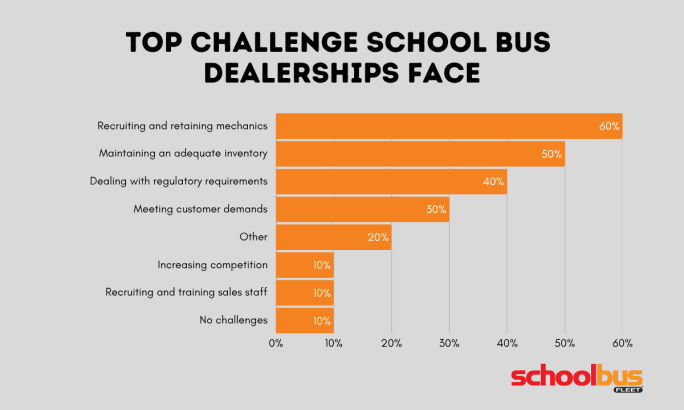
Compared to our 2023 results, customer demand and market competition became less of a challenge. Meanwhile, inventory concerns spiked way up from 18% two years ago. “Other” challenges included building costs and production delays from custom orders.
Source: School Bus Fleet
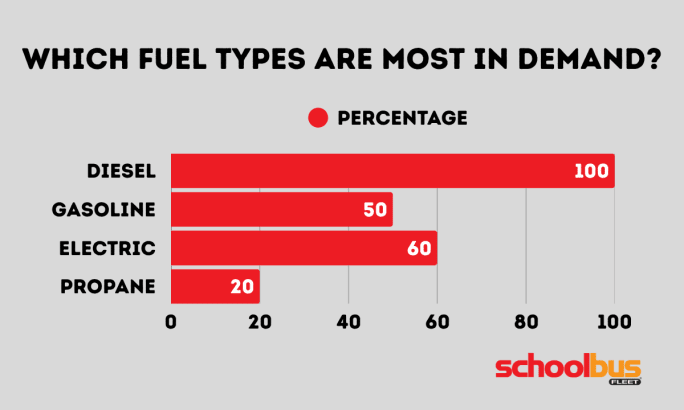
All dealer respondents said that diesel remains in high demand, while just over half say EVs are growing in popularity, half report gasoline is, and 20% for propane.
Source: School Bus Fleet
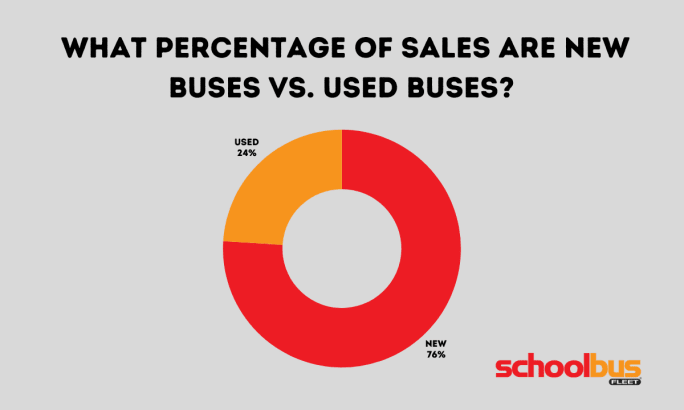
On average, just over three-quarters of sales are for new buses. Ninety percent of respondents said they offer a trade-in program for older buses.
Source: School Bus Fleet
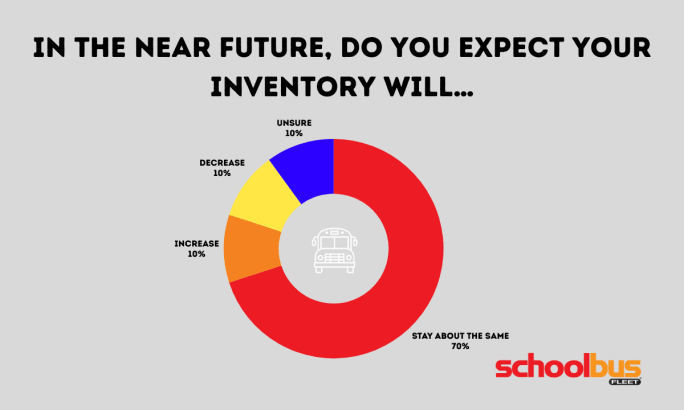
Things look to be pretty stable in the year(s) ahead, as dealers plan on maintaining current levels of inventory.
Source: School Bus Fleet
Looking Ahead
Most dealerships are committed to continuous improvement and top-notch service. But they also don’t rest on their laurels.
We asked respondents what investments they’re making to prepare for future market trends. Answers ranged from upgrading their facilities, equipping their service department with advanced diagnostics, closely evaluating and enhancing training programs, adding on-site charging and fueling, and other technological and staff investments.
Watch for the full results in our August 2025 print issue and digital edition!
Subscribe to Our Newsletter
More Management

How to Build a Better Driver Training Program
Ready to boost up your school bus instructor training? Here’s how to pick the right talent and improve recruitment, retention, and safety.
Read More →
CALSTART and Forth Combine to Form Catalyst Mobility
The new name represents a renewed vision for the nonprofit focused on advancing clean, equitable, and affordable transportation solutions that move people and goods.
Read More →
What Makes a Great School Bus Driver Trainer?
Choosing the right school bus driver trainer takes more than experience. Learn six keys to selecting and developing trainers and evaluating program effectiveness.
Read More →


School Bus Contractors Expand Through New Deals, Acquisitions & Partnerships
STA's Canadian division acquires Ontario-based G&L Stevenson Transport while Durham School Services adds a new district contract in California, First Student adds a New Jersey contract, and Minnesota Coaches acquires Halo Transportation.
Read More →
Logan Bus Company Rolls Out AI Phone System for NYC School Bus Families
A summer pilot found that AI agents could handle most routine calls, freeing up time for customer service staff to focus on emergencies and complex family concerns.
Read More →
From Intent to Impact: What I Learned About Leadership from TAPT
A Texas transportation supervisor shares lessons on self-awareness, accountability, managing stress and building trust — and why investing in leadership development matters at every stage of your career.
Read More →
NAPT Names 2026 Award Recipients, Hall of Fame Inductee
Who earned national recognition for their work in student transportation? This year, NAPT named five recipients of its 2026 awards for service, safety, and leadership, plus its newest Hall of Famer.
Read More →
Sponsored•September 2, 2026
2026 State of Student Transportation Report
Driver shortages. Rising costs. Growing safety expectations. More data, but not enough time to act on it. The 2026 State of Student Transportation Report reveals what transportation leaders say is putting the most pressure on their operations—and where they’re investing next. See how your priorities compare.
Read More →
How to De-Escalate an Angry Person: 5 Steps for Handling Workplace Conflict
What makes emotions run high, and how should you handle an angry colleague or parent? Follow these steps for staying calm, listening, showing empathy, and resolving conflict.
Read More →
Sponsored•September 1, 2026
What Readiness Looks Like This School Year
Learn about the challenges shaping the 2026–2027 school year, from persistent driver shortages and budget pressure to technology and readiness gaps. See how school districts are responding and adapting in Zonar’s 2026 Back-to-School Readiness Report.
Read More →