




Want More? Let's Work Together to Stop Illegal School Bus Passing
Tools to Help Prepare You for National School Bus Safety Week
Resources you can use to create a campaign encouraging students, parents, and motorists in your area to keep school bus safety at the forefront.

Christy Grimes・Former Senior Editor
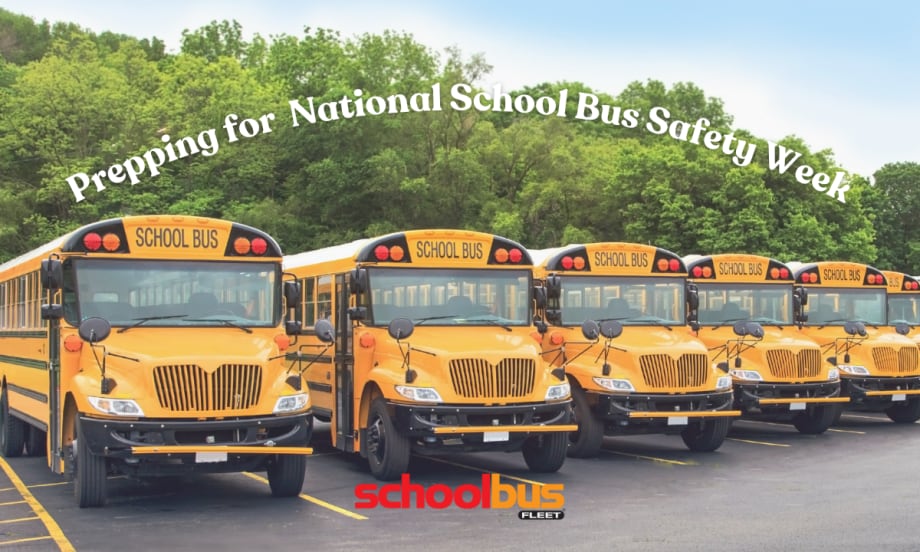
National School Bus Safety Week is meant to bring awareness to transportation departments and the public about the importance of staying vigilant around school buses for protect children.
Photo: School Bus Fleet
4 min to read
National School Bus Safety Week is just around the corner. Held during the third full week of October annually, the goal of National School Bus Safety Week is to bring school districts and their transportation departments, public safety officials, and more together to address the importance of school bus safety.
This year, National School Bus Safety Week runs Oct. 21-25, 2024 (it is always the third full week of October).
School Bus Fleet has gathered tools to help you prepare a safety campaign with your department and your school district for the annual safety week.
School Buses at a Glance
School buses are the most regulated vehicles on United States roadways, according to the National Highway Traffic Safety Administration. They undergo rigorous testing and have strict standards they must follow in their design, and are designed to be safer than passenger vehicles in preventing crashes and injuries.
Less than 1% of all traffic fatalities involve children on school transportation vehicles.
These reminders can help put the parents and guardians who send an estimated 25 million students to school on a school bus at ease.
Tips for School Bus Loading and Unloading
The most dangerous part of the school bus ride is the loading and unloading process. Consider going over these steps through drills with students or by creating flyers with safety tips for parents and guardians to go over with their children.
NHTSA encourages the SAFE method:
Stay at least 10 ft. — or five giant steps — away from the curb.
Always wait until the bus comes to a complete stop and the bus driver signals for you to board.
Face forward after finding a seat on the bus.
Exit the bus after it stops and look left-right-left for cars before crossing a street.
Over the last 53 years, more than 1,200 young people have been killed during the loading and unloading process. Of those deaths, nearly three-quarters involved students ages 9 and younger, according to the Kansas State Department of Education.
Planning Safer Bus Stop Routing
While changing school bus routes in the middle of the school year is not really feasible, it's always a good idea to identify stops that may be safer if relocated for the following school year.
NHTSA offers a customized school bus routing tool to help you find the safest locations possible for bus stops.
The agency has a form you can fill out with details on the bus stop that takes into consideration:
Bus stop waiting areas
Walkable infrastructure
Bus routing related to the stop
and more.
Scroll to the bottom of this page and click on the 'Planning Safer School Bus Stops and Routes Toolkit', fill out the Excel document, and submit it. Also at the bottom of the page are dozens of other resources to help you keep safety at the forefront for your department.
Revisit Driver Training
To safely share the road with other motorists, school bus drivers can brush up on their defensive driving. Smith System, the org behind the well-known Smith System five principles, offers a free infographic on 10 dangers facing school bus drivers, as well as other paid trainings for bus drivers.
School Bus Passing Law Reminders
In its 12th annual survey on illegal school bus passing, data collected by the National Association of State Directors of Pupil Transportation Services (NASDPTS) revealed a nearly 4% increase year-over-year.
Laws about when it is or is not safe to pass a stopped school bus depending on the type of roadway they are on vary from state to state.
Your state department of transportation will break down what the laws are, but in general — illegally passing a stopped school bus with red lights flashing is illegal in all 50 states.
Remind drivers to give extra space when waiting for a stopped school bus. The area 10 ft. around a school bus is the most dangerous for children. Drivers should stop far enough back to allow children space to safely enter and exit the bus, the National Safety Council advises.
NHTSA also has videos you can use to demonstrate the importance of knowing stop-arm laws for your state.
Encourage your school district to create a safety campaign reminding motorists of the laws in your state. This can be done various times throughout the year.
P.S. Want to get a head start on the 2024-25 National School Bus Safety Week poster contest? This year's theme is Safety First - Safety Always. The creation period runs from Oct. 1 to April 25.
More Safety

How to Build a Better School Bus Driver Training Program
Is it time to strengthen your driver training? Here’s how to pick the right talent and improve recruitment, retention, and safety. This video is brought to you by IC Bus.
Read More →
Recent School Bus Accidents Leave 2 Dead, 2 Injured
Four school bus crashes in Florida, Illinois, and Georgia highlight risks in transportation lots, at bus stops, and during student loading and unloading.
Read More →
Sponsored•September 8, 2026
When Every Second Matters, Clarity Keeps Routes Moving
From routine delays to urgent incidents, strong communication practices help drivers, dispatchers, schools, and families respond with confidence.
Read More →

What Happens When a School Bus Catches Fire — and What Can Help
School bus fires are rare but can be devastating. Learn how advances in fire suppression and asset protection help fleets detect fires earlier, reduce damage, and improve safety.
Read More →
Geotab Launches Tool to Help Fleets Investigate Road Incidents
Geotab Investigations combines telematics data, video, documents, and other evidence to help fleets reconstruct incidents, resolve claims, and determine what happened.
Read More →
Texas Sixth Grader Wins 2026 National School Bus Safety Poster Contest
Sai Darshana Yekolu of Moseley Middle School in Prosper, Texas, was named the newest winner for her artwork, bringing the theme of “Safe Rides, Everyday Heroes” to life.
Read More →
Sponsored•August 27, 2026
Doing More With Less: How Transportation Directors Can Prioritize Safety Amid Budget Uncertainty
With diesel prices soaring and nearly one-third of transportation directors expecting budget cuts, maintaining student safety has never been more challenging. Download this guide to learn how leading districts are prioritizing risk, funding critical safety technology, and building stronger budget cases with data.
Read More →
Walton County Schools Adds Gatekeeper Stop-Arm Enforcement System
The Florida district will deploy Gatekeeper’s updated Student Protector technology, which now incorporates AI to improve video evidence.
Read More →
How To Build a More Secure School Bus Yard During and After Hours
As thefts and overnight security threats continue, school transportation leaders are combining stronger operational practices with AI-enabled surveillance to better protect buses, facilities, and staff.
Read More →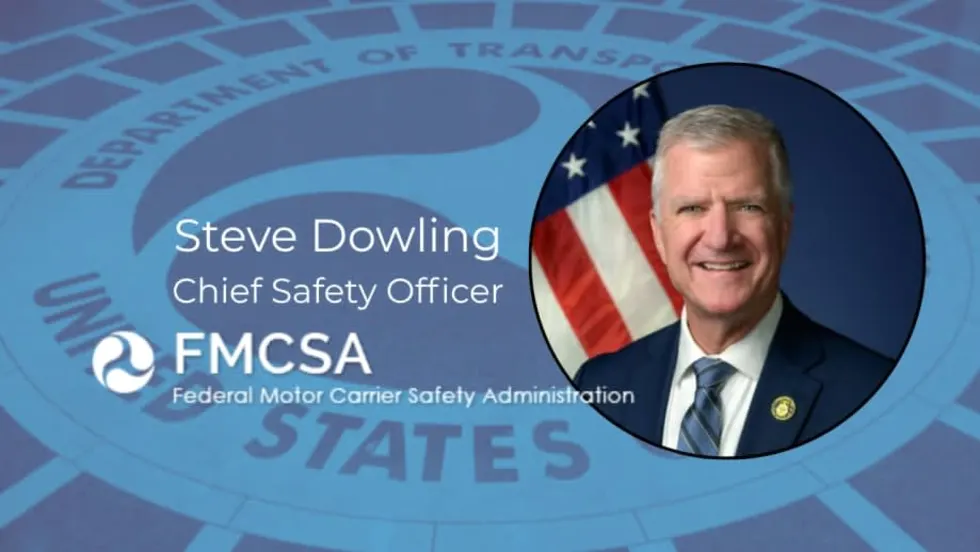
FMCSA Names New Chief Safety Officer: What School Bus Operators Should Know
Steve Dowling is set to lead the federal agency's efforts to advance commercial motor vehicle safety and reduce crashes, fatalities, and injuries on the nation's roadways.
Read More →