





Catch Up: 21 Questions About Clean School Bus Program Funding
California Energy Commission Funds Bidirectional EV Charging Project
The $2.9 million grant will support a project, led by The Mobility House, that could be replicated in school districts across the state.
December 27, 2023
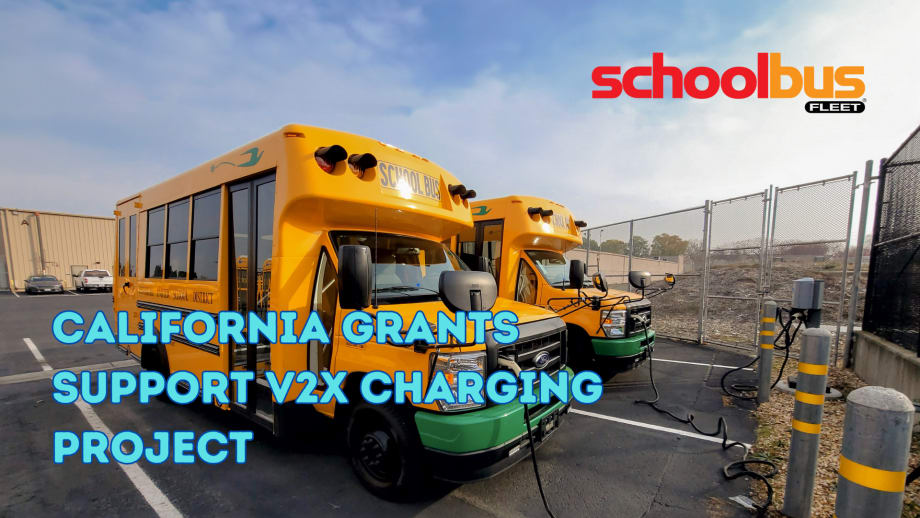
Electric school buses charging at the Pittsburg (Calif.) Unified School District bus depot.
Image: Pittsburg (Calif.) Unified School District/Canva
2 min to read
The California Energy Commission (CEC), through its Clean Transportation Program, has granted a $2.9 million award to a project team led by The Mobility House to implement 12 bidirectional chargers at four California school locations. The project, termed “Replicable V2X Deployment For Schools (RVXDS),” will use school bus fleets to mitigate regional grid emergencies - especially during peak summertime windows.
The project will use replicable, open standards throughout the vehicles, hardware, and software. The Mobility House has assembled an industry-leading team of partners including World Resources Institute, Center for Transportation and the Environment, and Polara Energy USA to support Pittsburg Unified School District, Fremont Unified School District, and the Napa Unified School District.
“Our interest is to establish real-world examples of V2G projects that other districts can easily replicate,” said Greg Hintler, CEO of North America at The Mobility House. “Through this project, we aim to reduce congestion on the same circuits by reducing the need for imported power, thus benefitting three school districts, the State of California, and grid reliability.”
Three of the schools will export power from their buses during peak windows in the summer, earning the districts $2 per kWh through the Emergency Load Reduction Program (ELRP), and helping keep the distribution system of their communities from overloading. One school will use bidirectional functionality for V2B resilience, to act as a community resilience hub at their high school.
All project learnings will be captured in a Blueprint report, providing guidance for districts across the state on how to incorporate V2G into their school bus charging operations. This project will not only provide financial benefits but also improve grid reliability, reduce greenhouse gas emissions, and support disadvantaged communities in times of grid interruption.
“This project is a game-changer for our district, marking a significant stride in our journey towards a sustainable future. It not only brings financial relief but also strengthens our community's resilience,” said Matthew Belasco, director of maintenance, operations, and transportation at the Pittsburg Unified School District. “We are thrilled to be part of this endeavor, demonstrating the potential of electric school buses to other districts across the state and setting a new standard for transportation in education.”
This initiative marks a significant step towards the widespread use of electric vehicles and grid resources, setting a precedent for sustainable and efficient transport systems.
More Alternative Fuels

CALSTART and Forth Combine to Form Catalyst Mobility
The new name represents a renewed vision for the nonprofit focused on advancing clean, equitable, and affordable transportation solutions that move people and goods.
Read More →
Alt-Fuel Moves: New Buses, Charging Hubs & Real-World EV Testing
Propane and electric school bus deployments continue to grow as districts add new vehicles, expand charging infrastructure, and gather more real-world operating data.
Read More →
Fewer Electric School Bus Models Reshape the U.S. Market
WRI’s latest buyer’s guide points to a consolidating electric school bus market, but fewer options may reflect a maturing industry rather than fewer meaningful choices for school bus operators.
Read More →
The Fuel Budget You Can Actually Predict: How Propane Autogas Keeps Money in the Classroom
Learn how propane autogas helps school districts manage fuel costs with predictable pricing, lower maintenance, and reduced emissions from former transportation director Joel Stutheit.
Read More →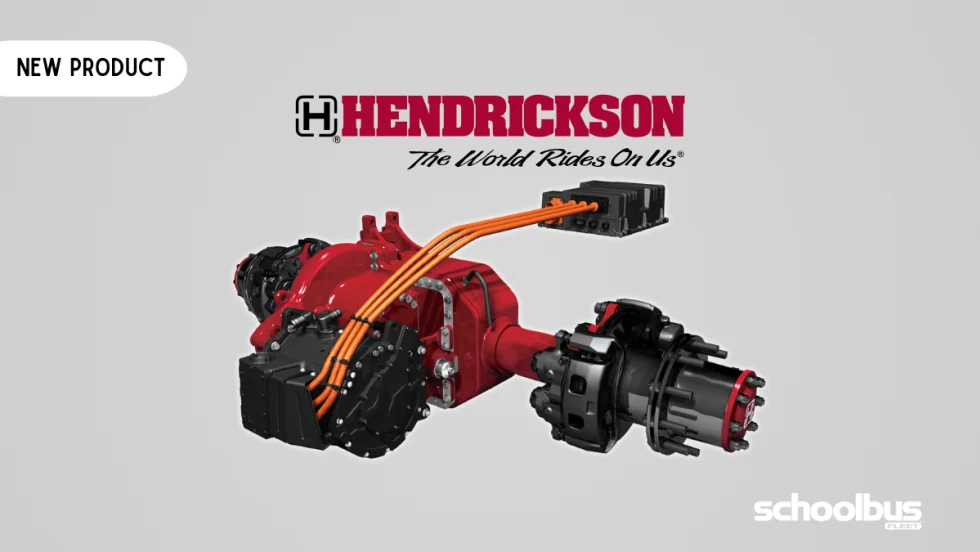
Hendrickson, Driventic Introduce New Electric Powertrain for School Buses
ELECTRAAX, the electrified, lightweight drive axle offers integrated ePowertrain efficiency and modular flexibility for Class 6–7 school bus use.
Read More →
The Mobility House Joins PowerFlex in Fleet Electrification Deal
The acquisition combines intelligent charging software, bidirectional charging expertise, and fleet electrification services to support the growing adoption of electric school buses across North America.
Read More →
Alt-Fuel Moves: Electric School Bus Investments Hit the Road
See which districts across the U.S. are putting electric school buses into service, expanding charging infrastructure, and planning the next phase of fleet electrification.
Read More →
With Fuel Volatility Ahead, School Districts Turn to Propane
While diesel prices peaked above $5 this spring, districts with propane autogas-powered fleets paid under $2 per gallon, according to PERC.
Read More →
EPA Unveils Proposed Changes to 2027 Heavy-Duty Engine Rules
The federal agency has proposed changes to next year’s targets that would eliminate DEF derates, ease warranty requirements, and retain current NOx emissions standards.
Read More →
Alt-Fuel Moves: EV Charging & Infrastructure Projects Gain Momentum
The latest developments include new funding, charging infrastructure, utility investments, and fleet technologies designed to support the transition to electric school buses nationwide.
Read More →