




EV Tech Company Unveils New V2G Hub Model
Nuvve's vehicle-to-grid model is designed to reduce electric fleet costs, improve grid resiliency, and better integrate and accelerate the use of renewable energy sources for commercial fleets.

Nuvve Holding Corp. has unveiled its new vehicle-to-grid electric vehicle charging hubs that are designed to deliver Transportation-as-a-Service for commercial EV fleets and enhance grid resiliency.
Photo courtesy Nuvve Holding Corp.
Green technology company Nuvve Holding Corp. has announced the launch of its new vehicle-to-grid (V2G) electric vehicle (EV) charging hubs (V2G hubs) that are designed to deliver Transportation-as-a-Service (TaaS) for commercial EV fleets and enhance grid resiliency.
The V2G hub model is intended to centralize renewable energy generation, bidirectional EV charging stations, and a suite of EV services while providing financing options to purchase EVs, according to a news release from Nuvve. This combination of centralized charging infrastructure and end-to-end fleet support services will reportedly make it easier for light-, medium-, and heavy-duty fleets to electrify their vehicles by reducing upfront capital costs.
“Electrifying fleets is critical to achieving our nation’s net-zero energy goals as the sector accounts for 20% of all transportation greenhouse gas (GHG) emissions while comprising less than 10% of vehicles on the road,” said Gregory Poilasne, chairman and CEO of Nuvve. “Many fleet owners want to electrify, but high upfront cost and concerns about charging infrastructure are slowing down adoption. Our global V2G hubs and TaaS model is a strategic way of resolving both of those challenges while maximizing the value of these vehicles by better harnessing renewable energy and reducing load on the grid.”
The V2G hubs and associated TaaS model will focus on fleets offering last-mile delivery, ride hailing and ride sharing, municipal services, and student transportation, according to the green technology company. The first application, which is expected to serve electric school buses, is based on existing commercial deployments and agreements between Nuvve and its V2G ecosystem partners to help achieve the objectives of President Biden’s infrastructure plan, including its commitment to electrifying America’s school buses.
Nuvve's TaaS offering will allow organizations to electrify their transportation by paying a monthly fee that covers leasing EVs, charging infrastructure, energy costs, vehicle storage, and vehicle maintenance, according to the company.
The V2G hubs also resolve limitations with utilities related to multiple interconnections to the electric grid by small energy storage systems, such as V2G EVs. By creating a set of hubs within a geographic area with large connections to the grid — on the order of two to 50 megawatts — Nuvve will enable access to energy for its customers while delivering services to energy markets through the company’s virtual power plant (VPP) and grid experience.
The V2G hubs will feature Nuvve’s V2G EV charging technology, which manages the charging and discharging of parked EV batteries while also prioritizing vehicle and driver considerations — including battery health and charging needs, according to Nuvve. The company’s system can reportedly combine energy from multiple EV batteries to form VPPs to sell energy back to the grid and provide services that help with grid stability, predictability, and resiliency.
As Nuvve advances with its V2G hubs and TaaS offering, Poilasne added in the news release that the company’s goal is to have an initial deployment near its headquarters in Southern California.
In March, school bus manufacturer Blue Bird Corp. announced that it had delivered the first operational electric DC fast charge school bus equipped with Nuvve’s V2G technology. The bus, which was delivered to the City of Pekin in Illinois, is reportedly the first of its kind in North America.
More Alternative Fuels

CALSTART and Forth Combine to Form Catalyst Mobility
The new name represents a renewed vision for the nonprofit focused on advancing clean, equitable, and affordable transportation solutions that move people and goods.
Read More →
Alt-Fuel Moves: New Buses, Charging Hubs & Real-World EV Testing
Propane and electric school bus deployments continue to grow as districts add new vehicles, expand charging infrastructure, and gather more real-world operating data.
Read More →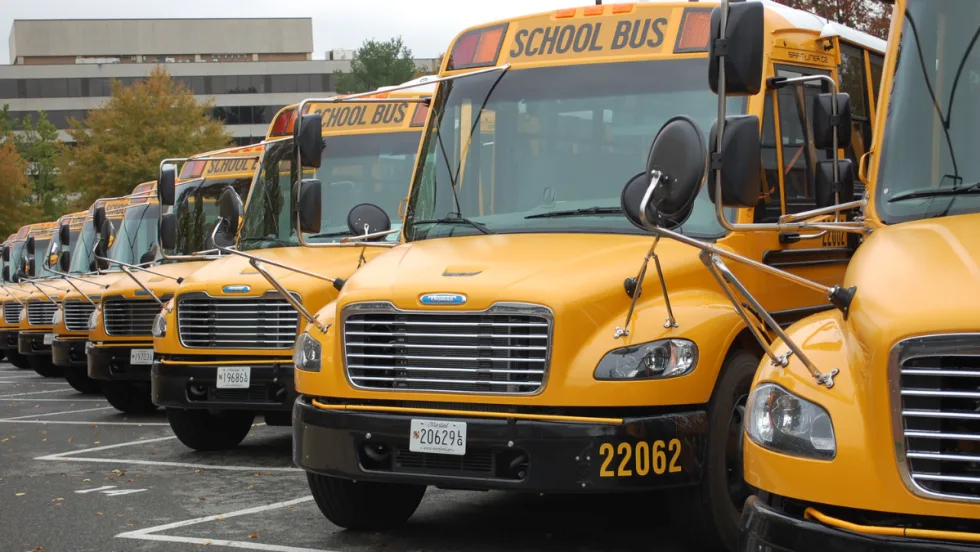
Fewer Electric School Bus Models Reshape the U.S. Market
WRI’s latest buyer’s guide points to a consolidating electric school bus market, but fewer options may reflect a maturing industry rather than fewer meaningful choices for school bus operators.
Read More →
The Fuel Budget You Can Actually Predict: How Propane Autogas Keeps Money in the Classroom
Learn how propane autogas helps school districts manage fuel costs with predictable pricing, lower maintenance, and reduced emissions from former transportation director Joel Stutheit.
Read More →
Hendrickson, Driventic Introduce New Electric Powertrain for School Buses
ELECTRAAX, the electrified, lightweight drive axle offers integrated ePowertrain efficiency and modular flexibility for Class 6–7 school bus use.
Read More →
The Mobility House Joins PowerFlex in Fleet Electrification Deal
The acquisition combines intelligent charging software, bidirectional charging expertise, and fleet electrification services to support the growing adoption of electric school buses across North America.
Read More →
Alt-Fuel Moves: Electric School Bus Investments Hit the Road
See which districts across the U.S. are putting electric school buses into service, expanding charging infrastructure, and planning the next phase of fleet electrification.
Read More →
With Fuel Volatility Ahead, School Districts Turn to Propane
While diesel prices peaked above $5 this spring, districts with propane autogas-powered fleets paid under $2 per gallon, according to PERC.
Read More →
EPA Unveils Proposed Changes to 2027 Heavy-Duty Engine Rules
The federal agency has proposed changes to next year’s targets that would eliminate DEF derates, ease warranty requirements, and retain current NOx emissions standards.
Read More →
Alt-Fuel Moves: EV Charging & Infrastructure Projects Gain Momentum
The latest developments include new funding, charging infrastructure, utility investments, and fleet technologies designed to support the transition to electric school buses nationwide.
Read More →