




Lion Electric Reports School Bus V2G Pilot Success
The EV manufacturer uses its electric school buses to supply electricity back to Con Edison utility customers as part of its vehicle-to-grid pilot in New York state.
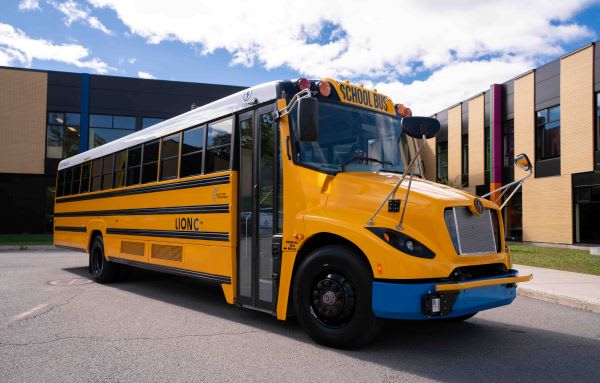
The Lion Electric Co. has successfully used its electric school buses to supply electricity back to Con Edison utility customers as part of its vehicle-to-grid pilot in New York state.
Photo courtesy The Lion Electric Co.
Electric vehicle (EV) manufacturer The Lion Electric Co. (Lion Electric) has successfully used its electric school buses to supply electricity back to Con Edison utility customers as part of its vehicle-to-grid (V2G) pilot in New York state.
The project, which began in 2018 in a partnership among Lion, green energy technology company Nuvve Corp., White Plains City School District, and National Express, is reportedly the first successful deployment in the state of a V2G pilot, according to a news release from the EV manufacturer.
The V2G charging and discharging takes place at a depot in North White Plains, where the buses remain plugged into a charger when not in use. The batteries are charged when demand for power is low, and the chargers are programmed to reverse the power flow into the grid at times when the buses are not in operation. By charging when demand — and thus the price for electricity — is low and discharging when demand is high, operators can save money on energy costs for their fleet.
The fleet of five LionC buses is operated for the school district by National Express, which also pays for the energy costs during the school year. Con Edison, the New York State Energy Research and Development Authority, and National Express contributed to the purchase of the electric bus fleet, while Lion Electric aided in the project design.
As a result of the deployment, Con Edison can now transmit energy from the district’s LionC school buses back into the grid, and that energy can then be distributed to customers aided by Nuvve’s V2G technology.
The success of this initial V2G pilot deployment serves as an example of how school buses — which are ideal for V2G integration due to their daily use patterns and overnight storage — can be used to sell power back to the grid when demand for energy is high, saving operators money and contributing to the condition of the grid. As such, all of Lion’s buses and heavy-duty vehicles come equipped standard with V2G technology, according to the EV manufacturer.
As governments around the globe pursue increasingly ambitious carbon neutrality goals based largely on renewable energy sources and zero-emission transportation, Lion Electric noted, V2G integration becomes an increasingly important tool in balancing grids — especially when considering the high-peak supply inherent to renewable energy sources.
“This important milestone for V2G outlines the cooperation required between utilities, fleet operators, school districts, and regulatory organizations to successfully implement a project of this scale,” said Marc-Andre Page, vice president of commercial operations at Lion Electric.
“We think electric school buses may provide an opportunity to achieve two of our company’s goals, which are reducing carbon emissions, and maintaining our industry-leading reliability,” said Brian Ross, Con Edison’s manager for the project. “We are innovating to help our state and region achieve a clean energy future in which electric vehicles will have a big role.”
Watch a video highlighting the project below.
More Alternative Fuels
Bipartisan Bill Seeks to Extend Clean School Bus Program Through 2031
The proposed legislation would renew federal support for cleaner school buses as districts navigate funding uncertainty, rising fuel and infrastructure costs, and fleet replacement needs.
Read More →
Alt-Fuel Moves: Electric Bus Rollouts, Bidirectional Charging & Propane Growth
See which fleets are adding electric and propane school buses as districts and operators invest in charging infrastructure, bidirectional technology, and alternative-fuel expansion.
Read More →
Nobody Told Diesel Prices They Were Supposed to Come Down
With diesel prices surging, school bus fleets have new reason to stress-test fuel costs, consider diversification, and calculate what each route really costs to operate.
Read More →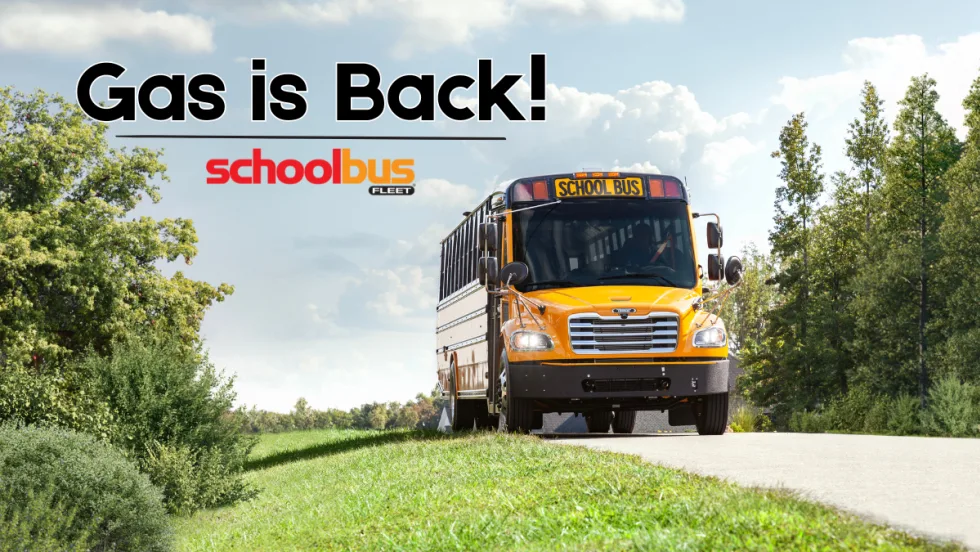
Why Gasoline School Buses Are Making a Comeback
Gasoline is gaining ground in full-size school buses. See how today’s options stack up against diesel on cost, maintenance, emissions, performance, and more.
Read More →
EPA Opens $180M DERA Funding Round for Diesel Upgrades
The 2026 Diesel Emissions Reduction Act program seeks applications from eligible organizations to accelerate the retirement of legacy diesel vehicles.
Read More →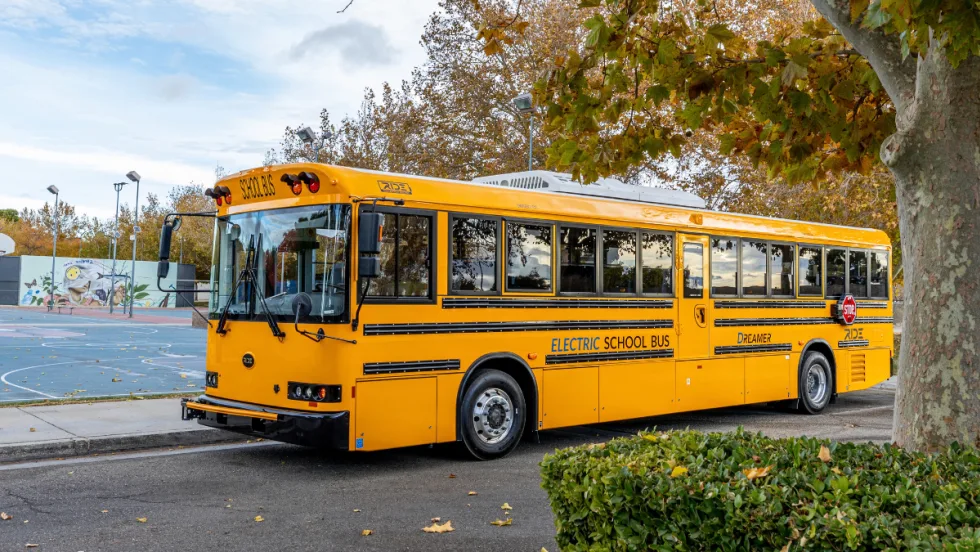
The Secret Life of an Electric School Bus Battery
Batteries change throughout years of daily routes, but degradation doesn’t necessarily mean the end. Here’s what operators should know about performance, safety, and second life.
Read More →
CALSTART and Forth Combine to Form Catalyst Mobility
The new name represents a renewed vision for the nonprofit focused on advancing clean, equitable, and affordable transportation solutions that move people and goods.
Read More →
Alt-Fuel Moves: New Buses, Charging Hubs & Real-World EV Testing
Propane and electric school bus deployments continue to grow as districts add new vehicles, expand charging infrastructure, and gather more real-world operating data.
Read More →
Fewer Electric School Bus Models Reshape the U.S. Market
WRI’s latest buyer’s guide points to a consolidating electric school bus market, but fewer options may reflect a maturing industry rather than fewer meaningful choices for school bus operators.
Read More →
The Fuel Budget You Can Actually Predict: How Propane Autogas Keeps Money in the Classroom
Learn how propane autogas helps school districts manage fuel costs with predictable pricing, lower maintenance, and reduced emissions from former transportation director Joel Stutheit.
Read More →