




Moving to Full Fleet Electrification: A Look at 3 Districts' Plans
California District Teams With EV Charging Solutions Provider
Stockton Unified School District is partnering with The Mobility House to deploy smart charging and management solutions for its new electric school buses.
by SBF Staff
May 4, 2021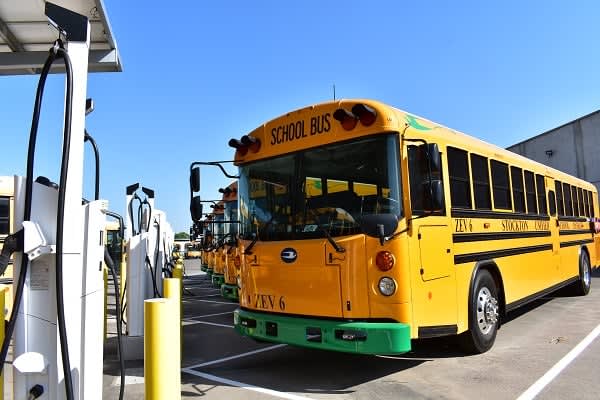
Stockton (Calif.) Unified School District has teamed up with electric vehicle charging solutions provider The Mobility House to deploy smart charging and management solutions for its new electric school buses.
Photo courtesy The Mobility House
2 min to read
California-based Stockton Unified School District (SUSD) has partnered with electric vehicle (EV) charging solutions provider The Mobility House to deploy smart charging and management solutions for the district’s new electric school buses.
The project includes 11 electric school buses and 24 chargers, all fully operational, with funding awarded by the California Air Resources Board, the California Energy Commission, and San Joaquin Valley Air Pollution Control District, according to a news release from The Mobility House. The district received an additional $4.94 million in funding from California Climate Investments, a statewide initiative that uses cap-and-trade dollars to fund projects designed to reduce greenhouse gas emissions, strengthen the economy, and improve public health — particularly in disadvantaged communities, according to the EV charging solutions provider.
"Stockton Unified School District is proudly committed to pioneering sustainability efforts both within our local community and across California’s entire educational system,” said Gilbert Rosas, SUSD’s energy education specialist for operations and maintenance. “Removing diesel pollution from our operations sets the foundation for ultimately eliminating harmful toxins in the air for our children. We are also excited to use our electric buses and charging technologies in peer-led educational programs to teach students and faculty about the power of clean energy.”
SUSD collaborated with the Center for Transportation and the Environment (CTE), Schneider Electric, Sage Energy Consulting, and The Mobility House to develop a comprehensive roadmap for achieving net-zero emissions, according to the EV charging solutions provider. The plan also details installation of solar photovoltaic (PV) canopies and switching to all-electric lawn mowers, grounds maintenance equipment, and fleet maintenance vehicles.
Make-ready infrastructure from utilities provider Pacific Gas and Electric (PG and E) also qualified the district to participate in PG and E’s business electric vehicle (BEV) rate. Leveraging The Mobility House’s intelligent charging and energy management system, called ChargePilot, to evaluate fleet schedules, equipment requirements, and PG and E’s BEV time-of-use rate, SUSD will reportedly benefit from lower electricity costs and a charging capacity that allows the buses to operate on longer daily routes — saving the district a projected $500,000 over five years in charging costs.
“From initial design planning and pre-install consulting to the integration of ChargePilot, we appreciated working hand-in-hand with the district and our partners throughout this process and are proud of our role in getting this project up and running in less than one year,” said Greg Hintler, U.S. managing director for The Mobility House.
Since 2009, the company has developed an expansive partner ecosystem to integrate EVs into the power grid, including EV charger manufacturers, installation companies, energy suppliers, and automotive manufacturers ranging from Audi to Tesla.
More Alternative Fuels

CALSTART and Forth Combine to Form Catalyst Mobility
The new name represents a renewed vision for the nonprofit focused on advancing clean, equitable, and affordable transportation solutions that move people and goods.
Read More →
Alt-Fuel Moves: New Buses, Charging Hubs & Real-World EV Testing
Propane and electric school bus deployments continue to grow as districts add new vehicles, expand charging infrastructure, and gather more real-world operating data.
Read More →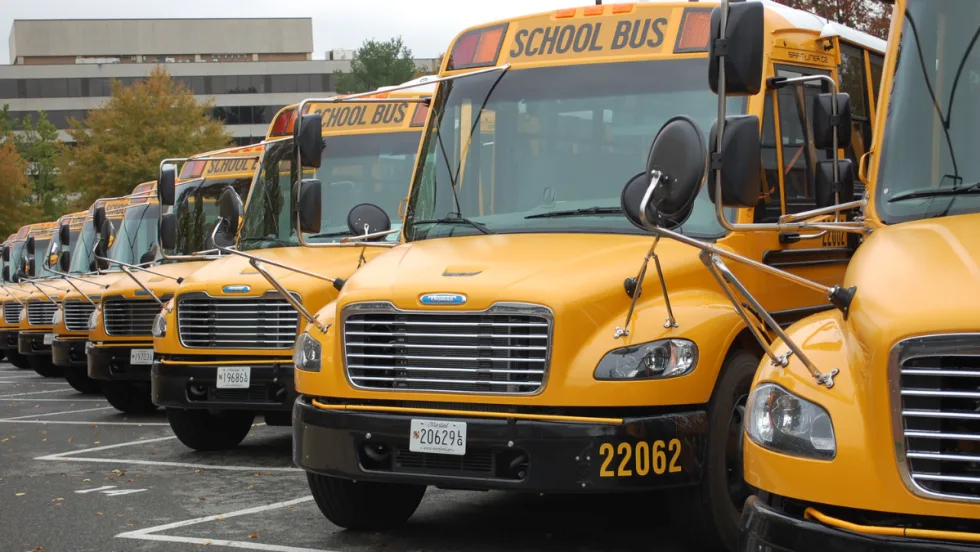
Fewer Electric School Bus Models Reshape the U.S. Market
WRI’s latest buyer’s guide points to a consolidating electric school bus market, but fewer options may reflect a maturing industry rather than fewer meaningful choices for school bus operators.
Read More →
The Fuel Budget You Can Actually Predict: How Propane Autogas Keeps Money in the Classroom
Learn how propane autogas helps school districts manage fuel costs with predictable pricing, lower maintenance, and reduced emissions from former transportation director Joel Stutheit.
Read More →
Hendrickson, Driventic Introduce New Electric Powertrain for School Buses
ELECTRAAX, the electrified, lightweight drive axle offers integrated ePowertrain efficiency and modular flexibility for Class 6–7 school bus use.
Read More →
The Mobility House Joins PowerFlex in Fleet Electrification Deal
The acquisition combines intelligent charging software, bidirectional charging expertise, and fleet electrification services to support the growing adoption of electric school buses across North America.
Read More →
Alt-Fuel Moves: Electric School Bus Investments Hit the Road
See which districts across the U.S. are putting electric school buses into service, expanding charging infrastructure, and planning the next phase of fleet electrification.
Read More →
With Fuel Volatility Ahead, School Districts Turn to Propane
While diesel prices peaked above $5 this spring, districts with propane autogas-powered fleets paid under $2 per gallon, according to PERC.
Read More →
EPA Unveils Proposed Changes to 2027 Heavy-Duty Engine Rules
The federal agency has proposed changes to next year’s targets that would eliminate DEF derates, ease warranty requirements, and retain current NOx emissions standards.
Read More →
Alt-Fuel Moves: EV Charging & Infrastructure Projects Gain Momentum
The latest developments include new funding, charging infrastructure, utility investments, and fleet technologies designed to support the transition to electric school buses nationwide.
Read More →