




Spotting the Warning Signs of School Violence
It is imperative that the school bus driver of today be aware of the many warning signs and indicators of violence that are present in these types of situations.

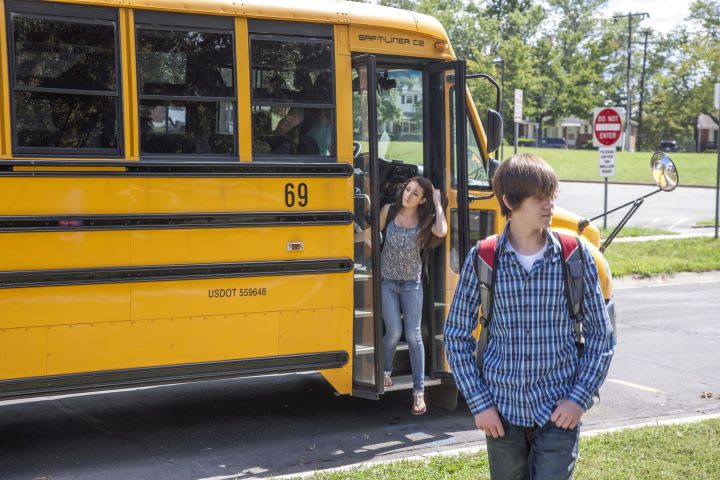
The school bus driver of today needs to be aware of the many warning signs and indicators of violence.
File photo courtesy of the National Highway Traffic Safety Administration
The school bus’s radiant yellow paint, flashing red and amber lights, and bright red stop arm are meant to draw attention to it. The student desperately clenching a weapon in the back seat is frantically trying to not draw attention to himself.
The American school bus is a traditional icon of safety. The American active killer is an unfortunate icon of modern horror.
The U.S. and many other places around the world have regrettably witnessed an apparent increase in school violence. That violence often comes in the form of an active shooter.
However, not all active killers use firearms. Take, for example, the murderous student in Casper, Wyoming, who used a bow and arrows.
The very same day as the Sandy Hook tragedy in which 20 students were killed with a gun, a man in China forced his way into an elementary school and stabbed, slashed, and mutilated 22 students with a knife.
Another example is the 1927 Bath School massacre, in which 43 people at a school in Michigan were killed by a bomb.
With those types of incidents in mind, we should use the broader term “active killer” rather than “active shooter.” The type of weapon used is important, but it is the underlying motives that are more disturbing and significant.
Nearly 11 years ago, Gray Ram Tactical LLC conducted a research study to determine the profile of an active killer inside of the educational institution — including the morning school bus ride, through the school day, and until the end of extracurricular activities in the evening.
The research showed that the most likely violent offender was a 14-year-old white male. The most common forms of weapon were hands and feet. Most violence was not premeditated, and the attackers simply used what they had available at the time — fists for punching and feet for kicking.
Later, the U.S. Department of Justice published research findings on school violence that showed the most likely attacker was a white male between 13 and 15 years old. They also showed that the most common weapons used were the hands and feet. Both research projects showed that school violence was not only becoming more common, but that the severity of the violence was also drastically increasing.
More recent research conducted by Gray Ram Tactical illustrates a likewise unfortunate and eye-opening phenomenon. Since the time of the Columbine massacre, many active killers committing an attack inside of a school have traveled to the school building via numerous different means. Some walked to school carrying their weapons, some drove themselves to the school with their weapons, and some were given rides by friends or family to the school with their weapons.
More contemporarily, killers have been transported to school via the school bus. Students bent on violence have carried their weapons (knives, bombs, guns) onto the school bus and have ridden to school, being delivered directly to their unsuspecting victims.
It is imperative that the school bus driver of today be aware of the many warning signs and indicators of violence that are present in these types of situations. Previous indicators might include a student that has brought a weapon to school in the past or has made recent threats. Immediate indicators might include such things as inappropriate clothing, distinct behavioral changes, or a security tap.
A security tap is an action that a person will take subconsciously to reassure himself that the item he is attempting to hide is still concealed. It is a telltale sign that a person is hiding something. The person will touch the item routinely and at certain times, such as when bending over, standing up, or turning quickly.
Being able to identify signs of concealed weapons is a life and death skill. Ultimately, of course, the school bus driver must know how to properly de-escalate these types of situations and prevent violence once the indicators are acknowledged.
As the nation continues to grieve and attempts to prevent another school shooting, we must all understand the full scope of the situation. We cannot focus solely on the type of weapon used or the mental condition of the killer. We must acknowledge that modern society is one of violence, gore, and disturbing imagery — all contained in popular movies, video games, and TV shows.
Likewise, we must not get tunnel vision on the killer inside the school. We must understand how that killer got to the school. If school bus drivers can identify the numerous visible warning signs, they could prevent the next mass shooting.
Regrettably, active killers don’t have bright colors or flashing lights drawing attention to themselves. Fortunately, though, they do display observable signals. Pupil transportation professionals must be prepared to identify those crucial signals.
More Safety

How to Build a Better School Bus Driver Training Program
Is it time to strengthen your driver training? Here’s how to pick the right talent and improve recruitment, retention, and safety. This video is brought to you by IC Bus.
Read More →
Recent School Bus Accidents Leave 2 Dead, 2 Injured
Four school bus crashes in Florida, Illinois, and Georgia highlight risks in transportation lots, at bus stops, and during student loading and unloading.
Read More →
When Every Second Matters, Clarity Keeps Routes Moving
From routine delays to urgent incidents, strong communication practices help drivers, dispatchers, schools, and families respond with confidence.
Read More →

What Happens When a School Bus Catches Fire — and What Can Help
School bus fires are rare but can be devastating. Learn how advances in fire suppression and asset protection help fleets detect fires earlier, reduce damage, and improve safety.
Read More →
Geotab Launches Tool to Help Fleets Investigate Road Incidents
Geotab Investigations combines telematics data, video, documents, and other evidence to help fleets reconstruct incidents, resolve claims, and determine what happened.
Read More →
Texas Sixth Grader Wins 2026 National School Bus Safety Poster Contest
Sai Darshana Yekolu of Moseley Middle School in Prosper, Texas, was named the newest winner for her artwork, bringing the theme of “Safe Rides, Everyday Heroes” to life.
Read More →
Doing More With Less: How Transportation Directors Can Prioritize Safety Amid Budget Uncertainty
With diesel prices soaring and nearly one-third of transportation directors expecting budget cuts, maintaining student safety has never been more challenging. Download this guide to learn how leading districts are prioritizing risk, funding critical safety technology, and building stronger budget cases with data.
Read More →
Walton County Schools Adds Gatekeeper Stop-Arm Enforcement System
The Florida district will deploy Gatekeeper’s updated Student Protector technology, which now incorporates AI to improve video evidence.
Read More →
How To Build a More Secure School Bus Yard During and After Hours
As thefts and overnight security threats continue, school transportation leaders are combining stronger operational practices with AI-enabled surveillance to better protect buses, facilities, and staff.
Read More →
FMCSA Names New Chief Safety Officer: What School Bus Operators Should Know
Steve Dowling is set to lead the federal agency's efforts to advance commercial motor vehicle safety and reduce crashes, fatalities, and injuries on the nation's roadways.
Read More →