




Winner named in first Canada's Greenest School contest
An essay from Burnaby (British Columbia) North Secondary student Jennifer H. wins the most votes, earning the school a hybrid school bus from IC Bus and Jennifer a $3,000 scholarship.

BURNABY, British Columbia — Jennifer H. of Burnaby North Secondary has won the inaugural Canada's Greenest School contest with her essay "Burnaby North: Youth in Action."
Voters across Canada chose her submission, which beat more than 100 entries from nearly 250 students nationwide. Burnaby North Secondary won a hybrid school bus from IC Bus, as well as a green school audit. Jennifer will receive a $3,000 scholarship.
In her essay, Jennifer wrote, "With the help of supportive staff, our Environment Club wants to launch a huge 'Green Rides Campaign' that will reach out to the school district, featuring hybrid school buses and emphasizing on how they are the most efficient, safest, and cheapest solution. We plan to test and record the efficiency of our buses to display the environmental benefits as part of a promotion to other schools."
The other environmental problems she said her school needs to tackle are waste reduction, energy consumption and choice of products. To address these issues, Jennifer wrote that the school should make recycling bins available in every classroom, ban plastic water bottles and print on both sides of paper.
To reduce energy consumption, she encouraged the school to switch to compact fluorescent light bulbs, improve building insulation and install energy-efficient appliances. Jennifer also urged the use of eco-friendly cleaning products, locally-produced food served in the cafeteria and the use of biodegradable utensils.
More Alternative Fuels
EPA Opens $180M DERA Funding Round for Diesel Upgrades
The 2026 Diesel Emissions Reduction Act program seeks applications from eligible organizations to accelerate the retirement of legacy diesel vehicles.
Read More →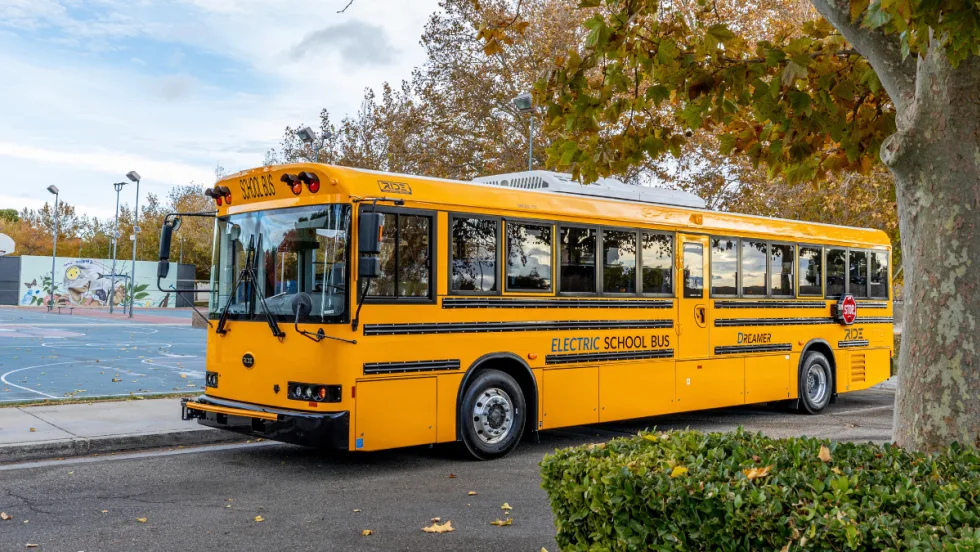
The Secret Life of an Electric School Bus Battery
Batteries change throughout years of daily routes, but degradation doesn’t necessarily mean the end. Here’s what operators should know about performance, safety, and second life.
Read More →
CALSTART and Forth Combine to Form Catalyst Mobility
The new name represents a renewed vision for the nonprofit focused on advancing clean, equitable, and affordable transportation solutions that move people and goods.
Read More →
Alt-Fuel Moves: New Buses, Charging Hubs & Real-World EV Testing
Propane and electric school bus deployments continue to grow as districts add new vehicles, expand charging infrastructure, and gather more real-world operating data.
Read More →
Fewer Electric School Bus Models Reshape the U.S. Market
WRI’s latest buyer’s guide points to a consolidating electric school bus market, but fewer options may reflect a maturing industry rather than fewer meaningful choices for school bus operators.
Read More →
The Fuel Budget You Can Actually Predict: How Propane Autogas Keeps Money in the Classroom
Learn how propane autogas helps school districts manage fuel costs with predictable pricing, lower maintenance, and reduced emissions from former transportation director Joel Stutheit.
Read More →
Hendrickson, Driventic Introduce New Electric Powertrain for School Buses
ELECTRAAX, the electrified, lightweight drive axle offers integrated ePowertrain efficiency and modular flexibility for Class 6–7 school bus use.
Read More →
The Mobility House Joins PowerFlex in Fleet Electrification Deal
The acquisition combines intelligent charging software, bidirectional charging expertise, and fleet electrification services to support the growing adoption of electric school buses across North America.
Read More →
Alt-Fuel Moves: Electric School Bus Investments Hit the Road
See which districts across the U.S. are putting electric school buses into service, expanding charging infrastructure, and planning the next phase of fleet electrification.
Read More →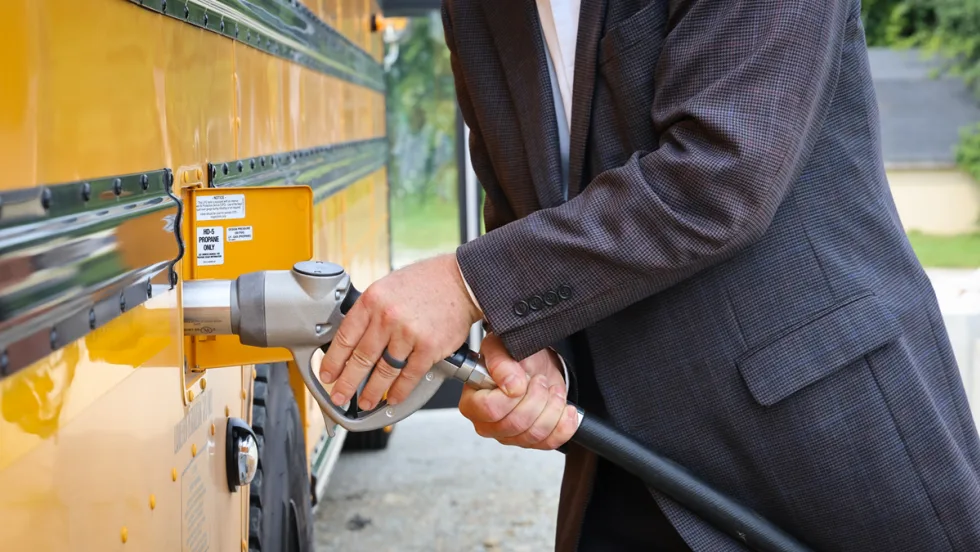
With Fuel Volatility Ahead, School Districts Turn to Propane
While diesel prices peaked above $5 this spring, districts with propane autogas-powered fleets paid under $2 per gallon, according to PERC.
Read More →