




Student detection systems allowed on Iowa school buses
State director Max Christensen says that the technology is now permitted on Iowa’s school buses, but it’s not required. Sensor-driven or video-based student detection systems are permitted, with no strict criteria set, which Christensen says opens the field to new ideas in developing more advanced and better designs.
DES MOINES, Iowa — Student detection systems are now permitted on school buses within the state following completion of a pilot program that several districts participated in.
As SBFreported last year, the pilot program to test two student detection systems was prompted by a 2011 danger zone accident in which Justin Bradfield was killed. The Smile BIG Foundation was created after Bradfield’s death, and one of the foundation’s goals was to have yellow buses in the state equipped with sensors to detect students in blind spots.
The systems tested were the Student Detection System from Rostra Precision Controls Inc. and SafeZone from National Patent Analytical Systems Inc. The Iowa Department of Education’s Office of School Transportation oversaw the pilot program.
In an announcement released on Wednesday detailing the outcome of the pilot program, Max Christensen, executive officer, school transportation, Iowa Department of Education, said that while there are subtle differences between the two tested systems, both systems work similarly and both offer alarms/lights to notify the driver that a child may be in danger. As to differences, the SafeZone uses Doppler radar in the sensing units, while the Rostra system uses another form of sensing. Also, the SafeZone system has about half the number of sensors as the Rostra system.
Upon evaluating the participating school districts' experiences with installing and maintaining both systems and how they actually worked, the announcement states that "while some potential concerns involving installation, customer service, sensor sensitivity/adjustment, cost and maintenance were found, the systems generally performed as designed. Proper and professional installation and sensor settings seem to be the key to making the systems successful."
Christensen told SBF that the Department of Education's Maintenance & Inspection Advisory Council has determined that these types of systems should be allowed as an option on school buses in Iowa, but they're not required.
“We’ve also decided to not adopt really strict technological criteria for the systems, but just allow the use of sensor-driven and/or video-based student detection systems,” Christensen said, “thus not locking ourselves into a very strict technology base that would require additional piloting and testing should other types of newer, and possibly better, technology become available.”
Christensen said this could also open the field to new ideas in developing more advanced and better designs for both sensors and camera technology.
Under this new development, Rostra's Student Detection System, SafeZone or any other sensor- or video-based student detection technology can be used, and Christensen said there is no specific requirement for the number of cameras or sensors on the system used.
Wednesday's announcement also addressed the potential benefit of student detection systems to schools and school districts, noting that such a system would give "extra eyes" all around the outside of the school bus to assist the school bus driver in watching for students walking or standing too close to the danger zone, which could help to save lives.
More Safety
School's Back. Here's What Happened to Traffic, Speeding & Distraction
What happens to traffic when school resumes? New data analysis examines changes in distracted driving, congestion, and speeding around schools.
Read More →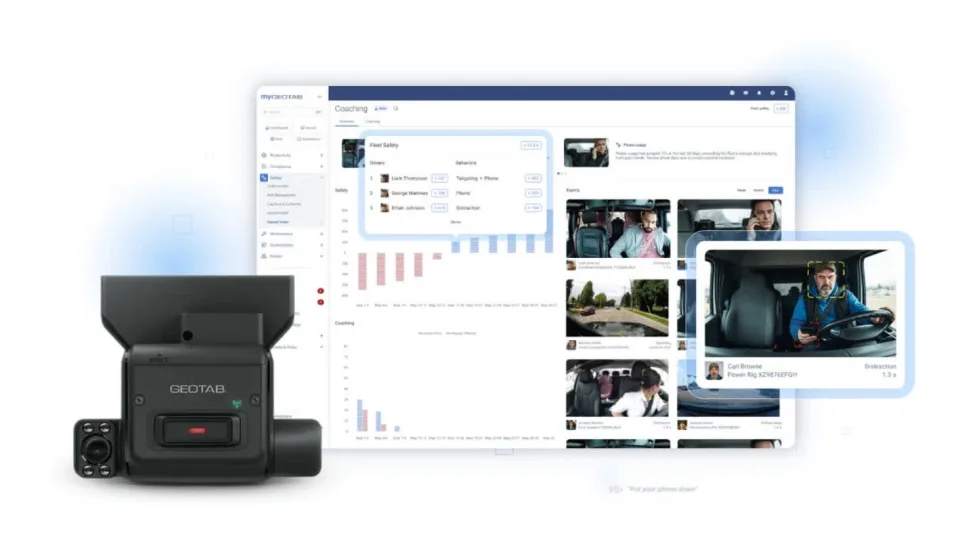
Geotab Expands Fleet Safety Tools With Video Coaching, Risk Insights
New safety and video capabilities aim to help fleet managers assess risk, support drivers, and take targeted action through video coaching, red-light violation detection, and more.
Read More →
How to Build a Better School Bus Driver Training Program
Is it time to strengthen your driver training? Here’s how to pick the right talent and improve recruitment, retention, and safety. This video is brought to you by IC Bus.
Read More →

Recent School Bus Accidents Leave 2 Dead, 2 Injured
Four school bus crashes in Florida, Illinois, and Georgia highlight risks in transportation lots, at bus stops, and during student loading and unloading.
Read More →
When Every Second Matters, Clarity Keeps Routes Moving
From routine delays to urgent incidents, strong communication practices help drivers, dispatchers, schools, and families respond with confidence.
Read More →
What Happens When a School Bus Catches Fire — and What Can Help
School bus fires are rare but can be devastating. Learn how advances in fire suppression and asset protection help fleets detect fires earlier, reduce damage, and improve safety.
Read More →
Geotab Launches Tool to Help Fleets Investigate Road Incidents
Geotab Investigations combines telematics data, video, documents, and other evidence to help fleets reconstruct incidents, resolve claims, and determine what happened.
Read More →
Texas Sixth Grader Wins 2026 National School Bus Safety Poster Contest
Sai Darshana Yekolu of Moseley Middle School in Prosper, Texas, was named the newest winner for her artwork, bringing the theme of “Safe Rides, Everyday Heroes” to life.
Read More →
Doing More With Less: How Transportation Directors Can Prioritize Safety Amid Budget Uncertainty
With diesel prices soaring and nearly one-third of transportation directors expecting budget cuts, maintaining student safety has never been more challenging. Download this guide to learn how leading districts are prioritizing risk, funding critical safety technology, and building stronger budget cases with data.
Read More →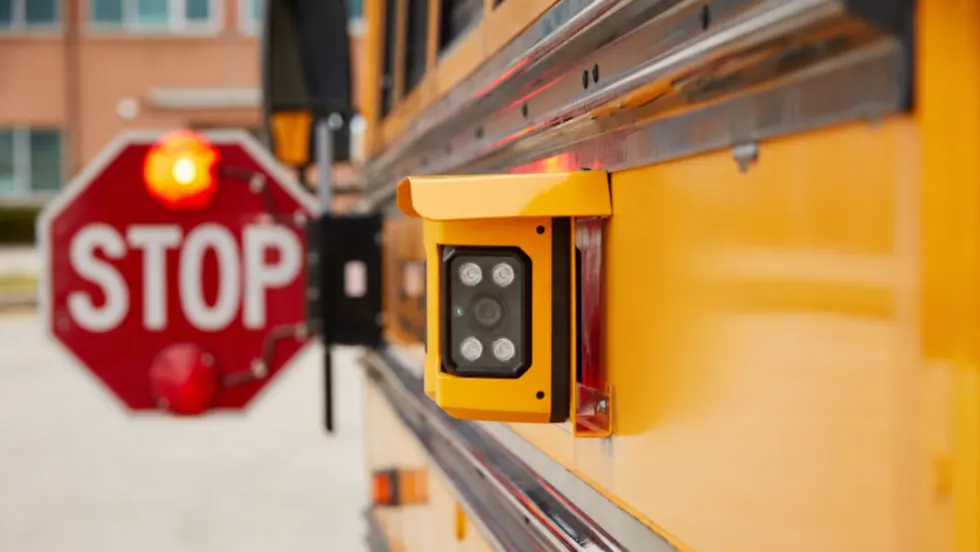
Walton County Schools Adds Gatekeeper Stop-Arm Enforcement System
The Florida district will deploy Gatekeeper’s updated Student Protector technology, which now incorporates AI to improve video evidence.
Read More →