




Stop-arm extender aims to block bus passing
Guilford County (N.C.) Schools is testing a mechanical arm with an extra stop sign that extends 6 feet from the side of the bus — into the next lane of traffic.

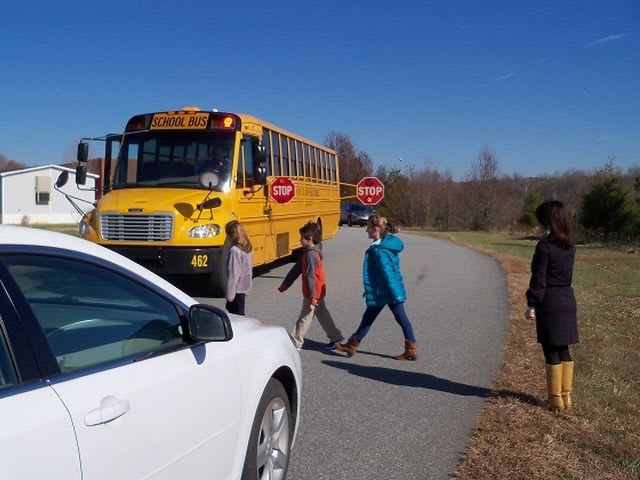
Guilford County (N.C.) Schools is testing the Bus Crossing Guard, a mechanical arm with an extra stop sign that extends 6 feet from the side of the bus.
With tens of thousands of motorists illegally passing school buses every day across the nation, a new product aims to make sure that drivers get the message to “STOP.”
In North Carolina, Guilford County Schools is testing the Bus Crossing Guard, a mechanical arm with an extra stop sign that extends 6 feet from the side of the bus when it stops to load or unload students.
The product, which has lights that flash alternately with the lights on the main stop arm, intentionally sticks out into the next lane of traffic. The goal is to help get drivers’ attention and to impose a physical barrier to deter them from passing the bus.
Ten of the Bus Crossing Guard units were installed on Guilford County Schools buses and put into service on April 13. Director of Transportation Jeff Harris said that the initial concept was to test the product for two weeks, but he asked to continue testing them for the rest of the school year. He said that the results have been favorable so far.
“Bus drivers are reporting that motorists are staying further away from the bus when the sign is deployed,” Harris said.
Harris is working with BL Solutions, the Lewisville, North Carolina-based developer of Bus Crossing Guard, on a comparison of stop-arm violations on the 10 buses before and after installation. He is also compiling his school bus drivers’ comments on the product.
Scott Geyer, vice president at BL Solutions, said that one of the findings so far has been that some motorists seem primarily concerned with avoiding damage to their vehicles. While many drivers are stopping farther away from the bus, a few have slowly ventured past.
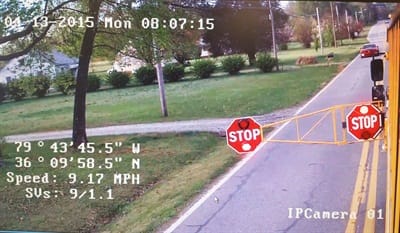
The stop-arm extension has lights that flash alternately with the lights on the main stop arm. This image is from an exterior camera on a Guilford County Schools bus.
“In a couple of incidents, people slowed down, drove into the ditch [next to the road] and went around,” Geyer said. “But at least they slowed down.”
If a driver does happen to crash into the stop-arm extension, it is designed to break away from the bus, although it may still damage the passing vehicle.
Geyer said that state authorities reviewed the legality of the Bus Crossing Guard, and they determined that a motorist hitting it would be equivalent to hitting the school bus itself — in addition to committing an illegal passing offense.
According to the North Carolina attorney general’s office, “There is no increased risk of liability for the use of an extension to the stop bar.”
Geyer said that his father, Robert Geyer, started thinking about new safety measures for school buses in 1999 when state legislator Dale Folwell’s 7-year-old son Dalton was fatally struck by a car passing his school bus.
“My father was torn up about it,” Geyer said. “He’s an inventive type of guy, and he started dreaming up stuff. About three years ago, when he retired from his day job, he really started working harder on this.”
Geyer said that in addition to the legal review, BL Solutions has made multiple changes to Bus Crossing Guard — the alternately flashing lights, for example — based on requests from North Carolina state pupil transportation director Derek Graham and his staff. Also, Geyer noted that the product is engineered to be compatible with any type of school bus, old or new.
As the pilot program continues at Guilford County Schools, the stop-arm extension may soon be tested on more school buses in North Carolina and elsewhere.
“We’re going to pursue it in other states as well,” Geyer said.
For more information, go to www.buscrossingguard.com.
More Safety

HopSkipDrive Reports Progress on Safety Advisory Council
More than a year after forming the council, independent safety experts have helped shape new rider-safety features and policy progress, with a new goal to address rider behavior.
Read More →
What the 2026 National School Bus Safety Month Resolution Means for Student Transportation
The bipartisan resolution highlights illegal school bus passing, student safety during loading and unloading, and the need for driver training and public education.
Read More →
School Bus Stop-Arm Violations Decline 53% Across Verra Mobility Programs
Verra Mobility shares how school bus stop-arm cameras and school zone safety programs are changing driver behavior, reducing violations, and protecting students.
Read More →
Most Bus Crashes Aren’t Your Fault. Here’s How to Prove It.
A guide for what to do in between a school bus crash and a claim: what to preserve, who to notify, and how to keep the facts available when they matter.
Read More →
National School Bus Safety Week 2026: Tips, Toolkits & Resources to Keep Students Safe
School bus safety takes more than awareness. Explore expert tips, enforcement strategies, and free resources to help protect students on every ride.
Read More →
2 Killed, Dozens Injured in Florida School Bus Crash
A multi-vehicle collision caused a Polk County school bus carrying 37 students to overturn on its way to Winter Haven High School.
Read More →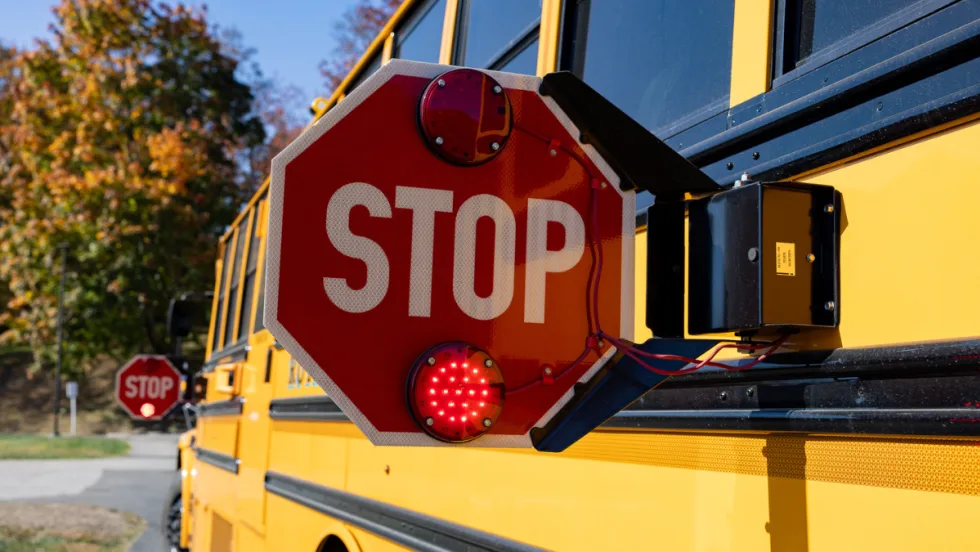
Illegal School Bus Passing Drops 24% in New York Districts
With fewer than 5% of citations involving repeat offenders, Westchester County officials said enforcement, education, and community partnerships are helping change driver behavior.
Read More →
School's Back. Here's What Happened to Traffic, Speeding & Distraction
What happens to traffic when school resumes? New data analysis examines changes in distracted driving, congestion, and speeding around schools.
Read More →
Geotab Expands Fleet Safety Tools With Video Coaching, Risk Insights
New safety and video capabilities aim to help fleet managers assess risk, support drivers, and take targeted action through video coaching, red-light violation detection, and more.
Read More →
How to Build a Better School Bus Driver Training Program
Is it time to strengthen your driver training? Here’s how to pick the right talent and improve recruitment, retention, and safety. This video is brought to you by IC Bus.
Read More →