




State directors take on pressing issues
The NASDPTS conference includes discussions on enhancing school bus security and reducing pedestrian fatalities, among many other topics.

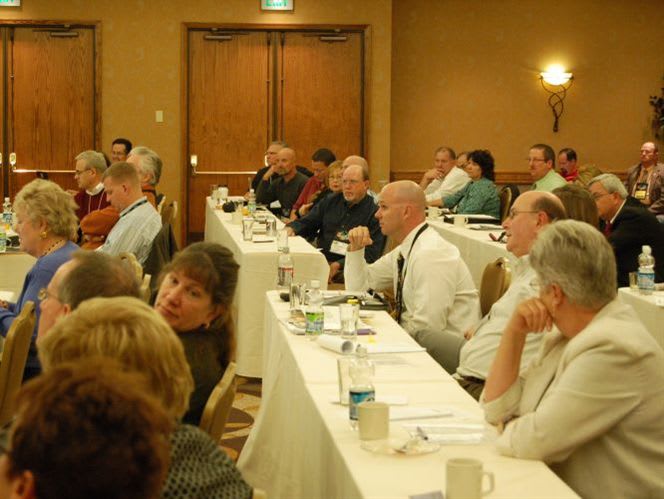
The NASDPTS conference included discussions on enhancing school bus security and reducing pedestrian fatalities, among many other topics.
PORTLAND, Ore. — State pupil transportation directors convened here to discuss a variety of vital topics, including school bus security and pedestrian fatalities.
The National Association of State Directors of Pupil Transportation Services (NASDPTS) conference got rolling on Friday with an intriguing presentation: “Why Does an Old-Fashioned Childhood Sound So Radical?”
The speaker, Free-Range Kids founder Lenore Skenazy, argued that the world is much safer than the media lead us to believe. The New York City resident, who gained notoriety after she wrote a column about letting her 9-year-old son find his way home by himself on the subway, advocated teaching our children the skills and responsibility to be more independent. She said that may include allowing them to walk to school or the school bus stop on their own.
The conference’s next presentation provided an interesting contrast: “School Buses and Terrorism Awareness.”
FBI Special Agent Marybeth King discussed why school buses could be an alluring target for extremists. King gave insight into how terrorists work and how they aim to carry out their agendas. An attack on kids — whether at a school or in a school bus — would have a widespread impact on the public, particularly as it is covered by the media.
King stressed the importance of drivers’ pre-trip inspections and of having a secure bus facility. “If you are vulnerable to vandals, you are vulnerable to anything,” she said.
King also cautioned against making school bus route information available online. “If you post it, it takes away maybe the one chance you have of seeing someone following a bus,” she said.
One of the more interactive sessions was a panel discussion on reducing pedestrian fatalities, moderated by California state director John Green. The dialogue centered on two pressing issues: what to do about students being struck by passing motorists, and what to do about students being struck by their own school bus.
Within the arena of passing motorists, one concept that generated much discussion was that of enforcement. North Carolina state director Derek Graham explained that while some call for stiffer penalties for those who illegally pass school buses, his state has seen that stiffer penalties are less likely to be enforced. Florida state director and outgoing NASDPTS president Charlie Hood added that when car seat fines were raised in his state, convictions went down.
Other ideas that were talked about included the use of surveillance cameras to catch passing motorists (and how states' laws can affect that process) and the potential for using public awareness campaigns to make it clear that passing a stopped school bus is dangerous and unacceptable.
Regarding the problem of students being struck by their own bus, discussions covered the importance of proper mirror adjustment (industry consultant Dick Fischer said that he constantly sees crossover mirrors that are not adjusted correctly), the need in some cases for “back-to-basics” training, and having the driver get out of the bus to escort children across the street, as California does.
More coverage of the NASDPTS conference will appear in the January issue of SBF.
More Management
How to Build a Better Driver Training Program
Ready to boost up your school bus instructor training? Here’s how to pick the right talent and improve recruitment, retention, and safety.
Read More →
CALSTART and Forth Combine to Form Catalyst Mobility
The new name represents a renewed vision for the nonprofit focused on advancing clean, equitable, and affordable transportation solutions that move people and goods.
Read More →
What Makes a Great School Bus Driver Trainer?
Choosing the right school bus driver trainer takes more than experience. Learn six keys to selecting and developing trainers and evaluating program effectiveness.
Read More →

School Bus Contractors Expand Through New Deals, Acquisitions & Partnerships
STA's Canadian division acquires Ontario-based G&L Stevenson Transport; Durham School Services adds a new district in California; First Student expands in New Jersey; and Minnesota Coaches rebrands and acquires Halo Transportation.
Read More →
Logan Bus Company Rolls Out AI Phone System for NYC School Bus Families
A summer pilot found that AI agents could handle most routine calls, freeing up time for customer service staff to focus on emergencies and complex family concerns.
Read More →
From Intent to Impact: What I Learned About Leadership from TAPT
A Texas transportation supervisor shares lessons on self-awareness, accountability, managing stress and building trust — and why investing in leadership development matters at every stage of your career.
Read More →
NAPT Names 2026 Award Recipients, Hall of Fame Inductee
Who earned national recognition for their work in student transportation? This year, NAPT named five recipients of its 2026 awards for service, safety, and leadership, plus its newest Hall of Famer.
Read More →
2026 State of Student Transportation Report
Driver shortages. Rising costs. Growing safety expectations. More data, but not enough time to act on it. The 2026 State of Student Transportation Report reveals what transportation leaders say is putting the most pressure on their operations—and where they’re investing next. See how your priorities compare.
Read More →
How to De-Escalate an Angry Person: 5 Steps for Handling Workplace Conflict
What makes emotions run high, and how should you handle an angry colleague or parent? Follow these steps for staying calm, listening, showing empathy, and resolving conflict.
Read More →
What Readiness Looks Like This School Year
Learn about the challenges shaping the 2026–2027 school year, from persistent driver shortages and budget pressure to technology and readiness gaps. See how school districts are responding and adapting in Zonar’s 2026 Back-to-School Readiness Report.
Read More →