




SOAR School Bus Safety Program Takes Flight
School districts in Georgia and other states have adopted the "Safe, Orderly, and Respectful" concept for teaching students about school bus safety.

Thomas McMahon・Executive Editor
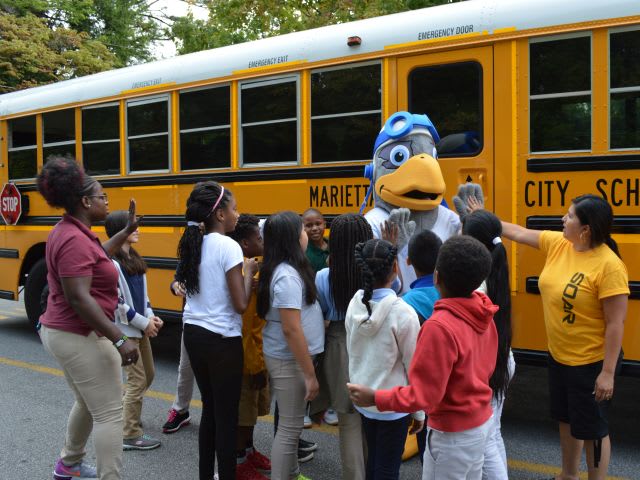
At Marietta (Ga.) City Schools, students going through the SOAR school bus safety program meet the district’s SOAR eagle mascot.
4 min to read
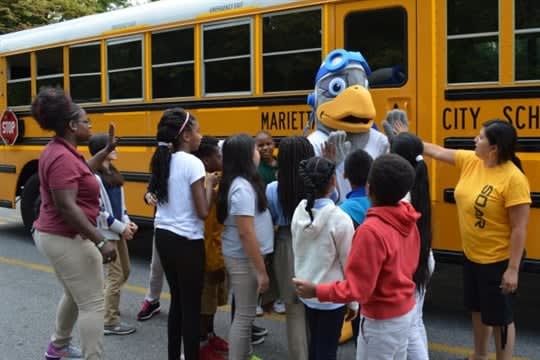
At Marietta (Ga.) City Schools, students going through the SOAR school bus safety program meet the district’s SOAR eagle mascot.
MARIETTA, Ga. — School bus drivers here are visiting schools to teach students about the subject they know best: safety.
As part of the SOAR program — which stands for "Safe, Orderly, and Respectful" — drivers go to schools and lead students through six stations that cover key safety topics, like school bus evacuation, the danger zone around the bus, and how to cross the street safely.
The SOAR program originated at Forsyth County Schools in Cumming, Georgia, where a mascot called Elvis the Safety Owl accompanies drivers as they visit schools to instruct students.
After seeing success with SOAR at Forsyth, Director of Transportation Garry Puetz and his staff gave a presentation about the program at a Georgia Association for Pupil Transportation (GAPT) conference in 2013.
Among those in attendance at the GAPT event was Mark Lindstrom, director of transportation for Marietta City Schools, who was impressed by the SOAR concept.
“When I saw this, I had been in transportation for about 12 years. This was probably the best safety program I had seen,” Lindstrom recalled.
He took the idea back to Marietta City Schools and, with his staff, began developing their district's own SOAR program.
At Marietta, about a dozen of the approximately 100 school bus drivers and monitors conduct the SOAR training twice every school year with all of the district's K-8 students. At each school, the classes take turns going through the six SOAR stations over the course of the school day.
Drivers also reinforce the training through their weekly "bus talks" — one- to two-minute safety lessons that cover the SOAR principles while on the bus route.
Lindstrom said that the hands-on training is fun for the students, and it imparts safety lessons that are important but simple — and easy to remember. The program has also enhanced relationships between the drivers and their passengers.
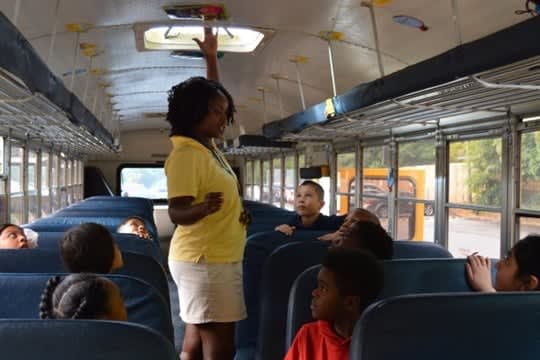
A Marietta school bus driver on the SOAR team shows students a roof hatch, one of the emergency exits on the bus.
“It helps our drivers communicate with students better,” Lindstrom said. “They have more camaraderie.”
Kimberly Ellis, Marietta’s assistant director of transportation, said that the SOAR program is also helpful for the schools, because it meets the Georgia Department of Education’s requirements on school bus safety instruction for students.
“It takes the responsibility off of our schools and away from our teachers,” Ellis said. “Instead of the PE teacher, it’s our transportation professionals. … We want our bus drivers to teach school bus safety.”
The drivers on the SOAR team are trained on how to conduct the program. They are paid for the time they work on the SOAR program, but Lindstrom said the extra money isn’t the motivating factor for the drivers.
“They like being part of the SOAR team,” he said. “They really feel like they’re contributing to student safety."
Marietta City Schools has nearly 9,000 students in its 11 schools. The hands-on SOAR training takes place across much of the fall semester at all of the district’s elementary and middle schools. There are plans to expand the program to high school, possibly starting with a student video contest.
In the spring, drivers return to schools to read a SOAR book to students. In that book, written by the Marietta transportation team and illustrated by a company called wizMotions, an eagle mascot named SOAR reviews the school bus safety procedures that students are taught in the hands-on training. That same lesson is also presented in a video that wizMotions developed for Marietta.
The costs for the various components of Marietta’s SOAR program haven’t tapped into the district’s budget. The funding comes from ticket revenue generated by the district’s school bus stop-arm cameras. Lindstrom said that that revenue, which amounts to about $70,000 per year, is also used for other safety projects — installing a crosswalk next to a school, for example.
Marietta City Schools is not the only district that has adopted the SOAR concept after Forsyth County Schools shared it at the GAPT conference. Forsyth's Puetz, who has also presented the concept at the Southeastern States Pupil Transportation Conference, said that several districts in Georgia and other states — including Mississippi, Iowa, Michigan, and Maine — have adopted parts or all of the SOAR model.
For example, Newton County Schools in Covington, Georgia, has implemented Forsyth’s full SOAR curriculum, training station system, and even the same mascot, Elvis the Safety Owl.
Meanwhile, the seminal SOAR program is still flying at Forsyth County Schools. Puetz said that since they launched the program in 2012, his transportation team has conducted a cumulative total of nearly 100,000 student training sessions at the district’s 21 elementary schools.
Lindstrom said that the SOAR idea could be adapted at any school district.
“I think this can work anywhere. We all have the same basic safety rules for children,” Lindstrom said. “It’s a dynamic program.”
Watch Marietta City Schools’ SOAR video here:
Watch a Forsyth County Schools SOAR team member teaching students here:
More Safety

Sponsored•August 27, 2026
Doing More With Less: How Transportation Directors Can Prioritize Safety Amid Budget Uncertainty
With diesel prices soaring and nearly one-third of transportation directors expecting budget cuts, maintaining student safety has never been more challenging. Download this guide to learn how leading districts are prioritizing risk, funding critical safety technology, and building stronger budget cases with data.
Read More →
How To Build a More Secure School Bus Yard During and After Hours
As thefts and overnight security threats continue, school transportation leaders are combining stronger operational practices with AI-enabled surveillance to better protect buses, facilities, and staff.
Read More →
FMCSA Names New Chief Safety Officer: What School Bus Operators Should Know
Steve Dowling is set to lead the federal agency's efforts to advance commercial motor vehicle safety and reduce crashes, fatalities, and injuries on the nation's roadways.
Read More →
New Study Finds School Zone Speed Safety Cameras Cut Speeding Violations 97%
A Florida university's research demonstrates that Verra Mobility's automated enforcement changes driver behavior and significantly improves school zone safety.
Read More →
What Changed in DOT’s New National Roadway Safety Strategy?
The federal agency's new plan shifts its focus to safer people, roads and vehicles, with a new three-pronged approach instead of five. One outlined action even addresses a key industry concern around illegal school bus passing.
Read More →
Are Autonomous Vehicles Ready to Safely Navigate School Bus Stops?
NHTSA is accelerating autonomous vehicle deployment through new safety standards and commercial approvals. See why school transportation leaders are watching.
Read More →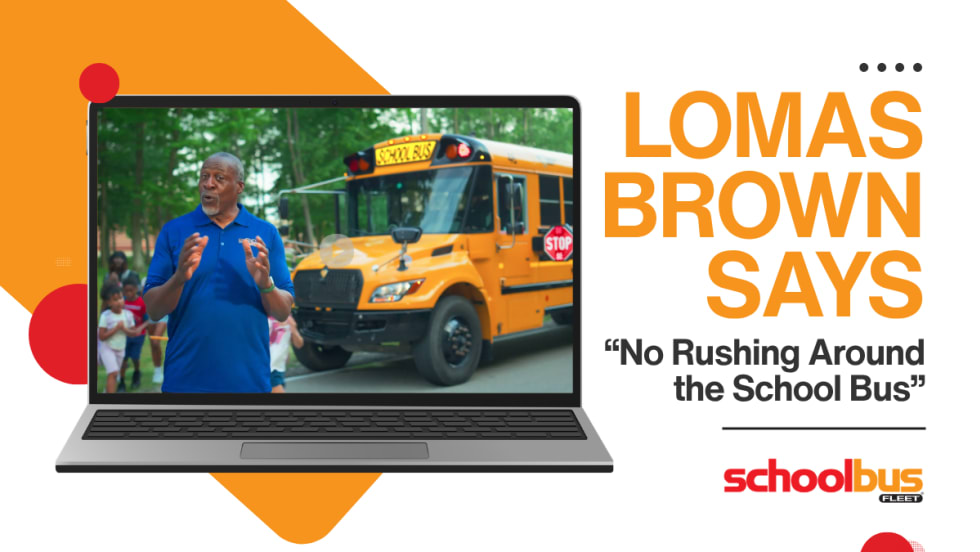
NFL Star Lomas Brown Kicks Off New Illegal School Bus Passing PSA
Just in time for the back-to-school season, the former Detroit Lions offensive tackle took time to record a video encouraging motorists to slow down around school buses.
Read More →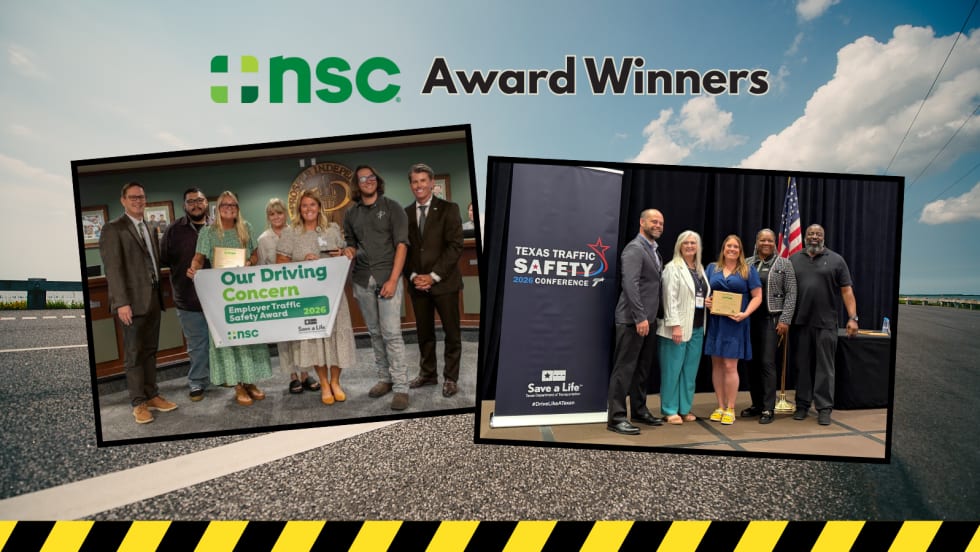
How Two Texas Districts Built Award-Winning Safety Programs
Learn how Prosper ISD and Rockwall ISD earned National Safety Council honors through hands-on training, safety culture, and strategies that reduced transportation incidents.
Read More →
NHTSA Releases 10-Year Review of Fatal School Bus Crashes
The latest federal analysis reinforces the safety of school buses while identifying where school-age pedestrians and other motorists remain most at risk.
Read More →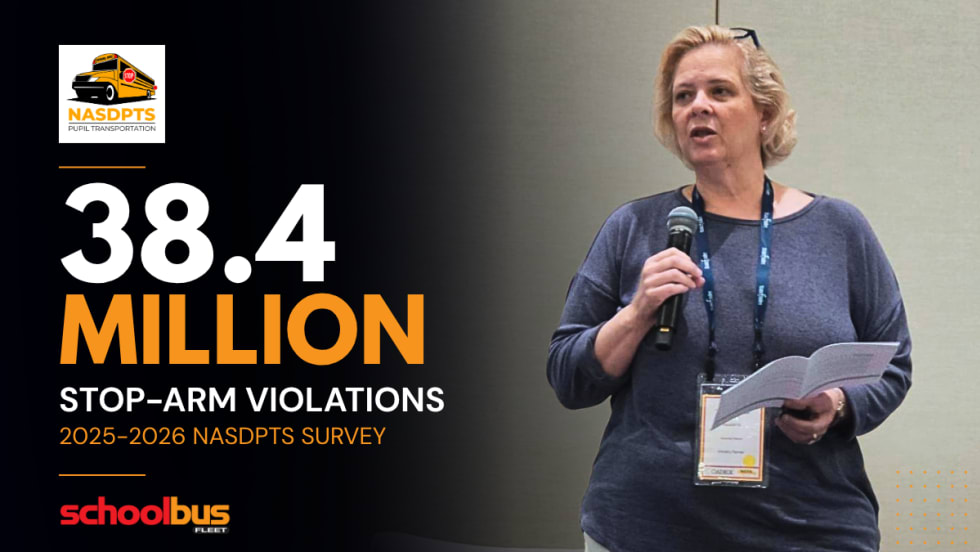
2026 NASDPTS Survey: Data Shows Further Reduction of Illegal Passing
New data is in! School bus stop-arm passings are down to 38.4 million violations per year, about a 2.3% decrease from last school year — but passings on the right side of the bus are higher than ever.
Read More →