




Report: Education Revenue Rose 3.3% in 2014
The increase in U.S. education revenue was the largest since 2008. Meanwhile, pupil transportation accounted for 3.9% of total education spending in 2014.

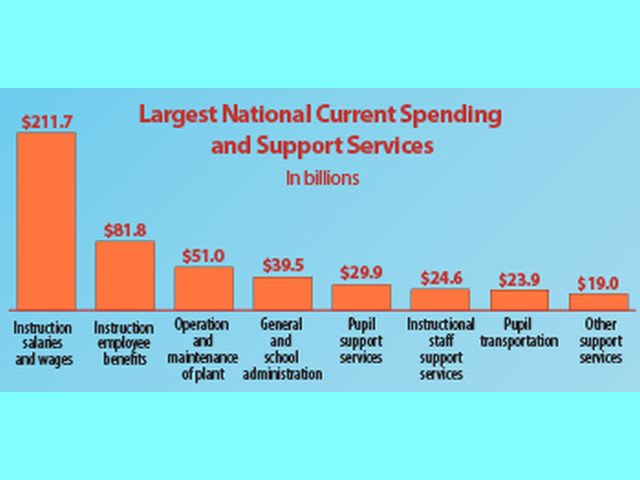
In 2014, pupil transportation spending amounted to $23.9 billion out of a total expenditure of $613.6 billion by public school systems nationwide. Source: U.S. Census Bureau
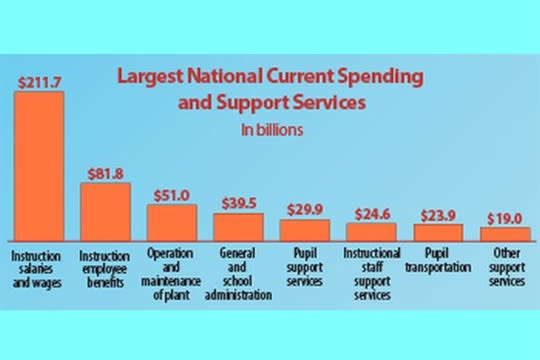
In 2014, pupil transportation spending amounted to $23.9 billion out of a total expenditure of $613.6 billion by public school systems nationwide. Source: U.S. Census Bureau
Elementary and secondary education revenue were up 3.3% nationally in fiscal year 2014, amounting to $617.6 billion, according to a report released on Thursday by the U.S. Census Bureau.
“This is the largest increase in total revenue since 2008, when there was a 4.1% increase from the prior year,” said Stephen Wheeler, an analyst at the Census Bureau. “School system revenue comes from federal, state, and local government sources.”
Per-pupil spending for the nation was $11,009, a 2.7% increase from 2013. This was the largest increase in per-pupil spending since 2008, when there was a 6.1% increase from the year prior. Among the 50 states and the District of Columbia, New York spent the highest per pupil, at $20,610, while Utah came in the lowest at $6,500.
Per-pupil spending includes gross school system expenditure for instruction, support services, and non-instructional functions, including direct expenditure for salaries, employee benefits, student transportation, building maintenance, purchased property, and other services and supplies.
Following New York, the highest spending per pupil in 2014 was in the District of Columbia at $18,485, Alaska at $18,416, New Jersey at $17,907, and Connecticut at $17,745.
After Utah, the states spending the least per pupil were Idaho at $6,621, Arizona at $7,528, Oklahoma at $7,829, and Mississippi at $8,263.
The findings come from the “Public Education Finances: 2014 report,” which provides figures on revenues, expenditures, debt, and assets (cash and security holdings) for the nation’s elementary and secondary public school systems. The report and tables, released annually, include detailed statistics on spending — such as instruction, student transportation, salaries, and employee benefits — at the national, state, and school district levels.
Total expenditure by public school systems was $613.6 billion in fiscal year 2014, up 2.6% from 2013. Public education expenditure categories include instructional spending, support services spending, capital outlay, and other current spending. Total school district debt increased by 0.5% from the prior year.
Pupil transportation, which falls under support services spending, amounted to $23.9 billion nationwide in 2014. That’s 3.9% of the total expenditure by public school systems.
For more information, go here.
More Management

Inside NAPT ACTS 2026: Highlights from Louisville
From federal updates and student behavior strategies to new school bus technology and industry awards, see highlights from NAPT ACTS 2026 in Louisville.
Read More →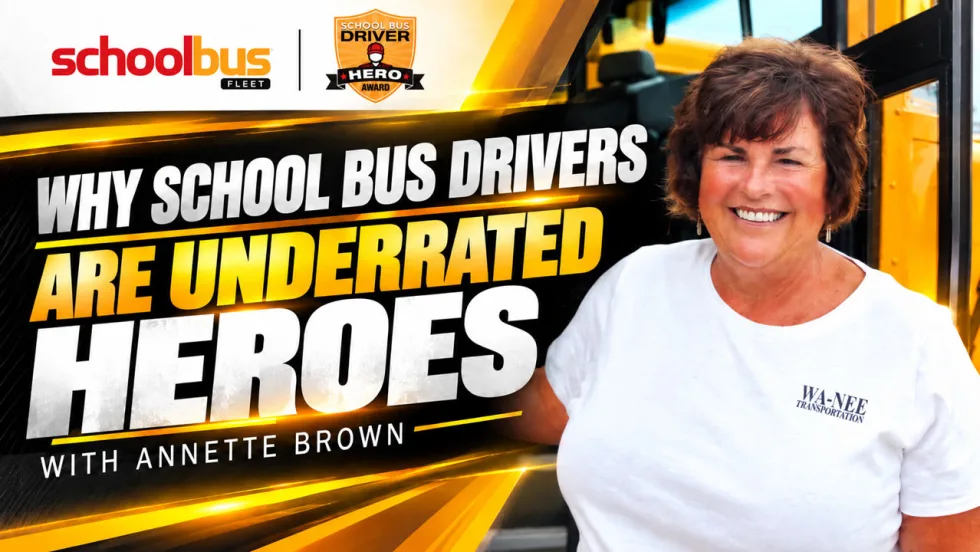
Meet the 2025 School Bus Driver Hero Winner: Annette Brown
We caught up with Wa-Nee Community Schools' Annette Brown on site at SBFX, where she was named the 2026 School Bus Driver Hero Award winner. Hear about her reaction, what she loves most about being a school bus driver, and more!
Read More →
Predictability Is Like Ketchup (According to 6-Year-Olds)
To students, a different school bus can feel like a full-blown crisis. One driver reflects on why familiar routines, showing up on time, and being reliably boring matter more than we think.
Read More →

Samsara Launches Free Driver Rewards Program
The new Driver Perks program gives eligible professional drivers access to discounts and offers without adding a cost for participating fleets.
Read More →
How Tax-Exempt Municipal Leases Can Help Finance School Buses
Let’s explore school bus financing options, including municipal leases, vendor payable accounts, and balloon payments, and how they can help stretch fleet budgets.
Read More →
Nominate Rising School Transportation Pros Under 40!
We’re searching for the next generation of leaders making an impact across the K-12 student transportation industry to recognize as SBF’s 2027 Trailblazers. Nominations are open now!
Read More →
Changing Lanes: BusWhere, EverDriven, InterMotive, Summit School Services, Switzer-Carty & Thomas Built Buses
Check out who's been hired, promoted, and appointed to leadership positions at various school transportation suppliers, contractors, and manufacturers.
Read More →
The Most Expensive Thing You Do Before Selling a School Bus: Wait
When should you sell an aging school bus? Learn how maintenance, mileage, corrosion, specifications, and timing can affect resale value long before the auction.
Read More →
American Student Transportation Partners Acquires AJ Myers and Sons
A new deal brings a 75-year Pennsylvania student transportation provider into one of the nation’s largest private school bus contracting groups.
Read More →
What I Brought Home From SBFX: Relationships, Leadership, and Preparing What's Next
Who could lead your transportation operation tomorrow if you couldn't? Bernando Brown explores succession planning, mentorship, and preparing emerging leaders to step up.
Read More →