




Report: Blue Bird propane bus performs well in cold temps
Officials from school districts and bus companies on the East Coast and in the Midwest report easy starting, quick warm-up and quiet operation of the propane Vision school buses in their fleets during the recent cold snap. Blue Bird says propane autogas’ natural properties keep the fuel in a constant liquid form, free from freezing or gelling, and the liquid form provides better control of the air-to-fuel ratio, resulting in excellent start-up dependability.

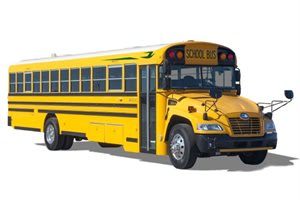
Officials for Blue Bird say propane autogas’ natural properties keep the fuel in a constant liquid form, free from freezing or gelling. Pictured is Blue Bird's propane Vision school bus.
FORT VALLEY, Ga. — While much of North America recently experienced record-breaking cold weather, school districts and contractors reported that their Blue Bird propane school buses started and operated impeccably, according to the manufacturer.
All Star Transportation in Torrington, Conn., has a fleet that includes 40 propane Vision school buses.
The area experienced average temperatures of around zero degrees for several days, and officials for the operation said the propane autogas buses were “stellar performers.”
“The temperature here dipped as low as -12 F, adding complexity to our daily operations,” said Leslie Sheldon, operations manager for All Star Transportation. “The propane autogas buses made the lives of our technicians and bus drivers easier, as the buses started perfectly and came up to temperature promptly.”
Bus companies and school districts in the Midwest were also impacted by low temperatures. In eastern Wisconsin, the temperature fell to -27 F, but the 14 propane Vision school buses in Lamers Bus Lines’ fleet didn’t experience any issues.
“Simply put, our propane Visions are great cold weather buses,” said Allen Lamers, owner of Lamers Bus Lines. “We experienced easy starting, heat within minutes, quiet operation and less headaches. Our drivers love the buses, and when the driver is happy, everyone is happy.”
Likewise, as -13 F temps hit Reed City (Mich.) Area Public Schools’ area of service, the district’s six propane Vision buses started without a problem.
“School was canceled for a few days, but we were out there anyway, starting the buses and making sure our fleet was fully prepared,” said Paul Lewis, director of facilities and transportation. “The quietness of the propane bus is amazing. During these colder temperatures, the drivers love how quickly the buses warm up. We are very happy with our propane buses.”
Officials said Blue Bird’s propane school buses offer superior cold weather starting and operational capabilities due to two important factors. First, propane autogas’ natural properties keep the fuel in a constant liquid form, free from freezing or gelling. Second, propane autogas’ liquid form provides better control of the air-to-fuel ratio, resulting in the superior start-up dependability that districts are widely reporting. Also, there is no need to plug the buses in to pre-heat them.
The Blue Bird propane Vision and propane Micro Bird, equipped with the ROUSH CleanTech propane autogas fuel system and a Ford 6.8-liter engine, meet all EPA and California Air Resources Board certifications.
Recent news related to cold temps and pupil transportation:
More Alternative Fuels
Alt-Fuel Moves: Electric Bus Rollouts, Bidirectional Charging & Propane Growth
See which fleets are adding electric and propane school buses as districts and operators invest in charging infrastructure, bidirectional technology, and alternative-fuel expansion.
Read More →
Nobody Told Diesel Prices They Were Supposed to Come Down
With diesel prices surging, school bus fleets have new reason to stress-test fuel costs, consider diversification, and calculate what each route really costs to operate.
Read More →
Why Gasoline School Buses Are Making a Comeback
Gasoline is gaining ground in full-size school buses. See how today’s options stack up against diesel on cost, maintenance, emissions, performance, and more.
Read More →
EPA Opens $180M DERA Funding Round for Diesel Upgrades
The 2026 Diesel Emissions Reduction Act program seeks applications from eligible organizations to accelerate the retirement of legacy diesel vehicles.
Read More →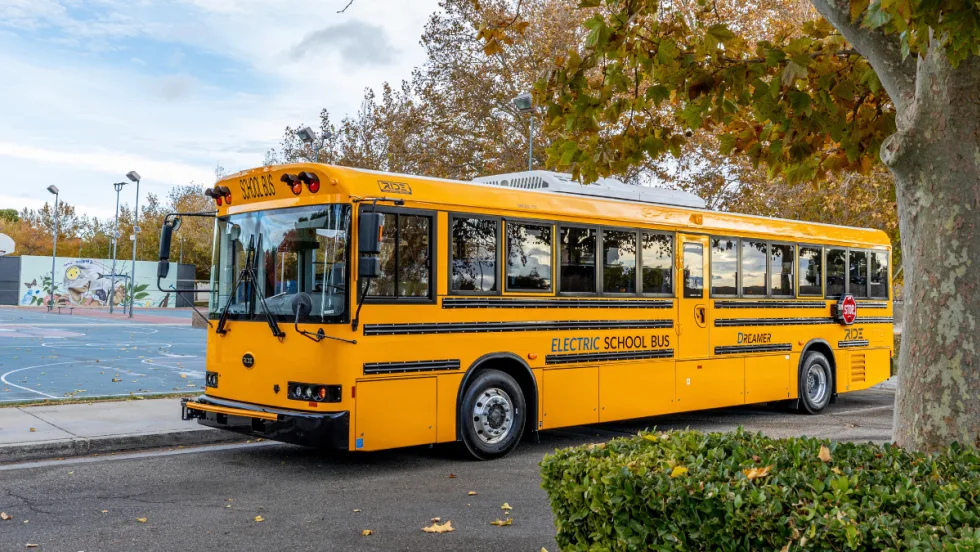
The Secret Life of an Electric School Bus Battery
Batteries change throughout years of daily routes, but degradation doesn’t necessarily mean the end. Here’s what operators should know about performance, safety, and second life.
Read More →
CALSTART and Forth Combine to Form Catalyst Mobility
The new name represents a renewed vision for the nonprofit focused on advancing clean, equitable, and affordable transportation solutions that move people and goods.
Read More →
Alt-Fuel Moves: New Buses, Charging Hubs & Real-World EV Testing
Propane and electric school bus deployments continue to grow as districts add new vehicles, expand charging infrastructure, and gather more real-world operating data.
Read More →
Fewer Electric School Bus Models Reshape the U.S. Market
WRI’s latest buyer’s guide points to a consolidating electric school bus market, but fewer options may reflect a maturing industry rather than fewer meaningful choices for school bus operators.
Read More →
The Fuel Budget You Can Actually Predict: How Propane Autogas Keeps Money in the Classroom
Learn how propane autogas helps school districts manage fuel costs with predictable pricing, lower maintenance, and reduced emissions from former transportation director Joel Stutheit.
Read More →
Hendrickson, Driventic Introduce New Electric Powertrain for School Buses
ELECTRAAX, the electrified, lightweight drive axle offers integrated ePowertrain efficiency and modular flexibility for Class 6–7 school bus use.
Read More →