




Radio Communication Strategies Shared at California Conference
Transportation staff from Elk Grove Unified School District give tips for successful driver-dispatch communication during the California Association of School Transportation Officials’ recent annual conference.

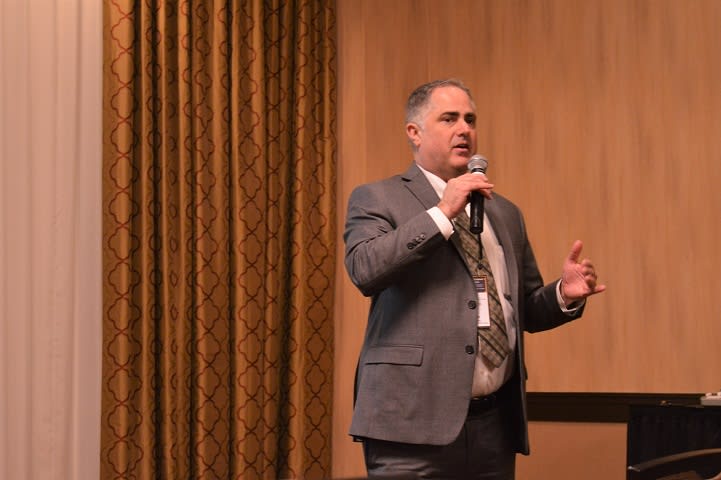
Matt Sanchez, the transportation director for Elk Grove USD, encouraged drivers to be mindful of the language they use when there is an emergency on or off the school bus.
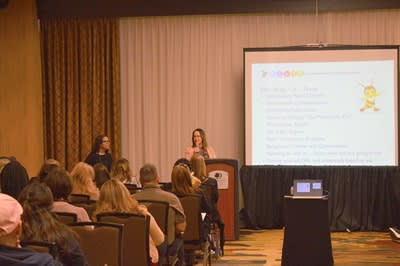
Tina Meuser (left) and Yvonne Dennings, two dispatchers from Elk Grove Unified School District, shared tips for effective radio communication during the California Association of School Transportation Officials’ annual conference.
SACRAMENTO, Calif. — Effective radio communication between dispatchers and drivers requires more than just uniform procedure, one session revealed at this year's California Association of School Transportation Officials (CASTO) conference.
Yvonne Dennings and Tina Meuser, two dispatchers from Elk Grove Unified School District (USD), discussed with attendees how to practice brief, concise, and impersonal radio communication while also considering voice perception.
Using Elk Grove USD’s transportation department as an example, Dennings and Meuser highlighted several key two-way radio protocols, including:
Keeping the radio on and at an audible level at all times.
Ensuring that users give the name or identifier of the unit they are calling before transmitting a message.
Holding the microphone approximately one inch away from the lips, at an angle of about 45 degrees.
Pressing the transmit button, hesitating for a count of two, and then speaking slowly and clearly across the mouthpiece in a normal voice.
“It’s just like sending a text message,” Dennings explained. “You never know how a person may be feeling when they’re sending a [text] message. Over the radio, you want to keep it the same way; it’s important to level your tone and have no inflection in your voice.”
Matt Sanchez, the transportation director for Elk Grove USD, also advised attendees to be mindful of the language they use when referring to students and how to communicate when there is an emergency on or off the school bus.
Matt Sanchez, the transportation director for Elk Grove USD, encouraged drivers to be mindful of the language they use when there is an emergency on or off the school bus.
For example, he told attendees, “If you’re transporting a student who uses a wheelchair, you never want to refer to them as ‘that wheelchair kid.’ You always want to use the most appropriate words and refer to them as students.”
In this case, he added, it would be best to say, “I am transporting a student who uses a wheelchair.”
Another scenario Sanchez mentioned was how to disclose to dispatchers and school staff that a student is lost or missing.
“You never want to say a student is lost prematurely; that evokes panic for the school and parents involved,” he added. “You simply want to say a student is ‘misplaced.’”
At Elk Grove, currently all of the district’s buses are equipped with tablets that allow drivers to scan students on and off the bus, in hopes of reducing the chance of any misplaced students, Meuser added. For attendees who may not have tablets on their buses, she stressed the importance of having dispatchers provide drivers with consistent, up-to-date records of student routing information and giving drivers access to multiple radio channels to disclose any emergency information.
Dennings told attendees that the same rules would apply in the event of a school bus accident.
“The dispatcher’s first responsibility is to keep the driver calm and focused,” she said. “You need to remind drivers to assess the scene and organize their thoughts. They need to be able to communicate [to the dispatcher] the location, how many students are on the bus, are there other vehicles involved, and are there any injuries or damages.”
In addition to the strategies mentioned above, Dennings and Meuser noted several radio practices to avoid. These included participating in unnecessary radio chatter, disrespectful communication, distributing excessive weather/traffic-related information, and not considering confidentiality when disclosing student information.
More Management
How to Build a Better Driver Training Program
Ready to boost up your school bus instructor training? Here’s how to pick the right talent and improve recruitment, retention, and safety.
Read More →
CALSTART and Forth Combine to Form Catalyst Mobility
The new name represents a renewed vision for the nonprofit focused on advancing clean, equitable, and affordable transportation solutions that move people and goods.
Read More →
What Makes a Great School Bus Driver Trainer?
Choosing the right school bus driver trainer takes more than experience. Learn six keys to selecting and developing trainers and evaluating program effectiveness.
Read More →


School Bus Contractors Expand Through New Deals, Acquisitions & Partnerships
STA's Canadian division acquires Ontario-based G&L Stevenson Transport while Durham School Services adds a new district contract in California, First Student adds a New Jersey contract, and Minnesota Coaches acquires Halo Transportation.
Read More →
Logan Bus Company Rolls Out AI Phone System for NYC School Bus Families
A summer pilot found that AI agents could handle most routine calls, freeing up time for customer service staff to focus on emergencies and complex family concerns.
Read More →
From Intent to Impact: What I Learned About Leadership from TAPT
A Texas transportation supervisor shares lessons on self-awareness, accountability, managing stress and building trust — and why investing in leadership development matters at every stage of your career.
Read More →
NAPT Names 2026 Award Recipients, Hall of Fame Inductee
Who earned national recognition for their work in student transportation? This year, NAPT named five recipients of its 2026 awards for service, safety, and leadership, plus its newest Hall of Famer.
Read More →
2026 State of Student Transportation Report
Driver shortages. Rising costs. Growing safety expectations. More data, but not enough time to act on it. The 2026 State of Student Transportation Report reveals what transportation leaders say is putting the most pressure on their operations—and where they’re investing next. See how your priorities compare.
Read More →
How to De-Escalate an Angry Person: 5 Steps for Handling Workplace Conflict
What makes emotions run high, and how should you handle an angry colleague or parent? Follow these steps for staying calm, listening, showing empathy, and resolving conflict.
Read More →
What Readiness Looks Like This School Year
Learn about the challenges shaping the 2026–2027 school year, from persistent driver shortages and budget pressure to technology and readiness gaps. See how school districts are responding and adapting in Zonar’s 2026 Back-to-School Readiness Report.
Read More →