





Alt-Fuel for Non-Electrifiers: 3 Reasons to Consider Propane
PERC Survey Shows 87% of Parents Support Low-Emissions School Buses
Survey results reveal parents want cleaner rides, but school districts face funding gaps and delays in deploying other fuel options.
August 28, 2025
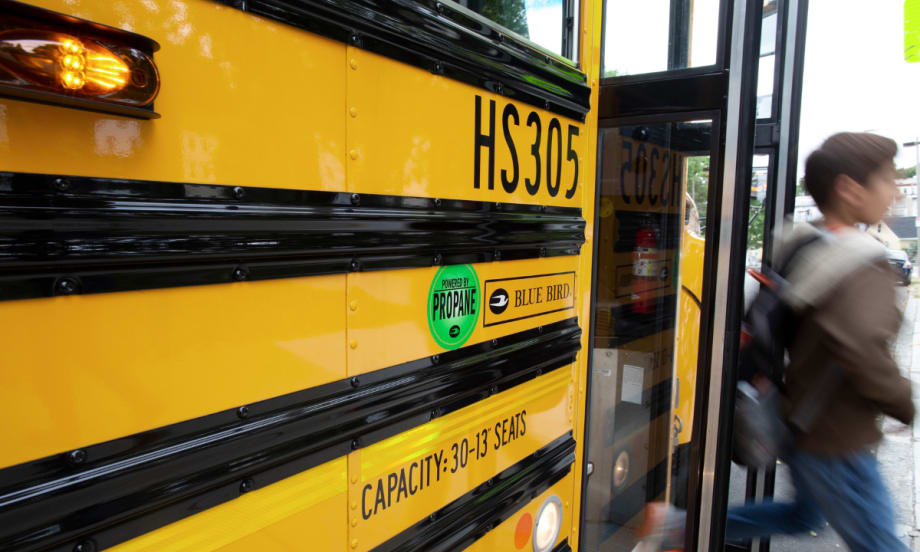
According to a PERC survey, parents overwhelmingly support cleaner school buses, and propane-powered fleets are already helping reduce emissions in more than 1,000 U.S. districts.
Photo: PERC
3 min to read
What tops the list of parent concerns regarding school transportation? Cleaner air. Yet, diesel buses remain the norm in most districts.
A recent nationwide survey conducted by the Propane Education & Research Council (PERC) reveals that 87% of parents and K-12 educators say it's important for their children to get to and from school in low-emission school buses.
According to a release, the survey asked respondents about their awareness and attitudes toward school bus emissions and alternative fuels like propane, and the results show a demand for cleaner school buses.
However, most students still ride to school on diesel buses despite nationwide programs funding cleaner transportation options. A June 2025 report from the U.S. Government Accountability Office (GAO) found that, while billions in federal funding have been committed to electric and other alternative-fuel buses, many of those buses remain delayed in deployment, often due to charging infrastructure and delivery challenges, keeping older, higher-polluting diesel buses on the road longer.
EPA Data Shows Emissions Benefits of Propane Buses
Although diesel exhaust is a known carcinogen that causes lung cancer and increases the risk of bladder cancer, alternative types of fuel, like propane, can reduce that risk.
PERC notes that propane school buses reduce "nitrogen oxide (NOx) emissions by up to 96% compared with diesel and emit near-zero particulate matter (PM) emissions." According to the Environmental Protection Agency, both NOx and PM emissions are recognized as triggers for conditions such as asthma, bronchitis, and other respiratory issues.
"Every child deserves a safe, clean, healthy ride to school," said Joel Stutheit, senior manager of autogas business development at PERC. "The way children ride to school today is like how I rode to school — in an aging, dirty diesel bus. Parents will remember that cloud of black smoke from the exhaust pipe, the smell of the diesel, the headaches, and the noise. With propane, all of that is gone, so children arrive safely and ready to learn."
Survey Highlights Parent Support for Propane School Bus Adoption
Although 76% of parents agreed that the biggest benefit of low-emissions buses is cleaner air for students, the survey results indicated that parents didn't want to use funding from other academic areas to pay for cleaner transportation.
According to PERC, propane buses may present an affordable option that "costs marginally more than a diesel bus but can reduce operating costs by half."
"I am often asked, 'What about electric buses?'" Stutheit said. "While electric buses may not have tailpipe emissions, we need to remember that 65% of the grid is still powered by coal and other fossil fuels — emissions are generated when those buses charge. There is no such thing as a zero-emissions vehicle. And when you compare the full lifecycle emissions, propane buses hold their own as a clean energy, and at an affordable cost to replace diesel buses and reduce emissions more quickly."
Currently, 1.1 million children across the country ride to school every day in 22,000 propane autogas school buses. Those buses operate in more than 1,000 school districts in 48 states.
After learning about how propane school buses reduce emissions and potentially save school districts money, 90% of parents surveyed said they would be at least somewhat likely to support their use.
More Alternative Fuels

CALSTART and Forth Combine to Form Catalyst Mobility
The new name represents a renewed vision for the nonprofit focused on advancing clean, equitable, and affordable transportation solutions that move people and goods.
Read More →
Alt-Fuel Moves: New Buses, Charging Hubs & Real-World EV Testing
Propane and electric school bus deployments continue to grow as districts add new vehicles, expand charging infrastructure, and gather more real-world operating data.
Read More →
Fewer Electric School Bus Models Reshape the U.S. Market
WRI’s latest buyer’s guide points to a consolidating electric school bus market, but fewer options may reflect a maturing industry rather than fewer meaningful choices for school bus operators.
Read More →
The Fuel Budget You Can Actually Predict: How Propane Autogas Keeps Money in the Classroom
Learn how propane autogas helps school districts manage fuel costs with predictable pricing, lower maintenance, and reduced emissions from former transportation director Joel Stutheit.
Read More →
Hendrickson, Driventic Introduce New Electric Powertrain for School Buses
ELECTRAAX, the electrified, lightweight drive axle offers integrated ePowertrain efficiency and modular flexibility for Class 6–7 school bus use.
Read More →
The Mobility House Joins PowerFlex in Fleet Electrification Deal
The acquisition combines intelligent charging software, bidirectional charging expertise, and fleet electrification services to support the growing adoption of electric school buses across North America.
Read More →
Alt-Fuel Moves: Electric School Bus Investments Hit the Road
See which districts across the U.S. are putting electric school buses into service, expanding charging infrastructure, and planning the next phase of fleet electrification.
Read More →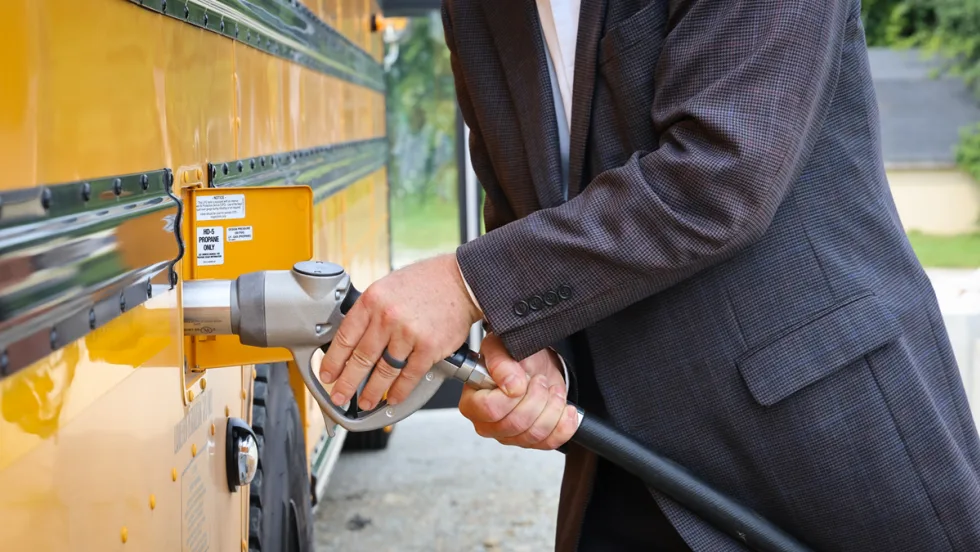
With Fuel Volatility Ahead, School Districts Turn to Propane
While diesel prices peaked above $5 this spring, districts with propane autogas-powered fleets paid under $2 per gallon, according to PERC.
Read More →
EPA Unveils Proposed Changes to 2027 Heavy-Duty Engine Rules
The federal agency has proposed changes to next year’s targets that would eliminate DEF derates, ease warranty requirements, and retain current NOx emissions standards.
Read More →
Alt-Fuel Moves: EV Charging & Infrastructure Projects Gain Momentum
The latest developments include new funding, charging infrastructure, utility investments, and fleet technologies designed to support the transition to electric school buses nationwide.
Read More →