


More Safety Standard Proposed Changes
in the Works:
NHTSA Seeks to Upgrade Regulations Governing Electric School Buses
 MENU
MENU SEARCH
Breaking down NHTSA's Advance Notice of Proposed Rulemaking that could lead to changes for school bus seats.

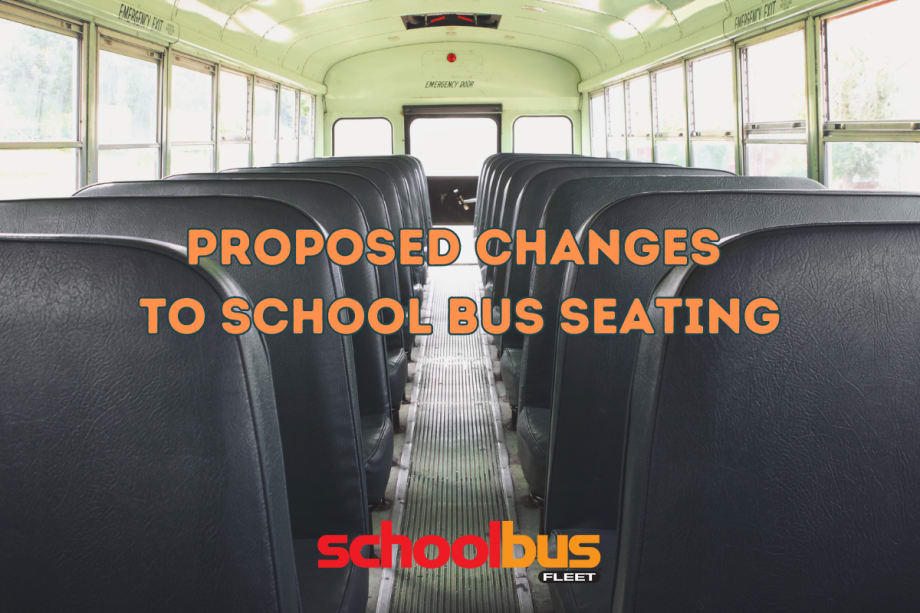
NHTSA's proposal seeks to create stronger standards for vehicle seat backs to help prevent them from collapsing or experiencing excessive deformation during rear-end collisions.
Photo: School Bus Fleet
Editor's Note: NHTSA has provided clarity on the Advance Notice of Proposed Rulemaking addressing FMVSS No. 207. The proposed change does not apply to school bus seating, since requirements in FMVSS No. 222 ensured that school bus passenger seats are strong enough to maintain their integrity in a crash yet also be flexible enough to deflect in a manner that absorbs the energy of the occupant, according to a NHTSA spokesperson.
The National Highway Traffic Safety Administration (NHTSA) is proposing changes to vehicle seating standards to better protect occupants, including students on school buses.
The agency has issued an Advance Notice of Proposed Rulemaking (ANPRM) addressing Federal Motor Vehicle Safety Standard 207, which is focused on seating systems. The ANPRM applies to an existing standard for seats, seat attachment assemblies, and their installation in vehicles, including school buses.
The proposal seeks to create stronger standards for vehicle seat backs to help prevent them from collapsing or experiencing excessive deformation during rear-end collisions, Blue Bird Director of Product Certification and Compliance Sumanth Balesh explained to School Bus Fleet.
NHTSA is looking into the existing standard as part of the Infrastructure Investment and Jobs Act.
It's important to note that the proposed changes to the standard impact both passenger vehicles and school buses, so some changes may affect passenger vehicles more than buses.
The standard, among other things, sets minimum requirements for the strength of the seat back and its associated restraining devices and adjusters, according to the ANPRM.
While in its rearmost position, a seat back must withstand a rearward moment — or torque — of 3,300 in.-lb., applied by a horizontal force measured vertically from the seating reference point.
This essentially means the seat must be able to withstand a high level of pressure in the event of a crash. The standard went into force beginning with model year 1969 passenger cars and was extended to include multipurpose vehicles, trucks, and school buses in 1972.
The proposal also includes updating specifications for the materials used in seat construction to revise design criteria to enhance overall seat strength and durability.
NHTSA is also proposing specific limits on how much a seat back can recline or rotate backward during a crash. The goal is to prevent excessive rearward movement that could compromise occupant safety, Balesh said.
The proposal would require seats to have symmetrical strength and support on both sides to provide uniform protection, to ensure occupants are equally protected regardless of their seating position.
NHTSA is also proposing introducing additional dynamic tests to simulate real-world rear-end crashes, Balesh explained. The agency believes that the tests will help assess the seat's performance under various crash conditions. NHTSA is proposing new low-speed and high-speed impact tests.
The agency is also proposing the industry leverage the test methods and criteria from FMVSS No. 301 to evaluate and improve seat performance. Currently, bus manufacturers use quasi-static tests for seat assessments.
This looks like slowly applying force to the seat and measuring its withstanding force. However, NHTSA is proposing a combination of quasi-static and dynamic tests to provide a more thorough assessment of seat safety.
In 1974, NHTSA commissioned a study on the safety of occupants in large school buses — those with a gross vehicle weight rating greater than 10,000 lbs.
NHTSA used the results of the study to develop the concept of seating compartmentalization for school buses.
The agency concluded that the seats and restraining barriers "must be strong enough to maintain their integrity in a crash yet flexible enough to be capable of deflecting in a manner which absorbs the energy of the occupant."
Essentially, compartmenalization involves closely spaced, energy-absorbing padded seats that help protect students without the need for individual seat belts.
NHTSA found there was a benefit to using seats that don't bend or retract in order to maintain occupant compartmentalization when occupants were not protected by seat belts.
NHTSA developed a force-deflection requirement for the forward and rearward directions for large school bus seat backs. The rearward requirement protects occupants in a rear collision.
Currently, the energy absorption or force-deflection characteristics of seat backs are not regulated by FMVSS No. 207.
NHTSA is also promoting the development and use of new head restraint designs that offer better protection against whiplash and other neck injuries in rear-end collisions. The agency is encouraging the use of adjustable head restraints to fit various occupant sizes and positions. This would ensure optimal protection for all passengers.
The applicability and feasibility of this part of the proposal for school buses needs to be evaluted in depth, due to the potential impact this would have on compartmentalization.
Comments on the proposal must be recieved no later than Sept. 16.

Is it time to strengthen your driver training? Here’s how to pick the right talent and improve recruitment, retention, and safety. This video is brought to you by IC Bus.
Read More →
Four school bus crashes in Florida, Illinois, and Georgia highlight risks in transportation lots, at bus stops, and during student loading and unloading.
Read More →
From routine delays to urgent incidents, strong communication practices help drivers, dispatchers, schools, and families respond with confidence.
Read More →
School bus fires are rare but can be devastating. Learn how advances in fire suppression and asset protection help fleets detect fires earlier, reduce damage, and improve safety.
Read More →
Geotab Investigations combines telematics data, video, documents, and other evidence to help fleets reconstruct incidents, resolve claims, and determine what happened.
Read More →
Sai Darshana Yekolu of Moseley Middle School in Prosper, Texas, was named the newest winner for her artwork, bringing the theme of “Safe Rides, Everyday Heroes” to life.
Read More →
With diesel prices soaring and nearly one-third of transportation directors expecting budget cuts, maintaining student safety has never been more challenging. Download this guide to learn how leading districts are prioritizing risk, funding critical safety technology, and building stronger budget cases with data.
Read More →
The Florida district will deploy Gatekeeper’s updated Student Protector technology, which now incorporates AI to improve video evidence.
Read More →
As thefts and overnight security threats continue, school transportation leaders are combining stronger operational practices with AI-enabled surveillance to better protect buses, facilities, and staff.
Read More →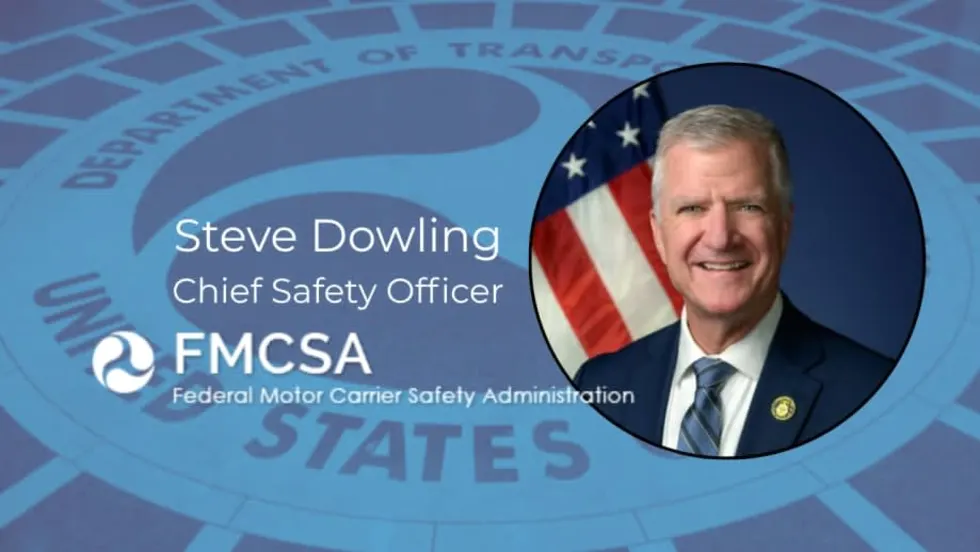
Steve Dowling is set to lead the federal agency's efforts to advance commercial motor vehicle safety and reduce crashes, fatalities, and injuries on the nation's roadways.
Read More →