




New North Carolina State Director Focuses on Crossing Safety Efforts
Kevin Harrison takes over the role as longtime director Derek Graham retires. Harrison oversees a multi-pronged approach to crossing safety, including pilots for extended stop arms and bumper-level strobe lights.

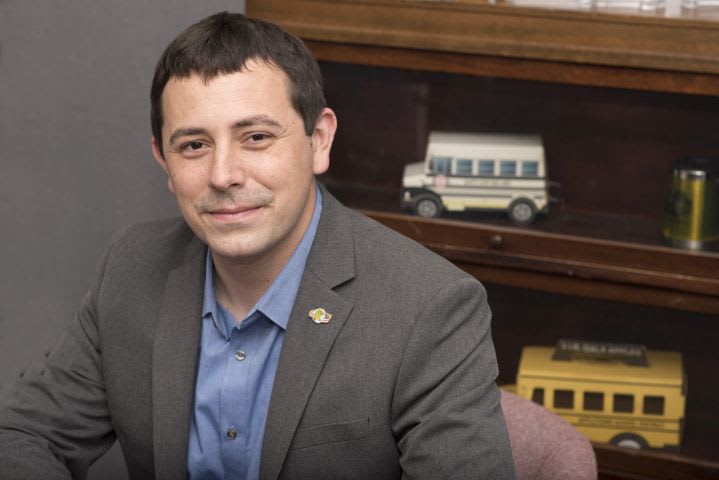
Kevin Harrison assumed the role of North Carolina state director when longtime director Derek Graham retired in February. Harrison oversees a multi-pronged approach to crossing safety, including pilots for extended stop arms and bumper-level strobe lights.
Kevin Harrison assumed the role of North Carolina state director when longtime director Derek Graham retired in February. Harrison oversees a multi-pronged approach to crossing safety, including pilots for extended stop arms and bumper-level strobe lights.
RALEIGH, N.C. — North Carolina has a new leader for its pupil transportation system: Kevin Harrison has taken over the role from longtime director Derek Graham.
Harrison officially took on the position in late February as Graham was stepping down to retire. (Graham is now working as a consultant.) Harrison had previously worked as a transportation computer consultant for the North Carolina Department of Public Instruction since 2005, training employees on using the statewide system for fleet and inventory management, supporting all things computer-related, and helping with legislative and funding issues, he said.
Harrison takes the helm at a busy time as school transportation safety efforts are advancing in the state: An extended school bus stop-arm project is quickly progressing, and a proposed bill, SB 55, which would allow video from stop-arm cameras to be used to penalize violators, is making its way through the state House of Representatives after passing the Senate at the end of March.
In late April, the North Carolina Department of Public Instruction approved 300 additional extended stop arms as part of an ongoing pilot project that began in 2015 at Guilford County Schools. Extended stop-arm supplier Bus Safety Solutions worked with the department to develop the stop arm. Ten counties participated in the initial pilot, and 10 more counties were added to the pilot this year.
“The people that have [the stop arms] so far are pleased with [them], so we allowed some expansion,” Harrison said.
At the beginning of the 2017-18 school year, there will be 340 extended stop arms in service, he added.
Additionally, the state recently started conducting a pilot that tests bumper-level strobe lights that alternate along with an eight-light system. The bumper-level lights will be tested in one or two counties with a small number of vehicles, Harrison said.
Even with the progress on pilot projects, Harrison’s first few months on the job haven’t all been smooth sailing: Just one month after he stepped into the position, a tragedy occurred. On March 27, a teenage student was struck and killed by an illegally passing motorist while the student was crossing the road to board his bus.
Harrison and his department staff rushed to assure parents of all the efforts the state has made and continues to make, such as those previously mentioned, to further improve safety. That multi-pronged approach also includes practices adopted in the last few years, such as a driver hand signal to communicate with students when it is safe to cross the street, and requiring documentation of additional school bus safety training for every student.
“We are trying multiple avenues simultaneously to reduce incidents. We are taking the approach [that] more can be done, because school transportation is the safest way to get to and from school,” Harrison said. “Students are most vulnerable when they are loading and unloading, and that is an area we have to look at.”
Meanwhile, a recent near-miss incident, in which a student just escaped being struck by a motorist, drove home to Harrison the need for a multifaceted safety approach. A group of five students received the signal from their bus driver that it was safe to cross the street when the motorist allegedly drove past the bus “at 55 miles an hour,” Harrison said.
“The [students] were not looking while they were crossing, and the bus driver thankfully got on the horn, and the driver swerved,” he added. “But if you watch the video, the kids, except one, would not have even seen the car before it hit them. They kept right on walking.”
“We know that we have to continue to impress upon students that … when you’re walking on a roadway, it’s always dangerous, and you always have to look. That’s going to be another area we continue to emphasize.”
More Safety
What the 2026 National School Bus Safety Month Resolution Means for Student Transportation
The bipartisan resolution highlights illegal school bus passing, student safety during loading and unloading, and the need for driver training and public education.
Read More →
School Bus Stop-Arm Violations Decline 53% Across Verra Mobility Programs
Verra Mobility shares how school bus stop-arm cameras and school zone safety programs are changing driver behavior, reducing violations, and protecting students.
Read More →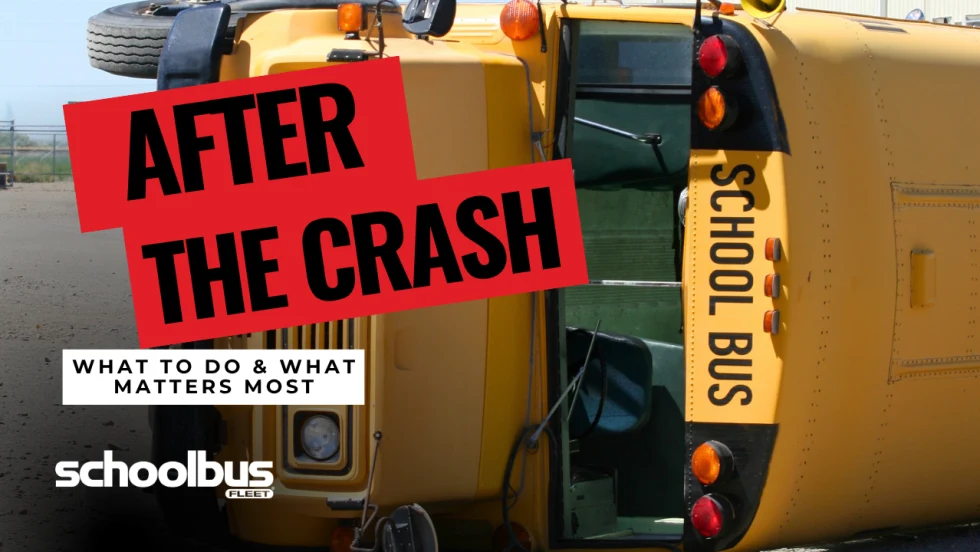
Most Bus Crashes Aren’t Your Fault. Here’s How to Prove It.
A guide for what to do in between a school bus crash and a claim: what to preserve, who to notify, and how to keep the facts available when they matter.
Read More →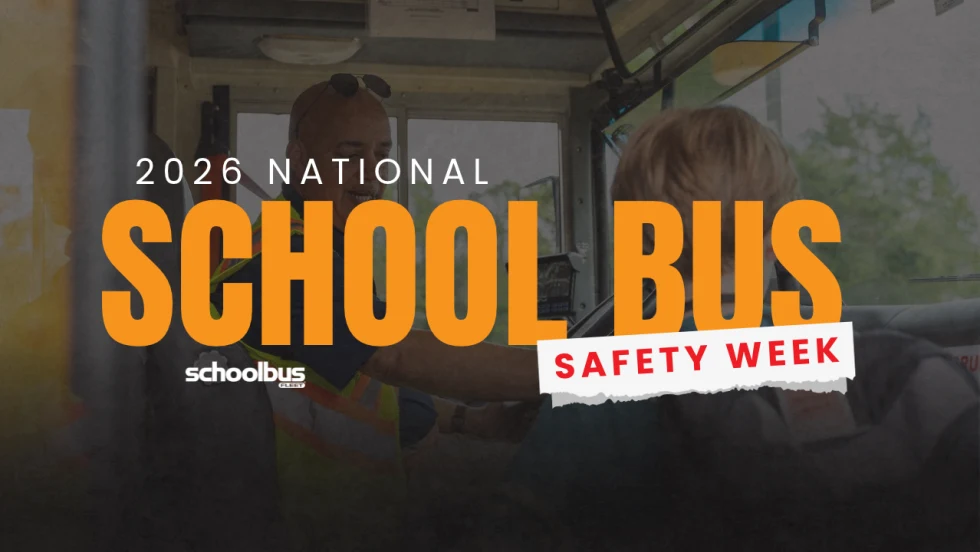
National School Bus Safety Week 2026: Tips, Toolkits & Resources to Keep Students Safe
School bus safety takes more than awareness. Explore expert tips, enforcement strategies, and free resources to help protect students on every ride.
Read More →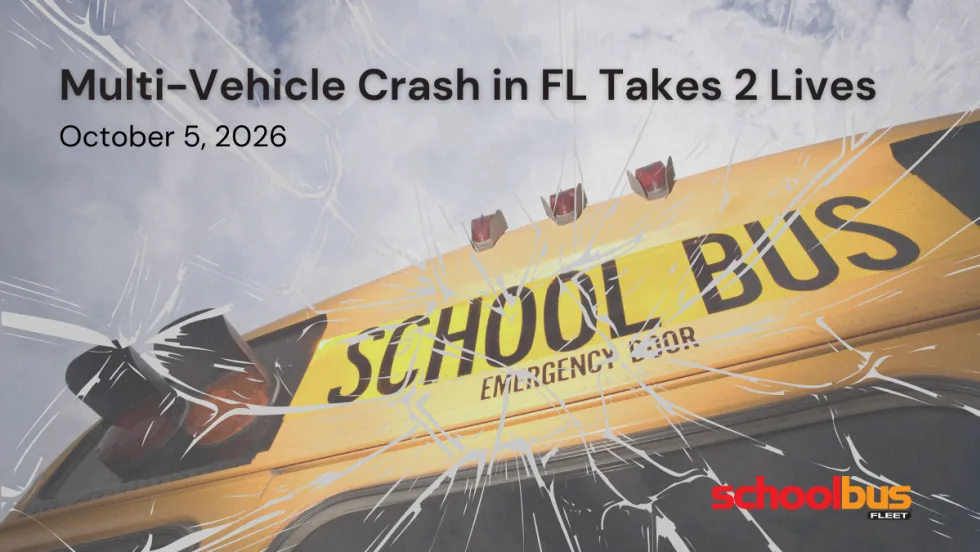
2 Killed, Dozens Injured in Florida School Bus Crash
A multi-vehicle collision caused a Polk County school bus carrying 37 students to overturn on its way to Winter Haven High School.
Read More →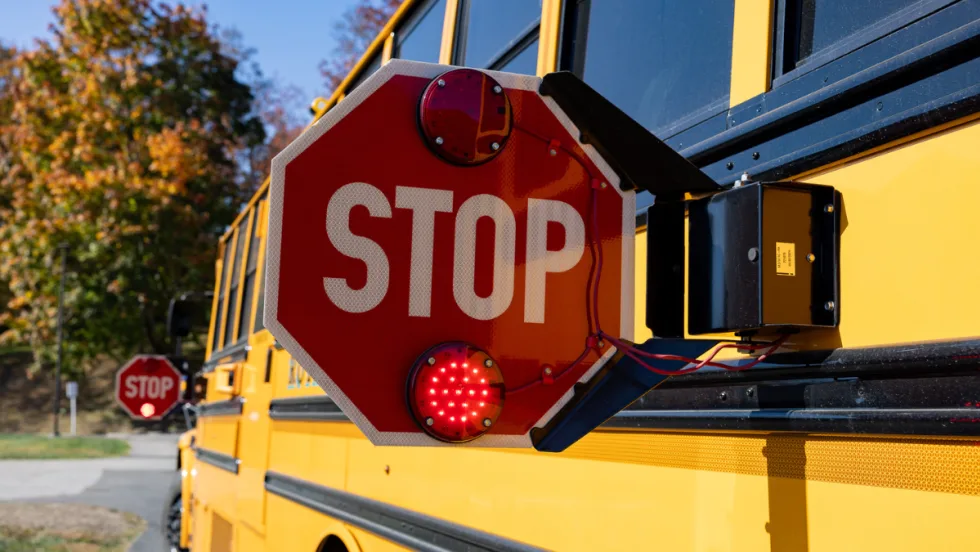
Illegal School Bus Passing Drops 24% in New York Districts
With fewer than 5% of citations involving repeat offenders, Westchester County officials said enforcement, education, and community partnerships are helping change driver behavior.
Read More →
School's Back. Here's What Happened to Traffic, Speeding & Distraction
What happens to traffic when school resumes? New data analysis examines changes in distracted driving, congestion, and speeding around schools.
Read More →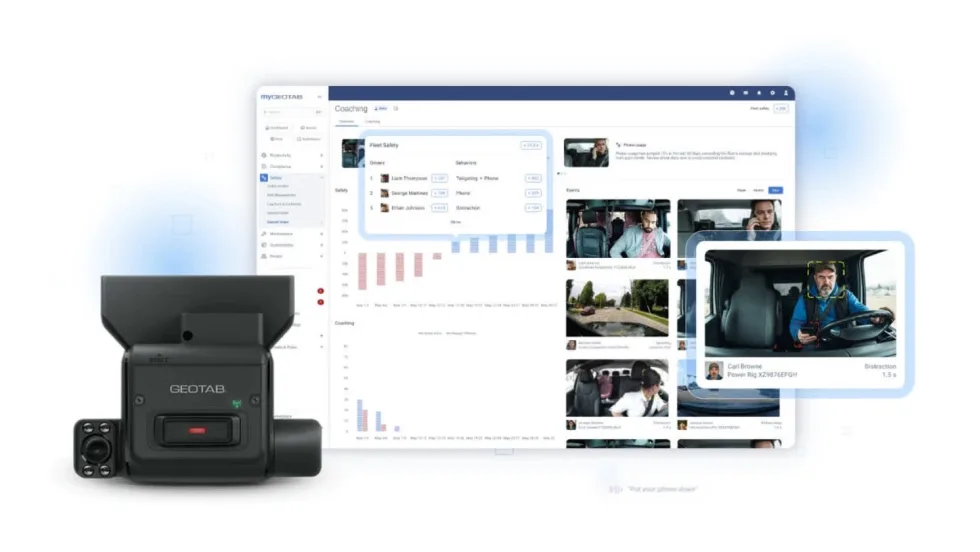
Geotab Expands Fleet Safety Tools With Video Coaching, Risk Insights
New safety and video capabilities aim to help fleet managers assess risk, support drivers, and take targeted action through video coaching, red-light violation detection, and more.
Read More →
How to Build a Better School Bus Driver Training Program
Is it time to strengthen your driver training? Here’s how to pick the right talent and improve recruitment, retention, and safety. This video is brought to you by IC Bus.
Read More →
Recent School Bus Accidents Leave 2 Dead, 2 Injured
Four school bus crashes in Florida, Illinois, and Georgia highlight risks in transportation lots, at bus stops, and during student loading and unloading.
Read More →