




Nevada Safety Pilot Reveals Alarming Illegal School Bus Passing Violations
BusPatrol worked with Carson City and Clark County schools to capture violations. The results encouraged Nevada lawmakers to pass new stop-arm camera legislation.

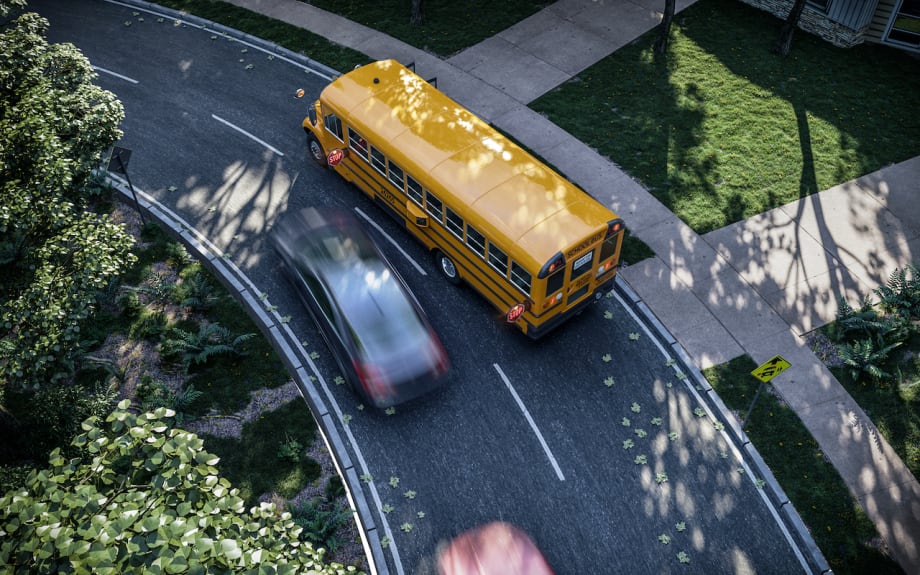
In Carson City, Nevada, over 300 violations were logged in five months. Clark County captured even more: 11,000 violations in five months, equaling about five and a half passings per bus per day.
Photo: BusPatrol
Two recent safety pilot programs in Nevada have unveiled the alarming results of school bus stop-arm running violations, plus how they inspired new legislation in the state to better protect student safety.
Camera manufacturer BusPatrol worked with both districts for the pilot using its AI-powered hardware to capture violations.
Carson City Pilot
In Carson City School District over five months, 318 violations were caught on camera involving motorists who failed to stop for the school bus as required by state law. From January 19 to June 3, 2025, just four school buses equipped with stop-arm cameras recorded the violations, accounting for more than one violation per bus per day.
Videos Show Close Calls from Illegal Stop-Arm Passings
The top three violation locations in the pilot include the 1600 block of East Robinson Street, 4600 block of South Curry Street, and 3600 block of South Curry Street.
“It is exciting to finally have some data behind what we have known anecdotally for many years, our kids need to be extra cautious in and around bus stops when picked up or dropped off because there are some drivers that disregard laws about how to operate around school buses,” said Andrew J. Feuling, superintendent of Carson City School District. “With that data, now Nevada legislators have given school districts and sheriff’s offices a tool to encourage safer driving habits and as a result, having safer kids.”
The Carson City illegal passings can be viewed in this video.
Clark County Pilot
Clark County School District's pilot caught more than 11,000 violations over five months.
From January 13 to May 23, 2025, 30 school buses equipped with stop-arm cameras recorded 11,079 violations, which accounts for an average of 5.6 illegal passings per bus per day.
“The numbers from the Clark County pilot program are deeply concerning and should serve as a wake-up call,” said Nevada State Majority Leader Nicole Cannizzaro. “I was proud to work with BusPatrol to support this common-sense legislation to help protect our most vulnerable – our children – as they travel to and from school. This new law gives school districts the opportunity to modernize their fleets at no cost, hold dangerous drivers accountable, and make our roads safer for everyone.”
“Clark County is experiencing a child safety crisis that is putting our students at risk, with a violation rate that is more than five times that of other states altogether,” said Justin Meyers, president and chief innovation officer for BusPatrol. “BusPatrol is ready to partner and provide communities with the tools they need to enforce the law, deter dangerous driving around the school bus, and protect our children.”
Clark County's footage can be found in this video.
Pilot Results in New State Legislation
The video footage from both pilots was shared with policymakers and stakeholders across the state, evidence that played a critical role in helping pass Assembly Bill 527. This new legislation authorizes the use of automated stop-arm enforcement cameras on school buses across Nevada.
With this new law, school districts can capture violations on video and work with law enforcement to issue civil citations to the registered owners of vehicles that illegally pass stopped school buses. The enforcement is civil in nature, meaning no points are added to drivers’ licenses.
With the passage of AB 527, Nevada became the 29th state in the country to pass stop-arm enforcement legislation, joining a growing national movement to prioritize student safety.
BusPatrol’s technology is deployed on more than 40,000 buses across 22 states.
Similar News: Connecticut, Rhode Island Schools Add New Safety Cameras to Buses
More Safety

How to Build a Better School Bus Driver Training Program
Is it time to strengthen your driver training? Here’s how to pick the right talent and improve recruitment, retention, and safety. This video is brought to you by IC Bus.
Read More →
Recent School Bus Accidents Leave 2 Dead, 2 Injured
Four school bus crashes in Florida, Illinois, and Georgia highlight risks in transportation lots, at bus stops, and during student loading and unloading.
Read More →
When Every Second Matters, Clarity Keeps Routes Moving
From routine delays to urgent incidents, strong communication practices help drivers, dispatchers, schools, and families respond with confidence.
Read More →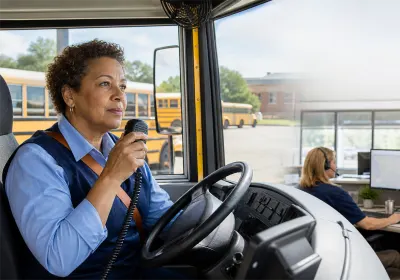

What Happens When a School Bus Catches Fire — and What Can Help
School bus fires are rare but can be devastating. Learn how advances in fire suppression and asset protection help fleets detect fires earlier, reduce damage, and improve safety.
Read More →
Geotab Launches Tool to Help Fleets Investigate Road Incidents
Geotab Investigations combines telematics data, video, documents, and other evidence to help fleets reconstruct incidents, resolve claims, and determine what happened.
Read More →
Texas Sixth Grader Wins 2026 National School Bus Safety Poster Contest
Sai Darshana Yekolu of Moseley Middle School in Prosper, Texas, was named the newest winner for her artwork, bringing the theme of “Safe Rides, Everyday Heroes” to life.
Read More →
Doing More With Less: How Transportation Directors Can Prioritize Safety Amid Budget Uncertainty
With diesel prices soaring and nearly one-third of transportation directors expecting budget cuts, maintaining student safety has never been more challenging. Download this guide to learn how leading districts are prioritizing risk, funding critical safety technology, and building stronger budget cases with data.
Read More →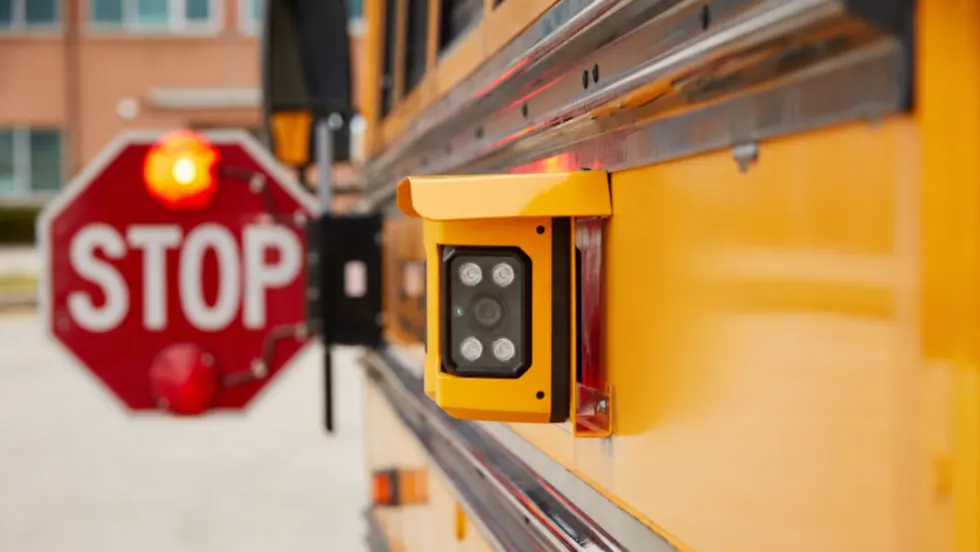
Walton County Schools Adds Gatekeeper Stop-Arm Enforcement System
The Florida district will deploy Gatekeeper’s updated Student Protector technology, which now incorporates AI to improve video evidence.
Read More →
How To Build a More Secure School Bus Yard During and After Hours
As thefts and overnight security threats continue, school transportation leaders are combining stronger operational practices with AI-enabled surveillance to better protect buses, facilities, and staff.
Read More →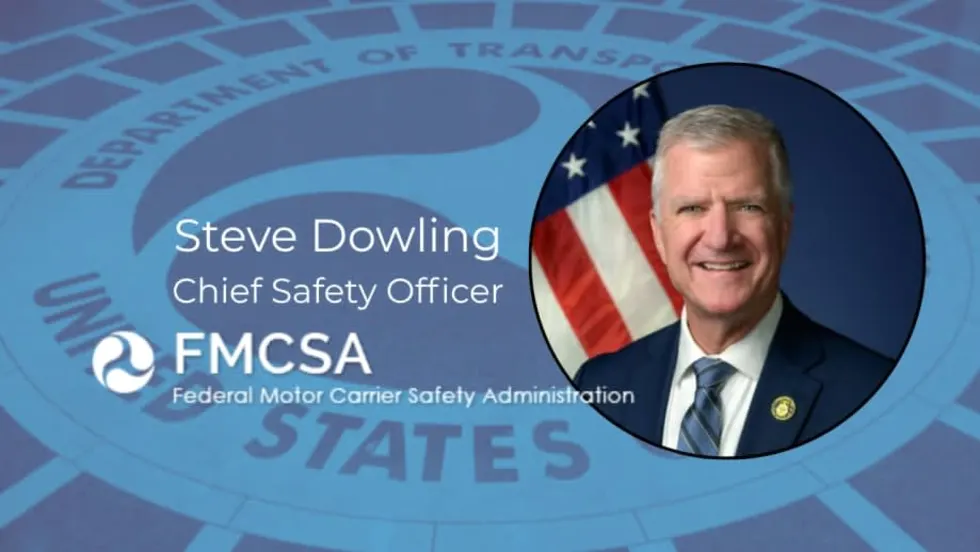
FMCSA Names New Chief Safety Officer: What School Bus Operators Should Know
Steve Dowling is set to lead the federal agency's efforts to advance commercial motor vehicle safety and reduce crashes, fatalities, and injuries on the nation's roadways.
Read More →