




NAPT speakers discuss vehicle developments, managing challenges
In a general session and keynote presentation, the president and CEO of Daimler Trucks North America provides the company's outlook on the future of commercial vehicles. Also during the general session, a successful entrepreneur shares how he has embraced living with a rare form of dwarfism. A workshop covers how to effectively address and diffuse problematic situations that stem from students' behavioral disorders.

[IMAGE]254[/IMAGE]
PORTLAND, Ore. — Monday's presentations and sessions during the National Association for Pupil Transportation's (NAPT) Summit here were engaging and they touched on a variety of topics.
The day began with a general session and keynote presentation featuring Martin Daum, president and CEO of Daimler Trucks North America (DTNA); he provided an outlook on the future of commercial vehicles.
DTNA focuses on safety technology and "green" technology when it comes to the products that its subsidiaries — including Thomas Built Buses — manufacture. More specifically, Daum said that the company has been working on investing in automatic emergency braking, attention assist technology (to notify drivers if they are drifting from their lane) and adaptive headlights, and he believes that some, if not all, of this technology will be integrated into trucks and buses in the future.
In regard to green technology and green efforts, DTNA has been successful in integrating it into Thomas Built school buses. Daum reported that more than 300 Saf-T-Liner HDX units powered by compressed natural gas have been sold in 2010 thus far and more than 65 Saf-T-Liner C2e hybrid school buses have been sold this year. The company is working on a propane solution for 2012, and DTNA has also worked with officials in Washington, D.C., on standards for reducing fuel consumption and carbon dioxide output by school buses and vocational vehicles by 10 percent.
Finally, Daum discussed school buses of the future saying, among other things, that he believes seat belts will be standard, airbags for bus drivers will be standard and that use of GPS will be standard.
In an inspiring presentation during the second half of the general session, Matt Roloff of the television series Little People, Big World shared how he overcame the challenges imposed on him by diastrophic dysplasia, a rare form of dwarfism, to become a successful entrepreneur.
Roloff said that the ability to be resilient in the face of tragic or challenging situations is built into many opportunities in life and it was his ability to be resilient in the face of the obstacles he faced that enabled him to become the person he is today. As an example, he revealed that when he was a boy, he wanted a paper route, so he built a small motorized vehicle with a wagon attached to the back to help him transport the papers, as well as an automatic paper-folding machine out of his mother's old sewing machine. When he got in trouble for riding his "motorized wagon" on the sidewalk, he met with his town's chief of police and convinced him to let him continue with his route.
Roloff noted that his school bus driver and riding the school bus were also instrumental in his growth as an individual. Roloff spent much of his childhood in and out of hospitals and, therefore, missed a lot of school. He said that encouragement from his bus driver (and his parents), as well as riding the bus helped him keep up with his friends socially and it helped him academically because he had a guaranteed mode of transportation to and from school.
Roloff left attendees with the following advice: Craft your thoughts to become your words. Craft your words to become your actions. And craft your actions to become your habits because your habits become your character and your character becomes your destiny.
[IMAGE]255[/IMAGE]
Later on Monday, Kathy Furneaux, executive director of the Pupil Transportation Safety Institute in Syracuse, N.Y., discussed behavioral disorders and how pupil transporters can effectively diffuse problematic situations that stem from these behavioral disorders in "Exploring the Peaks and Valleys of Emotional Disturbance."
Behavioral disorders include hyperactivity, aggression, immaturity and learning difficulties. Furneaux said that students' emotional problems can create emotional pressure that, in turn, forms tension. Students can release that tension either verbally or behaviorally (e.g., shouting at someone or hitting someone). She emphasized that when pupil transporters see students acting out, it is a symptom of their emotional problems or pressure — it is not the cause of their emotional problems. In acting out, they are attempting to stop whatever is upsetting them emotionally.
To handle students' emotional disorders, Furneaux recommended that transportation professionals turn to parents to find out the root/cause of their children's behavior problems. She also said that it's important for managers to trust their drivers' instincts and observations about students and their actions.
"Students with behavior problems will look to someone they can trust, like a bus driver, to intervene and help them — acting out is a cry for help," Furneaux explained.
To this end, she also said that establishing a behavioral intervention plan (i.e., ways to manage/control unsafe behaviors that stem from emotional disorders) is important, and she provided several intervention strategies for drivers. They include keeping students' interest, use planned ignoring when students exhibit undesirable behavior as well as positive reinforcement for desired behaviors, and use humor to reduce tension.
Managers also have a responsibility in helping to address students' behavioral disorders, Furneaux said. She recommended that managers know which students have behavioral disorders, that they regularly monitor students' behavior through video surveillance cameras on board their operation's buses and that they work to get as much information on the topic (through training, attending IEP meetings, etc.) for their drivers and share that information with them.
More Management
How to Build a Better Driver Training Program
Ready to boost up your school bus instructor training? Here’s how to pick the right talent and improve recruitment, retention, and safety.
Read More →
CALSTART and Forth Combine to Form Catalyst Mobility
The new name represents a renewed vision for the nonprofit focused on advancing clean, equitable, and affordable transportation solutions that move people and goods.
Read More →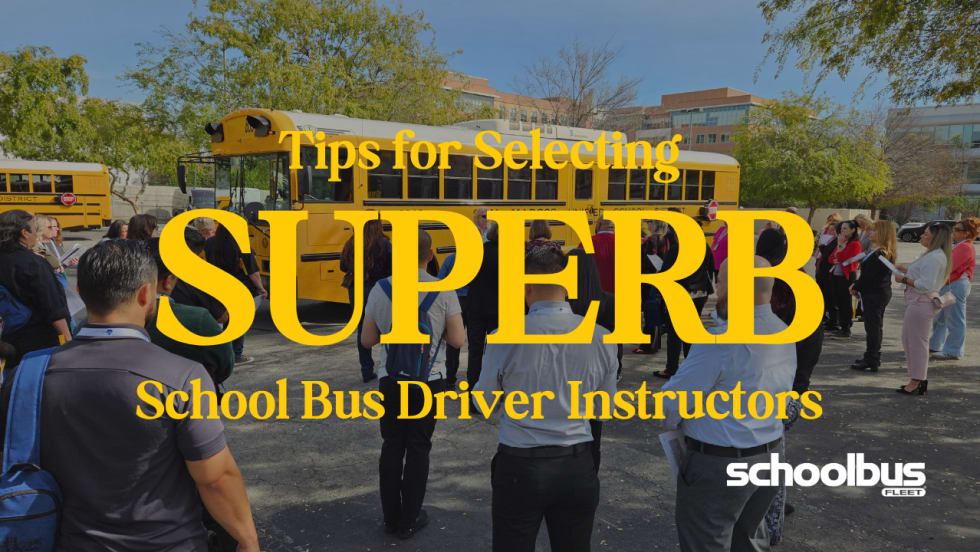
What Makes a Great School Bus Driver Trainer?
Choosing the right school bus driver trainer takes more than experience. Learn six keys to selecting and developing trainers and evaluating program effectiveness.
Read More →


School Bus Contractors Expand Through New Deals, Acquisitions & Partnerships
STA's Canadian division acquires Ontario-based G&L Stevenson Transport while Durham School Services adds a new district contract in California, First Student adds a New Jersey contract, and Minnesota Coaches acquires Halo Transportation.
Read More →
Logan Bus Company Rolls Out AI Phone System for NYC School Bus Families
A summer pilot found that AI agents could handle most routine calls, freeing up time for customer service staff to focus on emergencies and complex family concerns.
Read More →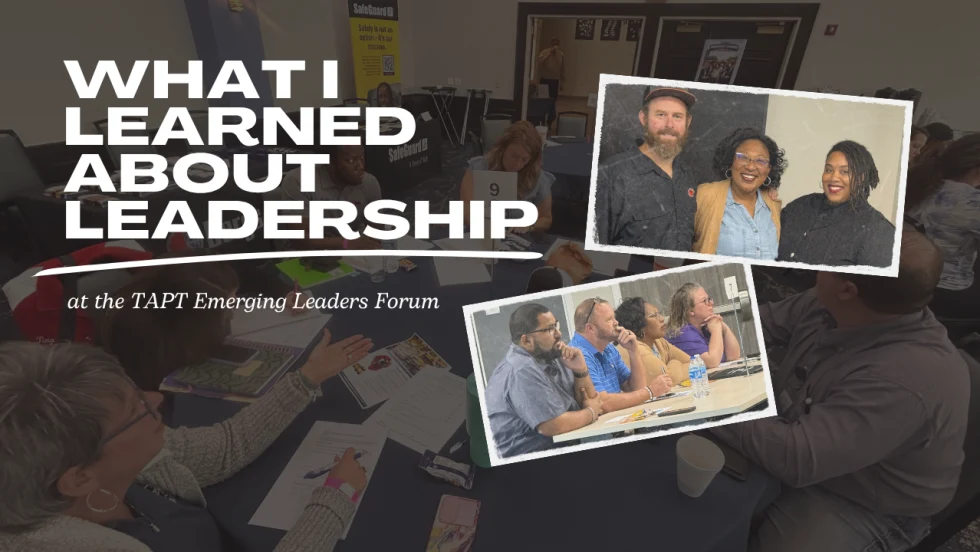
From Intent to Impact: What I Learned About Leadership from TAPT
A Texas transportation supervisor shares lessons on self-awareness, accountability, managing stress and building trust — and why investing in leadership development matters at every stage of your career.
Read More →
NAPT Names 2026 Award Recipients, Hall of Fame Inductee
Who earned national recognition for their work in student transportation? This year, NAPT named five recipients of its 2026 awards for service, safety, and leadership, plus its newest Hall of Famer.
Read More →
2026 State of Student Transportation Report
Driver shortages. Rising costs. Growing safety expectations. More data, but not enough time to act on it. The 2026 State of Student Transportation Report reveals what transportation leaders say is putting the most pressure on their operations—and where they’re investing next. See how your priorities compare.
Read More →
How to De-Escalate an Angry Person: 5 Steps for Handling Workplace Conflict
What makes emotions run high, and how should you handle an angry colleague or parent? Follow these steps for staying calm, listening, showing empathy, and resolving conflict.
Read More →
What Readiness Looks Like This School Year
Learn about the challenges shaping the 2026–2027 school year, from persistent driver shortages and budget pressure to technology and readiness gaps. See how school districts are responding and adapting in Zonar’s 2026 Back-to-School Readiness Report.
Read More →