




Micro Bird Type A completes Altoona testing
The manufacturer submitted the G5 lift bus for a 7-year/200,000-mile STURAA test (Surface Transportation and Uniform Relocation Assistance Act of 1987) last fall, and testing was completed in February. The unit was tested on maintainability, reliability, safety, performance, structural integrity, fuel economy, noise and emissions.

DRUMMONDVILLE, Quebec — Micro Bird’s DRW G5 school bus has successfully completed Altoona testing.
The Type A school bus manufacturer submitted the G5 lift bus for a 7-year/200,000-mile STURAA test (Surface Transportation and Uniform Relocation Assistance Act of 1987). Testing started on Oct. 8, 2012, and was completed on Feb. 18, 2013.
Officials said the DRW G5 outperformed the competition on the interior noise tests with impressive results and arrived at the finish line with a clean slate on the body structure.
To ensure optimal safety, quality, durability and serviceability, the Micro Bird bus was tested using the following criteria:
• Maintainability. This segment is broken down into three subsections that focus on the ability and time required to service the bus’ components. These subsections include accessibility, service/preventive maintenance and repair/replacement.
• Reliability. Documents unscheduled breakdowns, repairs, downtime and repair time that occurs during testing.
• Safety. Determines handling and stability of the bus by measuring speed through a double-lane change test.
• Performance. Determines acceleration, gradeability, top speed capabilities and braking of the bus.
• Structural integrity. Includes various subsections, including structural shakedown, structural distortion, static towing, dynamic towing, jacking, hoisting and durability.
• Fuel economy. Provides accurate comparable fuel consumption data on bus product by manufacturers.
• Noise. Measures and records interior and exterior noise levels and checks for audible vibration under various operating conditions.
• Emissions. Provides comparable gas and emissions data for buses produced by different manufacturers while operating the vehicle over a simulated route.
The Altoona test, performed in Duncansville, Pa., is required for any bus purchased utilizing Federal Transit Administration funds. While there is no pass or fail designation applied, the standardized test is utilized as a comparison tool for purchase decisions.
Micro Bird is a joint venture between Blue Bird and Girardin. Blue Bird buses have continually undergone Altoona Testing since 1993. In the event that a bus experiences substantial product redesign, the Altoona test is re-administered.
With each bus product line tested, Blue Bird is fully compliant with Altoona testing, according to the company.
“Micro Bird’s focus has always been to build the best, most economical buses,” said Steve Girardin, president of Micro Bird. “Altoona’s independent test results confirm we are achieving our objectives.”
Complete details and results from Altoona tests are available at www.altoonabustest.com.
More Safety
What the 2026 National School Bus Safety Month Resolution Means for Student Transportation
The bipartisan resolution highlights illegal school bus passing, student safety during loading and unloading, and the need for driver training and public education.
Read More →
School Bus Stop-Arm Violations Decline 53% Across Verra Mobility Programs
Verra Mobility shares how school bus stop-arm cameras and school zone safety programs are changing driver behavior, reducing violations, and protecting students.
Read More →
Most Bus Crashes Aren’t Your Fault. Here’s How to Prove It.
A guide for what to do in between a school bus crash and a claim: what to preserve, who to notify, and how to keep the facts available when they matter.
Read More →
National School Bus Safety Week 2026: Tips, Toolkits & Resources to Keep Students Safe
School bus safety takes more than awareness. Explore expert tips, enforcement strategies, and free resources to help protect students on every ride.
Read More →
2 Killed, Dozens Injured in Florida School Bus Crash
A multi-vehicle collision caused a Polk County school bus carrying 37 students to overturn on its way to Winter Haven High School.
Read More →
Illegal School Bus Passing Drops 24% in New York Districts
With fewer than 5% of citations involving repeat offenders, Westchester County officials said enforcement, education, and community partnerships are helping change driver behavior.
Read More →
School's Back. Here's What Happened to Traffic, Speeding & Distraction
What happens to traffic when school resumes? New data analysis examines changes in distracted driving, congestion, and speeding around schools.
Read More →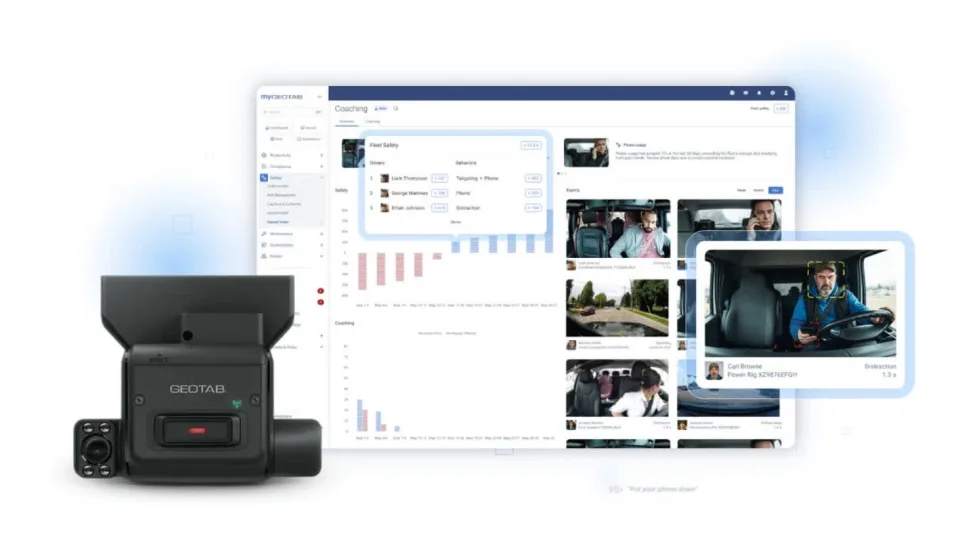
Geotab Expands Fleet Safety Tools With Video Coaching, Risk Insights
New safety and video capabilities aim to help fleet managers assess risk, support drivers, and take targeted action through video coaching, red-light violation detection, and more.
Read More →
How to Build a Better School Bus Driver Training Program
Is it time to strengthen your driver training? Here’s how to pick the right talent and improve recruitment, retention, and safety. This video is brought to you by IC Bus.
Read More →
Recent School Bus Accidents Leave 2 Dead, 2 Injured
Four school bus crashes in Florida, Illinois, and Georgia highlight risks in transportation lots, at bus stops, and during student loading and unloading.
Read More →