




Micro Bird Plant Expansion to Boost Electric School Bus Production
The new wing of the Canadian Type A school bus manufacturer’s Drummondville plant is now fully operational. The expansion will allow Micro Bird to increase electric and other alternative-fuel bus production.

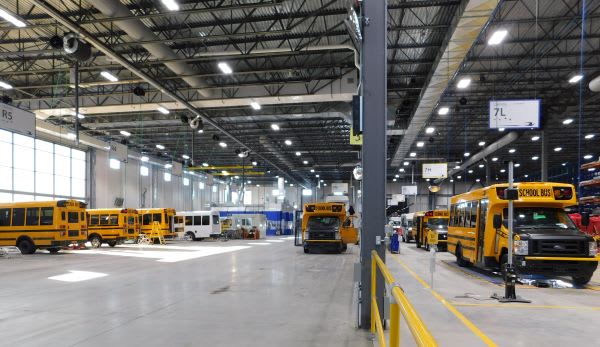
The new wing of Micro Bird's expanded plant is now fully operational.
Photo courtesy Micro Bird
A significant plant expansion that Type A school bus manufacturer Micro Bird invested in last year will enable it to increase its production of electric and other alternative-fuel vehicles.
The new wing at Micro Bird’s Drummondville plant is now in full operation, according to a news release from the manufacturer.
As School Bus Fleet reported in June, Micro Bird expanded the facility to a total of 200,000 square feet, with the intent of expediting bus production. Work on the expansion began in November 2019.
Part of the expansion process included the relocation of Micro Bird’s warehouse, which had been a few miles away from the assembly plant. The new section brings Micro Bird’s warehouse in-house. As a result, the move will improve logistics by providing quicker and easier access to parts.
The new wing is also dedicated to bus painting and maintenance, the manufacturer stated in the news release. Micro Bird has added new equipment, including air conditioning filling and testing equipment, wheel alignment turn tables, and paint booths, to the plant.
The plant expansion will significantly improve efficiency in Micro Bird’s production cycle as the manufacturer continues to grow in its current and new markets, said Steve Girardin, president of Micro Bird.
Girardin added that Micro Bird estimates that the current expansion has the necessary space and infrastructure to manufacture over 1,000 electric buses per year.
To meet market demand, Girardin said, Micro Bird has set up multiple work stations and fitted them with the necessary tools and resources to assemble and support electric school bus production. Its electric vehicle training program, he added, is supported by virtual and physical classrooms, and "ensures our employees, dealers, and customers successfully navigate the transition to electric school buses."
Now that the manufacturer can manage the entire bus production process under one roof, Micro Bird anticipates reducing its manufacturing time frame by up to 70%.
The consolidation of the warehouse is also expected to cut greenhouse gas emissions by about 35 tons per year by eliminating the need to transport parts that were coming from the manufacturer’s remote warehouse, Girardin told SBF in June.
Additionally, Micro Bird installed solar walls to capture heat and redistribute it throughout the building. Leveraging that renewable source of energy will help improve air quality by not running gas or electric heaters and reducing its carbon dioxide emissions, according to the manufacturer. This will also improve air quality for employees.
“We are convinced that our performance is strongly impacted by the well-being of our workers and the new installations will help to enhance and achieve that goal,” Girardin said in the news release. “Micro Bird has greatly involved its employees in the development of the expansion project, primarily in the development of design thinking, because the comfort and wellness of its employees are two major priorities for the company.”
More Alternative Fuels
Alt-Fuel Moves: Electric Bus Rollouts, Bidirectional Charging & Propane Growth
See which fleets are adding electric and propane school buses as districts and operators invest in charging infrastructure, bidirectional technology, and alternative-fuel expansion.
Read More →
Nobody Told Diesel Prices They Were Supposed to Come Down
With diesel prices surging, school bus fleets have new reason to stress-test fuel costs, consider diversification, and calculate what each route really costs to operate.
Read More →
Why Gasoline School Buses Are Making a Comeback
Gasoline is gaining ground in full-size school buses. See how today’s options stack up against diesel on cost, maintenance, emissions, performance, and more.
Read More →
EPA Opens $180M DERA Funding Round for Diesel Upgrades
The 2026 Diesel Emissions Reduction Act program seeks applications from eligible organizations to accelerate the retirement of legacy diesel vehicles.
Read More →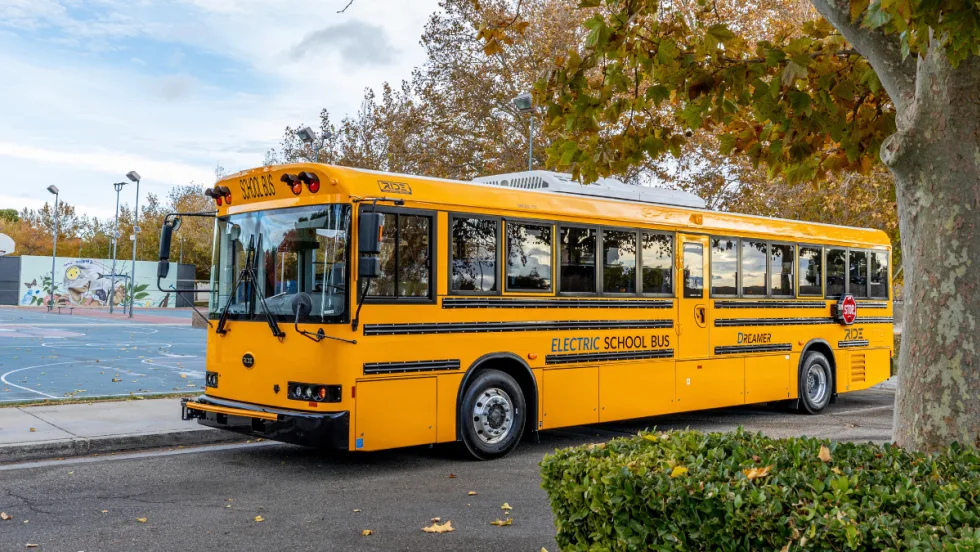
The Secret Life of an Electric School Bus Battery
Batteries change throughout years of daily routes, but degradation doesn’t necessarily mean the end. Here’s what operators should know about performance, safety, and second life.
Read More →
CALSTART and Forth Combine to Form Catalyst Mobility
The new name represents a renewed vision for the nonprofit focused on advancing clean, equitable, and affordable transportation solutions that move people and goods.
Read More →
Alt-Fuel Moves: New Buses, Charging Hubs & Real-World EV Testing
Propane and electric school bus deployments continue to grow as districts add new vehicles, expand charging infrastructure, and gather more real-world operating data.
Read More →
Fewer Electric School Bus Models Reshape the U.S. Market
WRI’s latest buyer’s guide points to a consolidating electric school bus market, but fewer options may reflect a maturing industry rather than fewer meaningful choices for school bus operators.
Read More →
The Fuel Budget You Can Actually Predict: How Propane Autogas Keeps Money in the Classroom
Learn how propane autogas helps school districts manage fuel costs with predictable pricing, lower maintenance, and reduced emissions from former transportation director Joel Stutheit.
Read More →
Hendrickson, Driventic Introduce New Electric Powertrain for School Buses
ELECTRAAX, the electrified, lightweight drive axle offers integrated ePowertrain efficiency and modular flexibility for Class 6–7 school bus use.
Read More →