




Micro Bird Marks 50 Years of Innovation, Diverse Offerings
Micro Bird has helped to transform the industry by introducing many small bus innovations that offer increased safety and durability.

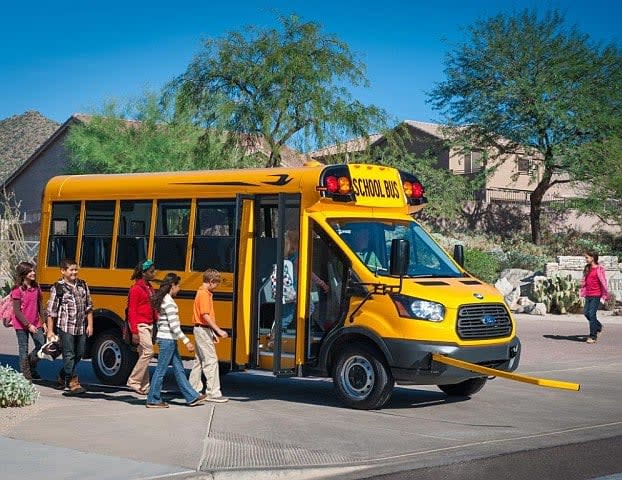
Micro Bird has helped to transform the industry by introducing many small bus innovations that offer increased safety and durability compared to van bodies. Shown here is its newest bus, the T-Series.
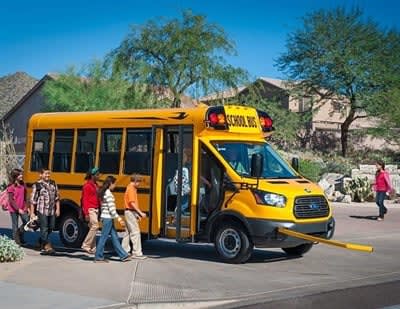
Micro Bird has helped to transform the industry by introducing many small bus innovations that offer increased safety and durability compared to van bodies. Shown here is its newest bus, the T-Series.
As Micro Bird celebrates 50 years of bringing to the market a diverse and innovative product line of vehicles designed for safely transporting small numbers of students, it credits its employees and customers for helping it achieve its success.
From transforming the Type A bus building process to unveiling its T-Series, Micro Bird has brought critical innovations to school transportation vehicles over the last half century.
“We are very small bus-minded,” said Steve Girardin, Micro Bird’s president and CEO. “We have always focused on the under 36-passengers [market].”
In July 1966, the Girardin family started what is known today as Micro Bird, with van conversions and upfits to meet demand in school transportation for smaller vehicles.
The company began as a department of A. Girardin Inc.’s school bus dealership in Quebec. Over the years, the family offered more buses for the special-needs and commercial transportation markets, including through two joint ventures with Blue Bird Corp., in 1992 and in 2009.
Micro Bird has helped to transform the industry by introducing many small bus innovations that offer increased safety and durability compared to van bodies.
In the late 1970s, Girardin Mini Bus added a new school bus-compliant body structure to enhance safety for Type A school buses, similar to the design of a Type C school bus.
Previously, Type A buses had been van conversions; van interiors would be stripped out and seats and padding would be added.
“The introduction of the cutaway changed the industry. You just built your body and then added it onto the cutaway, which is what people know today as the Type A school bus,” Girardin said.
“The important thing at the time was to provide safety inside the smaller school vehicle,” he added.
The company also added triangle-shaped warning lights, which identified the buses as school vehicles.
The Girardin family had been very focused on single rear wheel applications until the late 1970s, when the first Blue Bird Micro Bird was designed for the dual rear wheel market.
“Over time as Blue Bird changed the product, Girardin began introducing dual wheel, and in the mid-1990s, taking over Blue Bird’s production of both the single and dual wheel,” he explained.
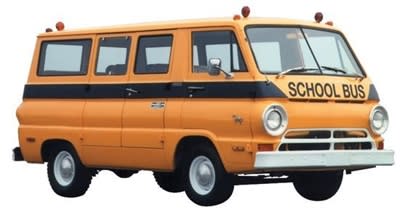
Shown here is one of the original vehicles the company built, a Dodge Fargo van.
Then, in the late 1990s, the company expanded the types of chassis available for the Micro Bird, diversifying the bus to apply to the multifunction school activity bus and other commercial markets.
The manufacturer’s dual rear wheel (DRW) G5, introduced in 2006, a new generation of the MB-IV, was also a significant milestone for Micro Bird, with many in the industry using it as a benchmark, Girardin said.
Micro Bird’s latest innovation, introduced in 2014, is the T-Series. Girardin said that Micro Bird brought the new Ford Transit platform into the market due to its fuel economy. Additionally, the oval body, designed with a wider interior width at-hip, allows for a lighter vehicle that provides a more comfortable ride.
To highlight its 50th anniversary, Micro Bird created a special logo and is undergoing a major plant overhaul to continue to meet growing demand. The company plans to celebrate with its employees and customers throughout the year.
“Our customers and employees took us through those first 50 years, and we are prepared for the next 50 years with them,” Girardin said.
More Management
STA Acquires Sunrise Transportation
Student Transportation of America expands in Illinois and Connecticut through Sunrise's fleet of nearly 1,000 vehicles.
Read More →
EPA Opens $180M DERA Funding Round for Diesel Upgrades
The 2026 Diesel Emissions Reduction Act program seeks applications from eligible organizations to accelerate the retirement of legacy diesel vehicles.
Read More →
HopSkipDrive’s CareEngine Targets the ‘Exceptions’ in Student Transportation
The new platform works alongside districts’ existing transportation management systems to coordinate specialized rides, automate last-minute changes, and turn ride data into operational improvements.
Read More →


The Right Ride for Every Student: Navigating the New Student Transportation Ecosystem
How should districts blend school buses with small-vehicle transportation and other options? EverDriven CEO Mitch Bowling discusses safety, costs, partnerships, and strategy.
Read More →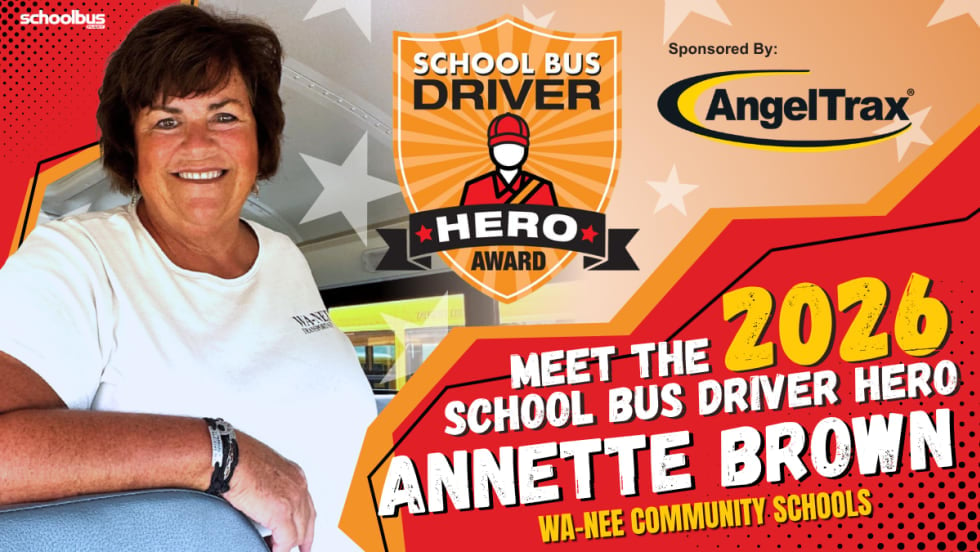
Annette Brown Always Takes the Extra Time: Meet Our 2026 School Bus Driver Hero
For more than 30 years, the Wa-Nee Community Schools driver has treated students like family, combining safety, compassion, and servant leadership to make a lasting difference on and beyond the school bus.
Read More →
How to Build a Better Driver Training Program
Ready to boost up your school bus instructor training? Here’s how to pick the right talent and improve recruitment, retention, and safety.
Read More →
CALSTART and Forth Combine to Form Catalyst Mobility
The new name represents a renewed vision for the nonprofit focused on advancing clean, equitable, and affordable transportation solutions that move people and goods.
Read More →
What Makes a Great School Bus Driver Trainer?
Choosing the right school bus driver trainer takes more than experience. Learn six keys to selecting and developing trainers and evaluating program effectiveness.
Read More →
School Bus Contractors Expand Through New Deals, Acquisitions & Partnerships
STA's Canadian division acquires Ontario-based G&L Stevenson Transport; Durham School Services adds a new district in California; First Student expands in New Jersey; and Minnesota Coaches rebrands and acquires Halo Transportation.
Read More →
Logan Bus Company Rolls Out AI Phone System for NYC School Bus Families
A summer pilot found that AI agents could handle most routine calls, freeing up time for customer service staff to focus on emergencies and complex family concerns.
Read More →