




Lawmakers Launch Effort to Mandate Seat Belts on School Buses Nationwide
The bipartisan bill in Congress follows the fatal school bus crash in New Jersey and NTSB’s new recommendations on lap-shoulder belts.

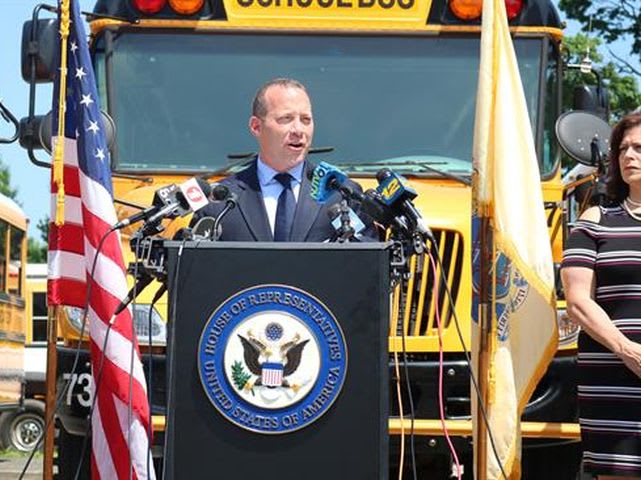
U.S. Rep. Josh Gottheimer (D-N.J.) on Tuesday announced a bipartisan bill that calls for a new federal rulemaking on school bus seat belts.
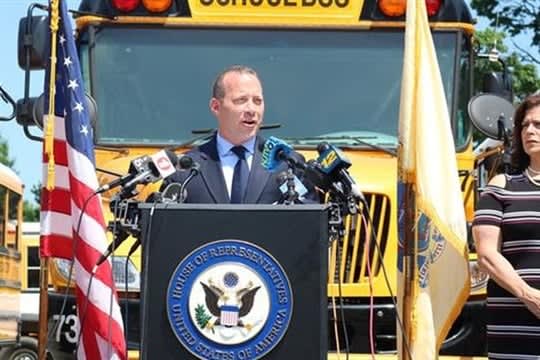
U.S. Rep. Josh Gottheimer (D-N.J.) on Tuesday announced a bipartisan bill that calls for a new federal rulemaking on school bus seat belts.
WASHINGTON, D.C. — The recent fatal school bus crash in New Jersey and new recommendations by the National Transportation Safety Board (NTSB) have led to an effort in Congress to require seat belts on school buses across the country.
U.S. Rep. Josh Gottheimer (D-N.J.) on Tuesday announced a new bipartisan bill that would require the U.S. Department of Transportation (DOT) to “begin the rulemaking process on new federal requirements for seat belts on school buses,” according to a one-page summary of the proposal.
The legislation, dubbed the Secure Every Child Under the Right Equipment Standards (SECURES) Act, is also backed by U.S. Rep. John Faso (R-N.Y.), with a Senate companion bill to be introduced by Sen. Bob Menendez (D-N.J.). The House bill, H.R.5984, was introduced on Tuesday, but the text was not available as of press time.
The summary of the SECURES Act proposal does not specify that the DOT rulemaking would have to be for lap-shoulder belts. Rather, the legislation would direct the DOT to “consider the added safety benefits of lap/shoulder seat belts in the rulemaking process,” and it would "require DOT to include NTSB’s recommendations in the federal rulemaking process." The bill summary cites NTSB’s new special investigation report on school bus safety, which recommends that states mandate lap-shoulder belts for all new large school buses.
The launch of the SECURES Act legislation follows the May 17 school bus crash in Mount Olive, New Jersey, that killed a student and a teacher. The bus in that crash was reportedly equipped with lap-only belts, as required by New Jersey law.
On Tuesday, Gottheimer and other elected officials held a press conference at the Fair Lawn (N.J.) Board of Education’s transportation depot. With a backdrop of yellow buses, the congressman discussed the Mount Olive crash and his new legislative proposal.
“As a parent of a 6-year-old and an 8-year-old, and as your congressman, after this horrific bus accident, I wanted to know if more could be done to ensure that all of our children, regardless of where they live, are as safe as they could be on our school buses,” Gottheimer said. “Our research has shown us that, as a state and as a country, there are more arrows in the quiver than we are currently putting into action. The evidence couldn’t be clearer — seat belts in school buses save lives.”
Gottheimer also said that he is writing to officials at the Federal Motor Carrier Safety Administration and the New Jersey Motor Vehicle Commission “asking them to study and to take immediate action to ensure that all bus drivers are qualified to drive our children.”
A video of the press conference can be viewed below.
Federally, lap-shoulder belts are required only on small school buses — more precisely, those with a gross vehicle weight rating of 10,000 pounds or less.
Three states — New Jersey, Florida, and New York — require lap belts on their large school buses. California mandates lap-shoulder belts.
Texas last year passed a requirement for lap-shoulder belts on school buses, but school boards can opt out if they determine that they can’t afford the additional cost of the restraint systems. Also last year, Nevada passed a mandate for lap-shoulder belts on new school buses that goes into effect July 1, 2019.
Louisiana has a school bus seat belt law on the books, passed in 1999, but it is contingent on funding being appropriated to pay for the restraints. Since the mandate remains unfunded, it has not been implemented.
Here's video of Gottheimer's press conference in New Jersey on Tuesday:
More Safety

How to Build a Better School Bus Driver Training Program
Is it time to strengthen your driver training? Here’s how to pick the right talent and improve recruitment, retention, and safety. This video is brought to you by IC Bus.
Read More →
Recent School Bus Accidents Leave 2 Dead, 2 Injured
Four school bus crashes in Florida, Illinois, and Georgia highlight risks in transportation lots, at bus stops, and during student loading and unloading.
Read More →
When Every Second Matters, Clarity Keeps Routes Moving
From routine delays to urgent incidents, strong communication practices help drivers, dispatchers, schools, and families respond with confidence.
Read More →

What Happens When a School Bus Catches Fire — and What Can Help
School bus fires are rare but can be devastating. Learn how advances in fire suppression and asset protection help fleets detect fires earlier, reduce damage, and improve safety.
Read More →
Geotab Launches Tool to Help Fleets Investigate Road Incidents
Geotab Investigations combines telematics data, video, documents, and other evidence to help fleets reconstruct incidents, resolve claims, and determine what happened.
Read More →
Texas Sixth Grader Wins 2026 National School Bus Safety Poster Contest
Sai Darshana Yekolu of Moseley Middle School in Prosper, Texas, was named the newest winner for her artwork, bringing the theme of “Safe Rides, Everyday Heroes” to life.
Read More →
Doing More With Less: How Transportation Directors Can Prioritize Safety Amid Budget Uncertainty
With diesel prices soaring and nearly one-third of transportation directors expecting budget cuts, maintaining student safety has never been more challenging. Download this guide to learn how leading districts are prioritizing risk, funding critical safety technology, and building stronger budget cases with data.
Read More →
Walton County Schools Adds Gatekeeper Stop-Arm Enforcement System
The Florida district will deploy Gatekeeper’s updated Student Protector technology, which now incorporates AI to improve video evidence.
Read More →
How To Build a More Secure School Bus Yard During and After Hours
As thefts and overnight security threats continue, school transportation leaders are combining stronger operational practices with AI-enabled surveillance to better protect buses, facilities, and staff.
Read More →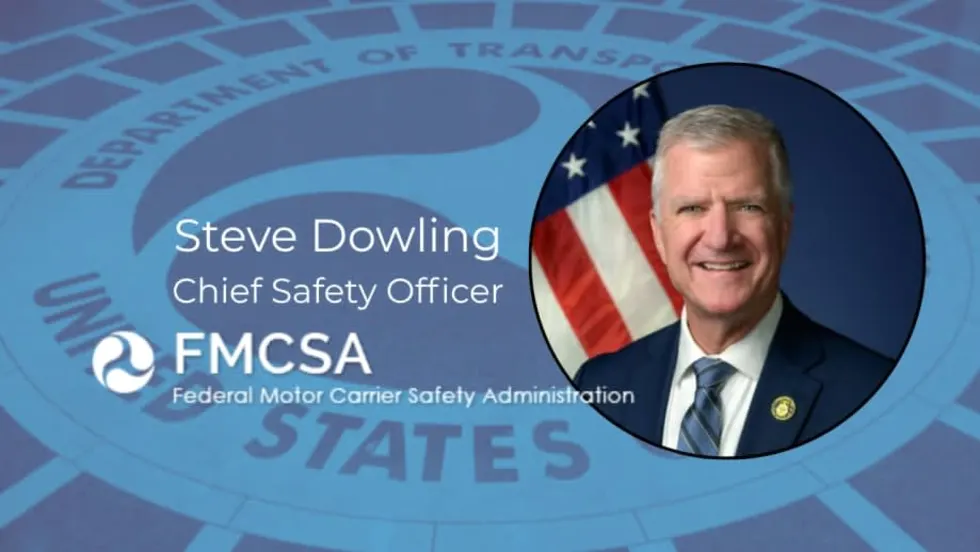
FMCSA Names New Chief Safety Officer: What School Bus Operators Should Know
Steve Dowling is set to lead the federal agency's efforts to advance commercial motor vehicle safety and reduce crashes, fatalities, and injuries on the nation's roadways.
Read More →