




Louisiana Task Force Advises Against Seat Belt Mandate
In a new report, the state panel finds that “compartmentalized seating and other occupant restraint usage … generally have met the safety needs of Louisiana’s school bus passengers.”

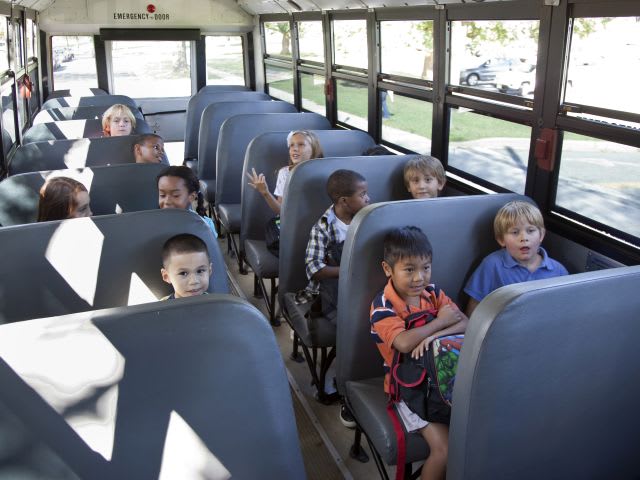
In a new report, a Louisiana task force finds that “compartmentalized seating and other occupant restraint usage … generally have met the safety needs of Louisiana’s school bus passengers.” Stock photo by NHTSA
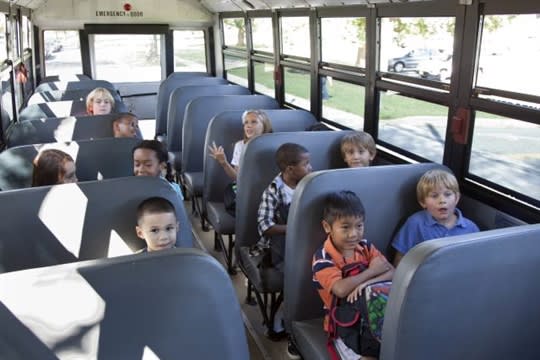
In a new report, a Louisiana task force finds that “compartmentalized seating and other occupant restraint usage … generally have met the safety needs of Louisiana’s school bus passengers.” Stock photo by NHTSA
BATON ROUGE, La. — Seat belts should not be required for school buses in Louisiana, a state task force advises in a new report.
The panel, dubbed the Task Force on Student Transportation and School Bus Passenger Safety, is the result of a resolution passed by Louisiana legislators in May. The resolution called on the state Department of Education to establish a task force to study and make recommendations on school bus safety, including the long-debated issue of seat belts.
The task force, composed primarily of Louisiana education and transportation officials, held a series of meetings that began in October and ultimately produced a report for the state Legislature.
The task force’s report gives an overview of school transportation safety issues nationally and in Louisiana specifically, including risks outside of the bus. For example, the report cites data showing that from 2012 to 2015, there were no student fatalities on board school buses in Louisiana, but there were two school bus-related pedestrian fatalities.
The task force developed a set of recommendations, the first of which is that seat belts should not be mandated for the state’s school buses.
“Compartmentalized seating and other occupant restraint usage for students with special needs and for Head Start passengers generally have met the safety needs of Louisiana’s school bus passengers,” the task force says in the report.
The panel’s second recommendation is that, if occupant restraints are mandated, the Legislature should provide funding for three-point belts and for employing an attendant for every bus that is equipped with them. The attendant would be responsible for ensuring that passengers are properly restrained and for assisting restrained passengers in emergency evacuations.
Louisiana does have a school bus seat belt law on the books, passed in 1999, but it is contingent on funding being appropriated to pay for the restraints. Since the mandate remains unfunded, it has not been implemented.
Federally, three-point belts are required only on small school buses — more precisely, those with a gross vehicle weight rating of 10,000 pounds or less, which account for a small proportion of the school bus market.
The Louisiana task force also offers several recommendations on school bus stop safety issues, including increasing motorists’ awareness of when to stop for school buses and adopting a universal signal for school bus drivers to use in crossing students.
Other recommendations include the creation of an advisory committee that would “recommend methods of improving school bus safety for Louisiana’s students.”
Along with state education and transportation officials, the task force included Ronna Weber, executive director of the National School Transportation Association, who said that the group’s work will be beneficial for school transportation in Louisiana and the rest of the nation.
“We commend the task force for completing its task and know others will learn from these efforts,” Weber said.
The task force’s school bus safety report can be downloaded here.
More Safety

How to Build a Better School Bus Driver Training Program
Is it time to strengthen your driver training? Here’s how to pick the right talent and improve recruitment, retention, and safety. This video is brought to you by IC Bus.
Read More →
Recent School Bus Accidents Leave 2 Dead, 2 Injured
Four school bus crashes in Florida, Illinois, and Georgia highlight risks in transportation lots, at bus stops, and during student loading and unloading.
Read More →
When Every Second Matters, Clarity Keeps Routes Moving
From routine delays to urgent incidents, strong communication practices help drivers, dispatchers, schools, and families respond with confidence.
Read More →

What Happens When a School Bus Catches Fire — and What Can Help
School bus fires are rare but can be devastating. Learn how advances in fire suppression and asset protection help fleets detect fires earlier, reduce damage, and improve safety.
Read More →
Geotab Launches Tool to Help Fleets Investigate Road Incidents
Geotab Investigations combines telematics data, video, documents, and other evidence to help fleets reconstruct incidents, resolve claims, and determine what happened.
Read More →
Texas Sixth Grader Wins 2026 National School Bus Safety Poster Contest
Sai Darshana Yekolu of Moseley Middle School in Prosper, Texas, was named the newest winner for her artwork, bringing the theme of “Safe Rides, Everyday Heroes” to life.
Read More →
Doing More With Less: How Transportation Directors Can Prioritize Safety Amid Budget Uncertainty
With diesel prices soaring and nearly one-third of transportation directors expecting budget cuts, maintaining student safety has never been more challenging. Download this guide to learn how leading districts are prioritizing risk, funding critical safety technology, and building stronger budget cases with data.
Read More →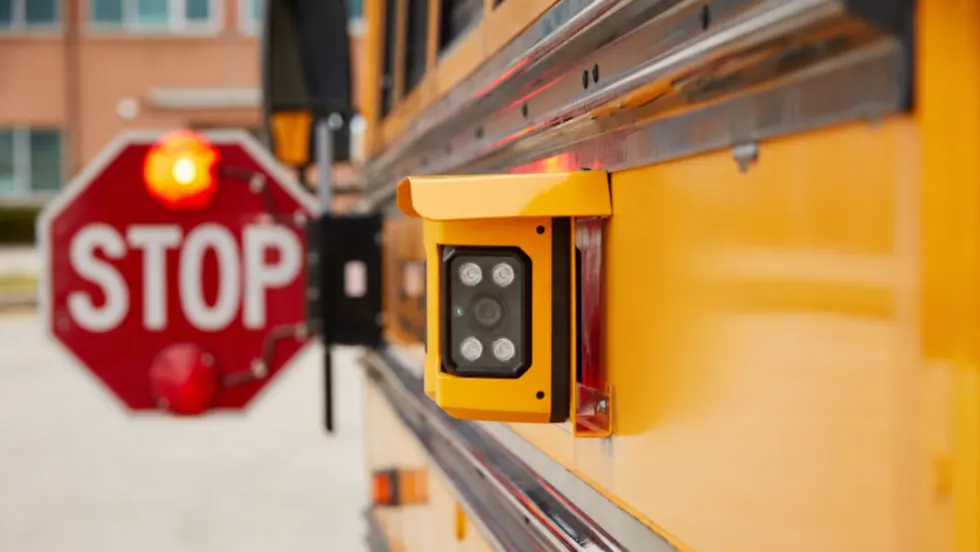
Walton County Schools Adds Gatekeeper Stop-Arm Enforcement System
The Florida district will deploy Gatekeeper’s updated Student Protector technology, which now incorporates AI to improve video evidence.
Read More →
How To Build a More Secure School Bus Yard During and After Hours
As thefts and overnight security threats continue, school transportation leaders are combining stronger operational practices with AI-enabled surveillance to better protect buses, facilities, and staff.
Read More →
FMCSA Names New Chief Safety Officer: What School Bus Operators Should Know
Steve Dowling is set to lead the federal agency's efforts to advance commercial motor vehicle safety and reduce crashes, fatalities, and injuries on the nation's roadways.
Read More →