




Texas Passes Another School Bus Seat Belt Bill
The state’s governor approves a measure that requires lap-shoulder belts on new school buses, but districts can opt out due to financial constraints.

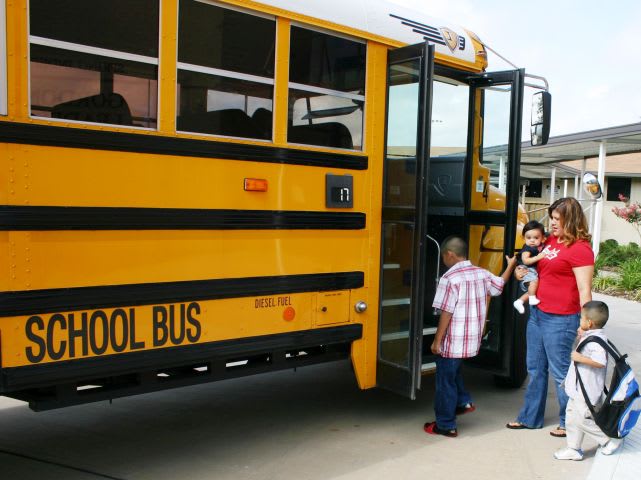
The governor of Texas approved a measure that requires lap-shoulder belts on new school buses, but districts can opt out due to financial constraints. File photo from Spring ISD

The governor of Texas approved a measure that requires lap-shoulder belts on new school buses, but districts can opt out due to financial constraints. File photo from Spring ISD
AUSTIN, Texas — A new bill signed into law last week requires lap-shoulder belts on new school buses in Texas, but school districts can opt out due to financial constraints.
Texas Gov. Greg Abbott approved the legislation, SB 693, on Thursday. The law goes into effect Sept. 1, with the three-point belt measure applying to new buses that transport students, beginning with model year 2018. In addition to school buses and school activity buses operated by districts and contractors, the measure covers multifunction school activity buses and school-chartered buses.
Ten years ago, Texas passed legislation that required three-point belts on school buses starting in 2010, but only if the state Legislature appropriated money to reimburse school districts for the cost of the restraint systems, which is typically around $7,000 to $10,000 for a full-size school bus. Since state funding is not being provided, school districts don’t have to comply. A few Texas districts, including Houston Independent School District (ISD) and Austin ISD, have begun voluntarily equipping their new buses with three-point belts.
The newly passed bill, authored by Texas Sen. Sylvia Garcia, is not contingent on funding from the Legislature. However, it allows school boards to vote to opt out if they determine “that the district's budget does not permit the district to purchase a bus that is equipped with the [three-point] seat belts required by this subsection.” That vote would have to be carried out in a public meeting.
On the seat belt subject, the Texas Association for Pupil Transportation (TAPT) published a position paper in September 2015 in which the group advocated for leaving lap-shoulder belt decisions up to local school districts.
Jim Abney, outgoing TAPT president and executive director of student safety and transportation for Alvin ISD, told SBF that the newly passed legislation addresses the local decision issue by including the opt-out provision.
“Our stance is still [that] it should be a district option,” Abney said, adding that TAPT supports the budgetary discretion that the measure provides for school boards.
Abney said that he expects a number of Texas districts to opt out of the seat belt requirement. Also, he noted that some districts will order their next round of new buses without belts before the law goes into effect in September.
“Then after Sept. 1, it will be a [school] board decision,” Abney said.
A press release from Garcia’s office described the opt-out provision as a way to ensure that the seat belt initiative is not an unfunded mandate. The senator also said that the bill was a response to school bus crashes in Texas that have caused fatalities and injuries.
“Safety experts, EMS professionals, and common sense tell us that children need to be buckled up. We've put this off for too long on our school buses,” Garcia said in the press release. “We need every Texas child to be safe on the way to and from school. This bill will make a big impact for child safety.”
More Management

How to Build a Better Driver Training Program
Ready to boost up your school bus instructor training? Here’s how to pick the right talent and improve recruitment, retention, and safety.
Read More →
CALSTART and Forth Combine to Form Catalyst Mobility
The new name represents a renewed vision for the nonprofit focused on advancing clean, equitable, and affordable transportation solutions that move people and goods.
Read More →
What Makes a Great School Bus Driver Trainer?
Choosing the right school bus driver trainer takes more than experience. Learn six keys to selecting and developing trainers and evaluating program effectiveness.
Read More →


School Bus Contractors Expand Through New Deals, Acquisitions & Partnerships
STA's Canadian division acquires Ontario-based G&L Stevenson Transport while Durham School Services adds a new district contract in California, First Student adds a New Jersey contract, and Minnesota Coaches acquires Halo Transportation.
Read More →
Logan Bus Company Rolls Out AI Phone System for NYC School Bus Families
A summer pilot found that AI agents could handle most routine calls, freeing up time for customer service staff to focus on emergencies and complex family concerns.
Read More →
From Intent to Impact: What I Learned About Leadership from TAPT
A Texas transportation supervisor shares lessons on self-awareness, accountability, managing stress and building trust — and why investing in leadership development matters at every stage of your career.
Read More →
NAPT Names 2026 Award Recipients, Hall of Fame Inductee
Who earned national recognition for their work in student transportation? This year, NAPT named five recipients of its 2026 awards for service, safety, and leadership, plus its newest Hall of Famer.
Read More →
2026 State of Student Transportation Report
Driver shortages. Rising costs. Growing safety expectations. More data, but not enough time to act on it. The 2026 State of Student Transportation Report reveals what transportation leaders say is putting the most pressure on their operations—and where they’re investing next. See how your priorities compare.
Read More →
How to De-Escalate an Angry Person: 5 Steps for Handling Workplace Conflict
What makes emotions run high, and how should you handle an angry colleague or parent? Follow these steps for staying calm, listening, showing empathy, and resolving conflict.
Read More →
What Readiness Looks Like This School Year
Learn about the challenges shaping the 2026–2027 school year, from persistent driver shortages and budget pressure to technology and readiness gaps. See how school districts are responding and adapting in Zonar’s 2026 Back-to-School Readiness Report.
Read More →